+91 7014607737
 info@technoloader.com





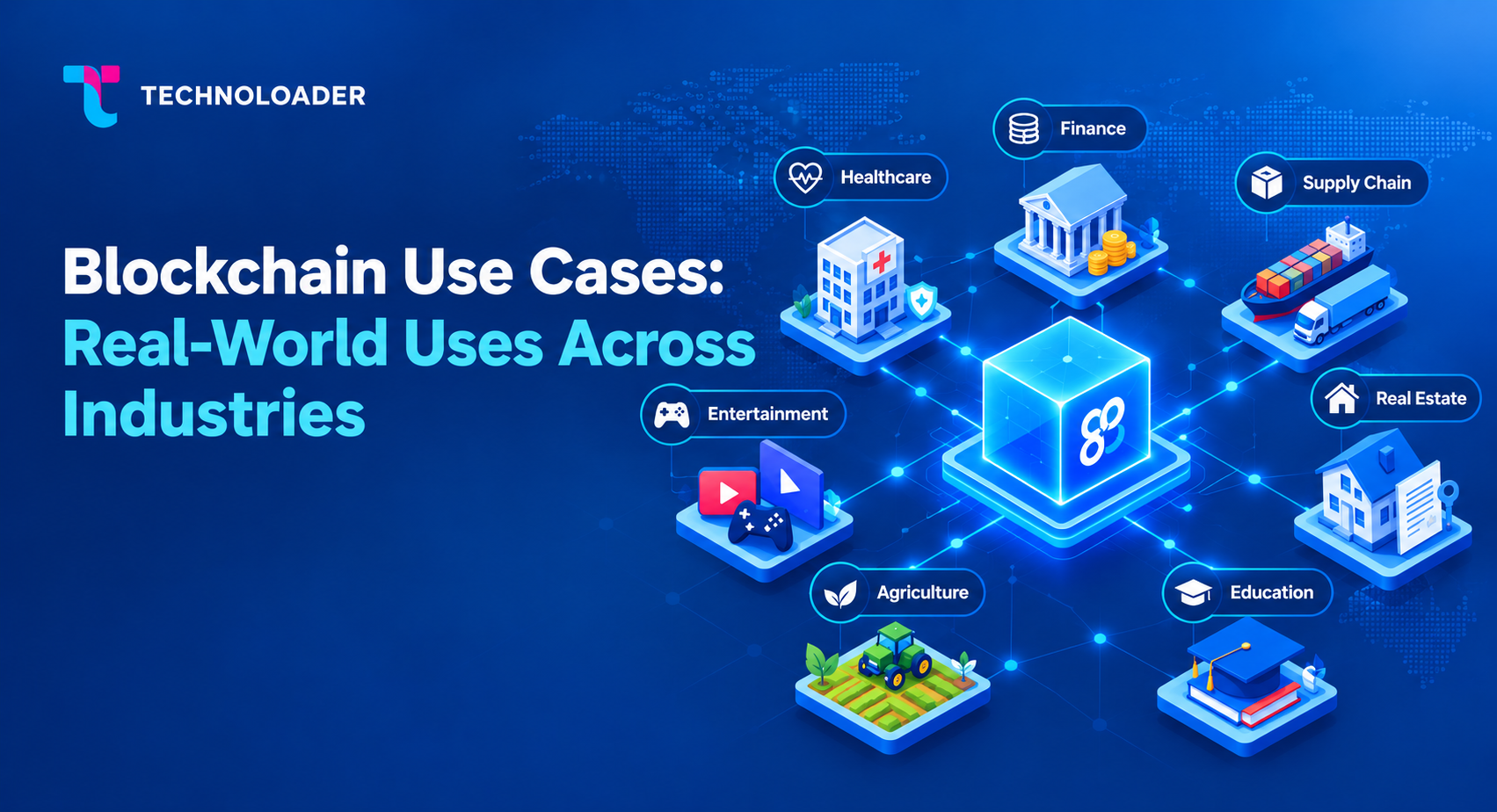
Table of Contents
Quick Summary
- Blockchain use cases go far beyond cryptocurrency. They help businesses solve problems that need a shared, tamper-evident record.
- Blockchain works best when several parties need to share the same data but do not completely trust one another.
- Finance and supply chain are already using blockchain in real-world settings. Other industries are still mostly in the testing stage.
- Not every business problem needs blockchain. A regular database can often do the job better, and this guide helps you spot those cases.
- Find the right use case first, pick public or permissioned rails, and test it with a small pilot before going further.
Blockchain use cases are situations where a shared record can solve a real business problem. Unlike a regular database, blockchain lets multiple parties keep track of the information without giving one party full control. It works best when those parties need to trust the record, but don’t trust each other.
That’s why its strongest use cases go far beyond cryptocurrency.
The funding numbers show where the market is heading. PitchBook and Galaxy Research report that blockchain and crypto startups raised $8.5 billion during Q4 2025. A lot of that money is going toward products built around actual business needs.
I’ve worked on more than 450 projects with my team over the years. Those projects include crypto exchanges, wallets, DeFi platforms, and other blockchain products.
The pattern is pretty clear from that work. Blockchain only makes sense when several parties need a trusted shared record.
This guide breaks down where blockchain use cases fit and how to assess yours.
What Are Blockchain Use Cases?
A blockchain use case is a real business problem that blockchain helps solve. It uses a shared, tamper-evident ledger that several parties can access.
Blockchain stores information in linked blocks and distributes copies across many computers. Once a block gets confirmed, changing the record becomes much harder to hide.
Before looking at specific uses, it helps to separate a few common terms.
- Blockchain is the shared-ledger technology.
- Cryptocurrency is one application built on blockchain.
- Web3 covers a wider idea of decentralized apps.
- Distributed ledger technology (DLT) is the broader group that includes blockchain.
The terms are related, but each one describes something different.

Smart contracts also play a major role in many blockchain use cases. They are programs that run automatically when specific conditions are met. They can automate steps that once needed a middleman or manual work.
Their legal status varies across countries, so treat them as code first.
Blockchain vs. a Traditional Database
Both store data, but they solve different problems. A database is faster and lower-cost when one trusted owner controls the records. A blockchain works when control is shared, and no party wants to trust another’s system.
The table below sums up the trade-off between blockchain and a traditional database.
| Dimension | Traditional Database | Blockchain |
|---|---|---|
| Control | One owner | Shared across participants |
| Trust model | Trust the owner | Trust the shared rules |
| Write access | Central admin | Agreed by the network |
| Speed and cost | Fast, low cost | Slower, higher cost |
| Best when | One party owns the data | Many parties share the data |
Clearly, the two are meant for different use cases.
When Should a Business Use Blockchain?
A business should consider blockchain when several parties need to share the same records. If one trusted party can manage the data, a traditional database may be faster and cheaper.
What Are the Key Benefits of Blockchain?
Businesses adopt blockchain to cut the cost of trust between parties. When each side keeps its own records, they spend heavily to reconcile and audit them. A shared ledger gives everyone one version to work from.
That is the core benefit, and most other benefits of blockchain stem from it. Here are some key benefits you should know of.
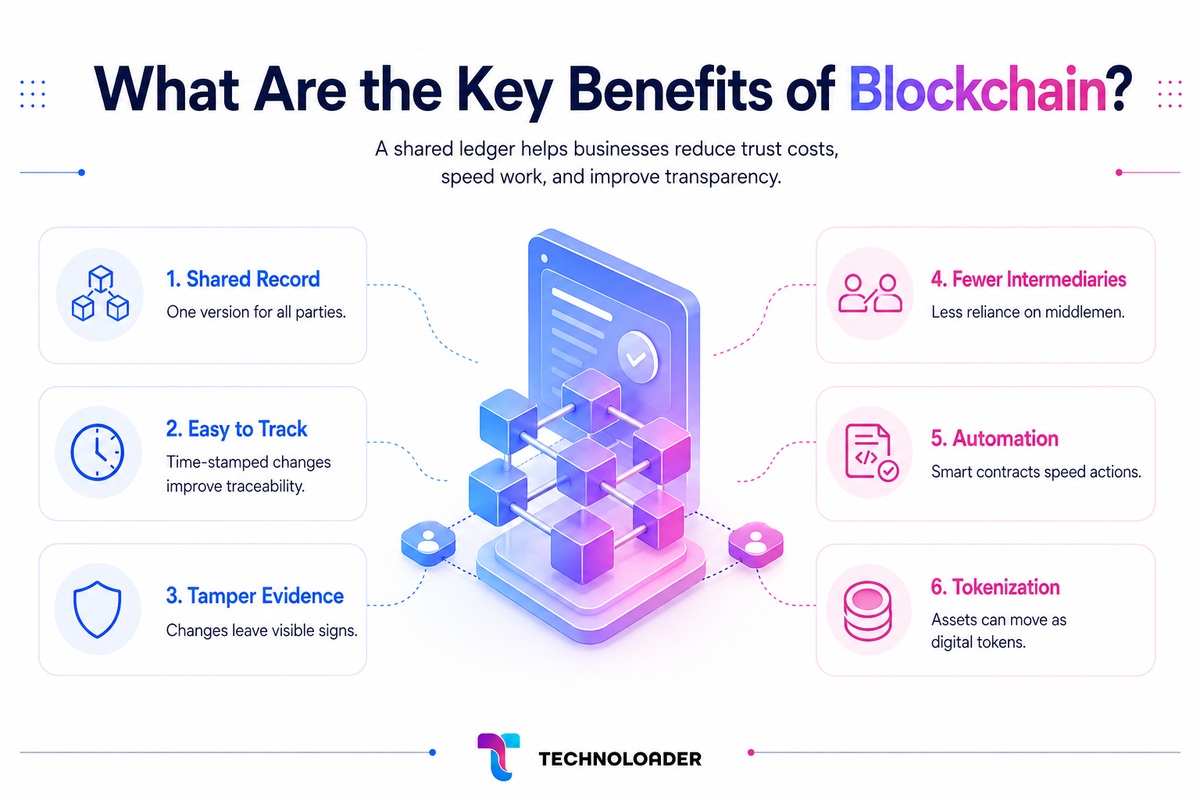
- Shared Record: Everyone works from the same record, which can reduce disputes and reconciliation between companies.
- Easy to Track: Each change gets a timestamp, making it easier to follow an item from start to finish.
- Tamper Evidence: Confirmed records are difficult to alter without leaving signs of the change.
- Fewer Intermediaries: Blockchain can remove some middlemen when their main job is helping parties trust each other.
- Automation: Smart contracts execute agreed steps on their own, which speeds up settlement and claims.
- Tokenization: Real assets can be represented as digital tokens, which can improve access and transfer.
Interest in tokenized assets is growing. In EY’s 2026 institutional survey, 63% of investors said they were very interested in tokenized assets. That figure rose from 57% in 2025.
The broader blockchain market is growing quickly too.
Fortune Business Insights values the market at $31.18 billion in 2025. It expects that figure to reach $577.36 billion by 2034. These figures are forecasts, so use them as a guide rather than a promise.
What Is the Main Benefit of Blockchain?
Blockchain gives different parties one shared record, reducing the need to reconcile separate records. This can lower trust-related costs while making tracking, automation, and transfers easier.
Also Read
What Are the Blockchain Use Cases Across Industries?
Most industries use blockchain to share and verify records between different parties. Blockchain use cases include financial settlement, supply chain tracking, digital identity, tokenization, and product traceability. Finance and supply chain have live systems, while many other uses are still being tested.
The table below gives you a quick view of the main blockchain use cases.
| Industry | Problem It Solves | How Blockchain Helps | Real Example | Maturity |
|---|---|---|---|---|
| Finance & Banking | Slow, costly settlement across institutions | Shared ledger settles and records value in near real time | JPMorgan Kinexys (>$3T processed) | Production |
| Supply Chain & Logistics | Poor visibility and counterfeits | Time-stamped provenance across all parties | Walmart + IBM Food Trust | Production |
| Healthcare | Siloed, hard-to-verify records | Shared audit trail for records and drugs | MediLedger (US DSCSA) | Piloting |
| Real Estate & Tokenization | Illiquid assets, slow transfers | Fractional, transferable tokens plus clear title trail | Deloitte forecast, $4T by 2035 | Early |
| Digital Identity | Fragmented, insecure identity | User-held verifiable credentials | EU Digital Identity Wallet | Piloting |
| Government & Voting | Low trust in records and results | Tamper-evident public records | Estonia e-governance | Mixed |
| Insurance | Slow, manual, disputed claims | Smart-contract claims and shared data | Parametric insurance pilots | Piloting |
| Energy & Utilities | No easy peer-to-peer energy trade | Automated trading and grid tracking | P2P energy pilots | Piloting |
| Retail & Consumer Goods | Fakes and unclear sourcing | Provenance and loyalty on a shared ledger | Luxury and food provenance | Piloting |
| Media & Advertising | Opaque royalties and ad spend | Transparent rights and payment tracking | Music and ad-tech pilots | Piloting |
| Gaming & Metaverse | No real ownership of in-game items | Tokenized items users can hold and trade | NFT game items | Mixed |
| Internet of Things | Weak device trust at scale | Device identity and machine payments | Supply-chain sensors | Experimental |
| Agriculture & Food | Unverified origin and quality | Farm-to-shelf traceability | Food-trace networks | Piloting |
| Education | Fakeable certificates | Verifiable, portable credentials | Blockchain diplomas | Piloting |
| Data & AI | Unclear data and model provenance | Verifiable data sources and audit trails | Data marketplaces | Experimental |
Most strong blockchain use cases have the same basic setup. Several parties need to share the same records and trust what they see. When one company controls the data, a normal database may be enough.
Now, let’s discuss the common blockchain use cases in detail.
1. Finance and Banking
Finance is one of the strongest blockchain use cases because banks move money between many different parties. Shared ledgers can help banks move and record money faster, with less work spent matching records.
Here are some examples of blockchain use cases in finance and banking.
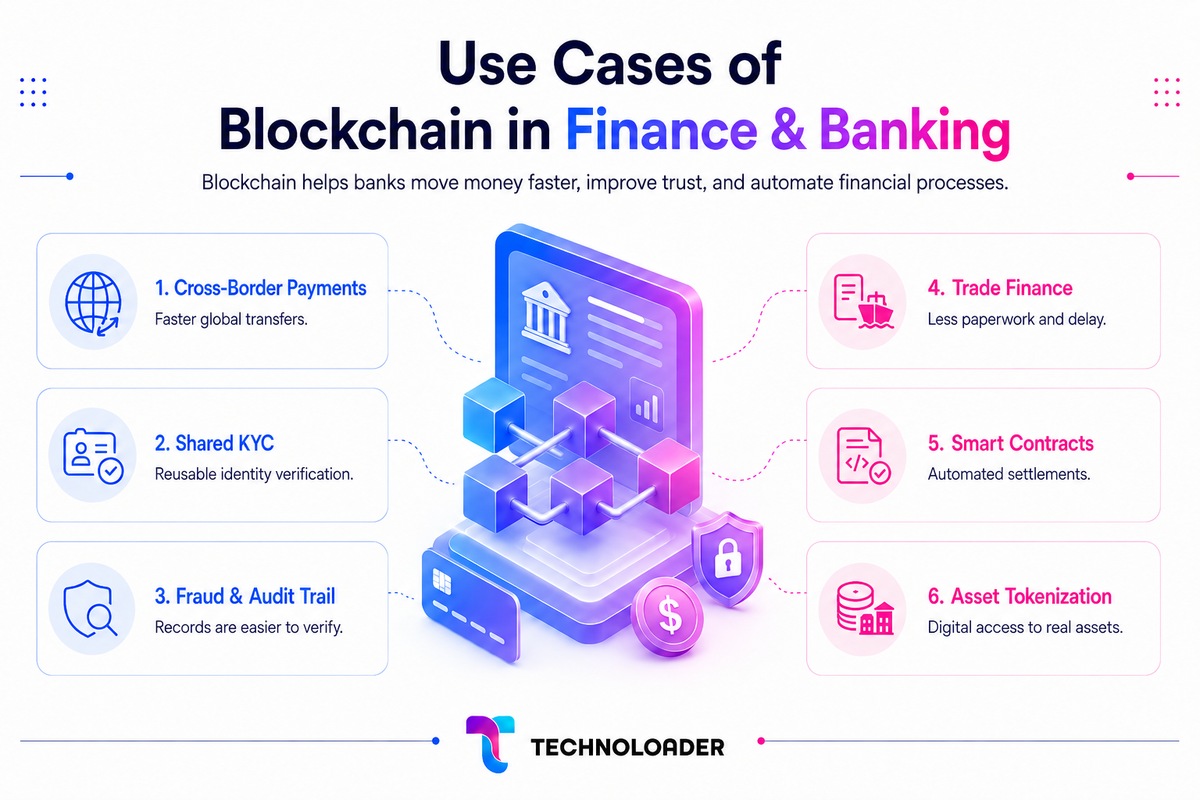
There are live systems already using blockchain in banking.
JPMorgan’s Kinexys unit, formerly Onyx, has processed more than $3 trillion to date using blockchain. Its April 2026 update reported more than $5 billion in daily volume.
Tokenized real-world assets are growing alongside these banking systems. RWA.xyz put the distributed asset value of RWA at about $38.3 billion in August 2026.
2. Supply Chain and Logistics
Supply chains involve many companies, and those companies often use separate systems. A shared ledger gives everyone one record they can check and follow. This can reduce disputes, speed up recalls, and help spot fake products.
That’s why it’s one of the most common blockchain use cases. Here are some more uses of blockchain in logistics.
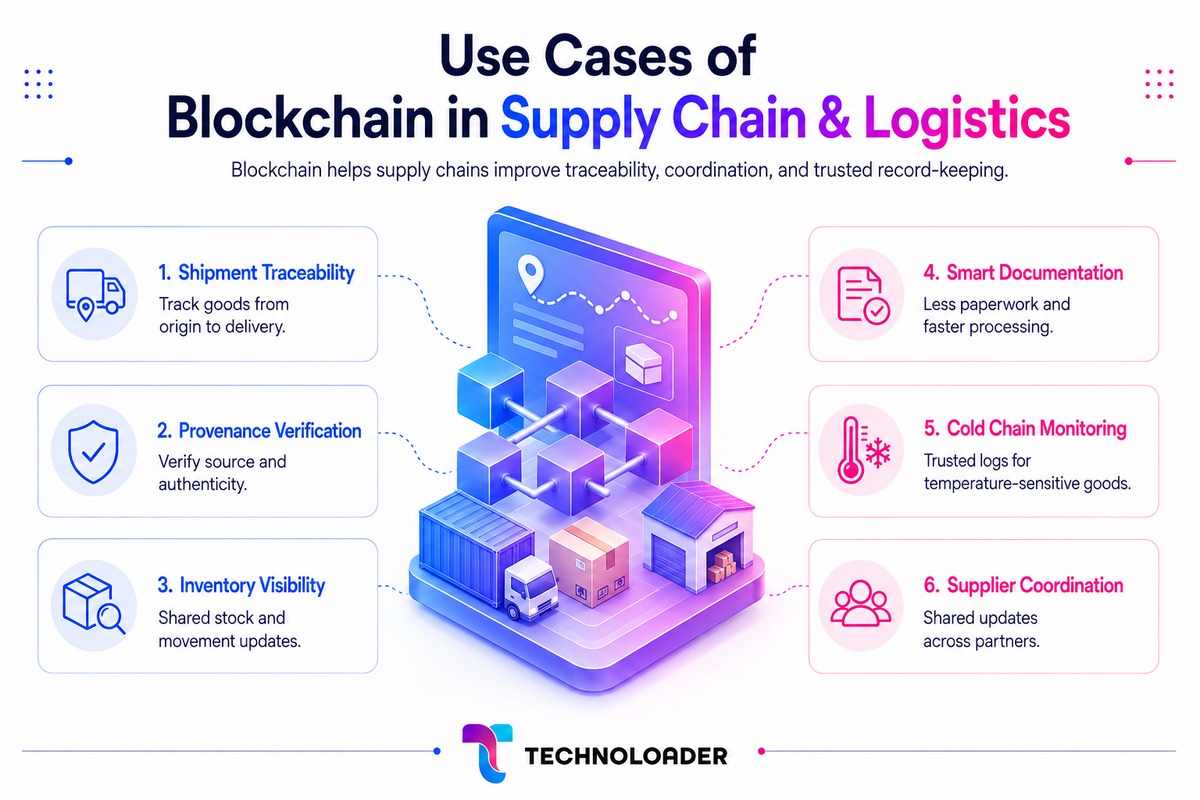
Mordor Intelligence expects the blockchain supply chain market to grow considerably. It estimates it to grow from $1.77 billion in 2026 to $12.41 billion by 2031.
3. Healthcare
Healthcare data is often stored in separate systems that don’t share information well. This makes healthcare a useful area for blockchain use cases.
Blockchain can create a shared audit trail that providers can check. It doesn’t hold the medical files. Instead, it records who changed a record and when.
Key blockchain use cases in healthcare include:
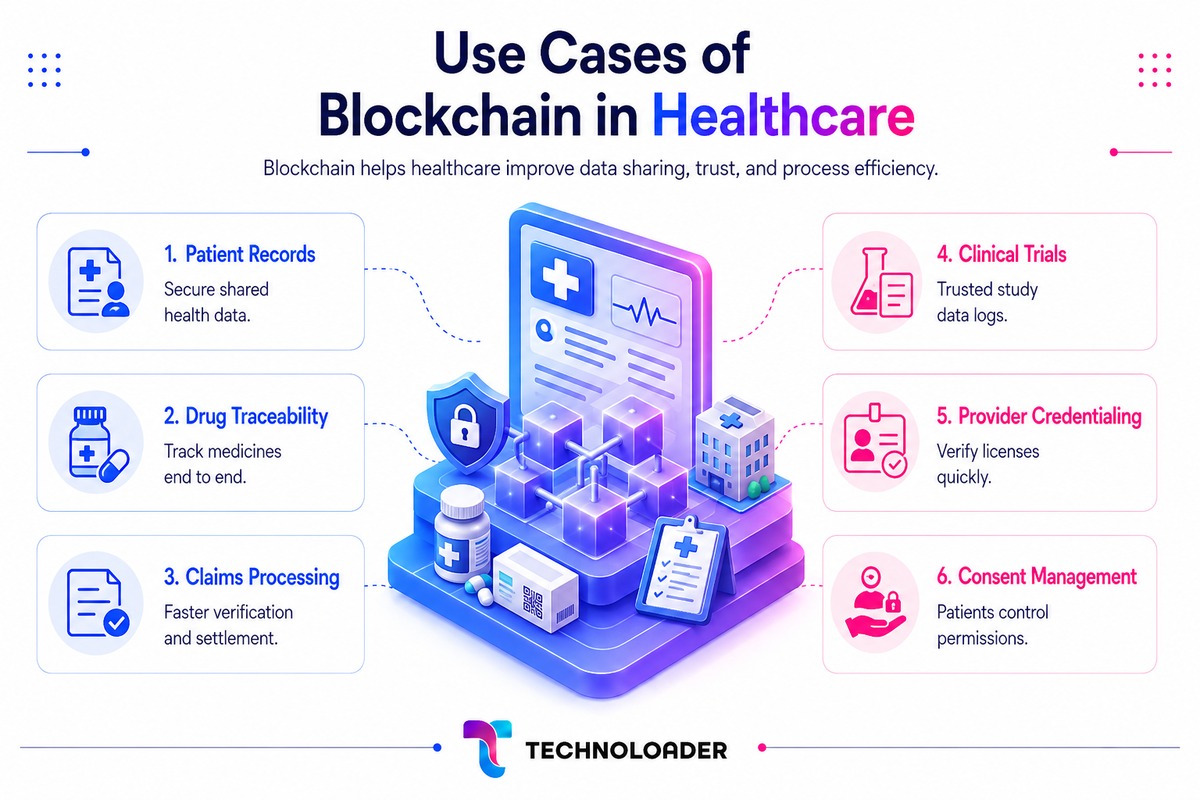
Drug traceability is one real-world example. Under US DSCSA rules, networks like MediLedger help companies check that medicines are genuine.
Healthcare blockchain use cases are still fairly new, but the market is growing. Grand View Research valued the sector at $11.32 billion in 2024. It forecasts growth to $214.86 billion by 2030, with a 63.6% CAGR.
Also Read
4. Real Estate and Asset Tokenization
Real estate is another growing area for blockchain use cases, especially through asset tokenization. Tokenization turns a property or part of its ownership into a digital token. This can make smaller shares easier to offer and transfers easier to handle.
The token doesn’t create legal ownership on its own. The legal rights still depend on contracts outside the blockchain.
Check out the key blockchain use cases in real estate below.
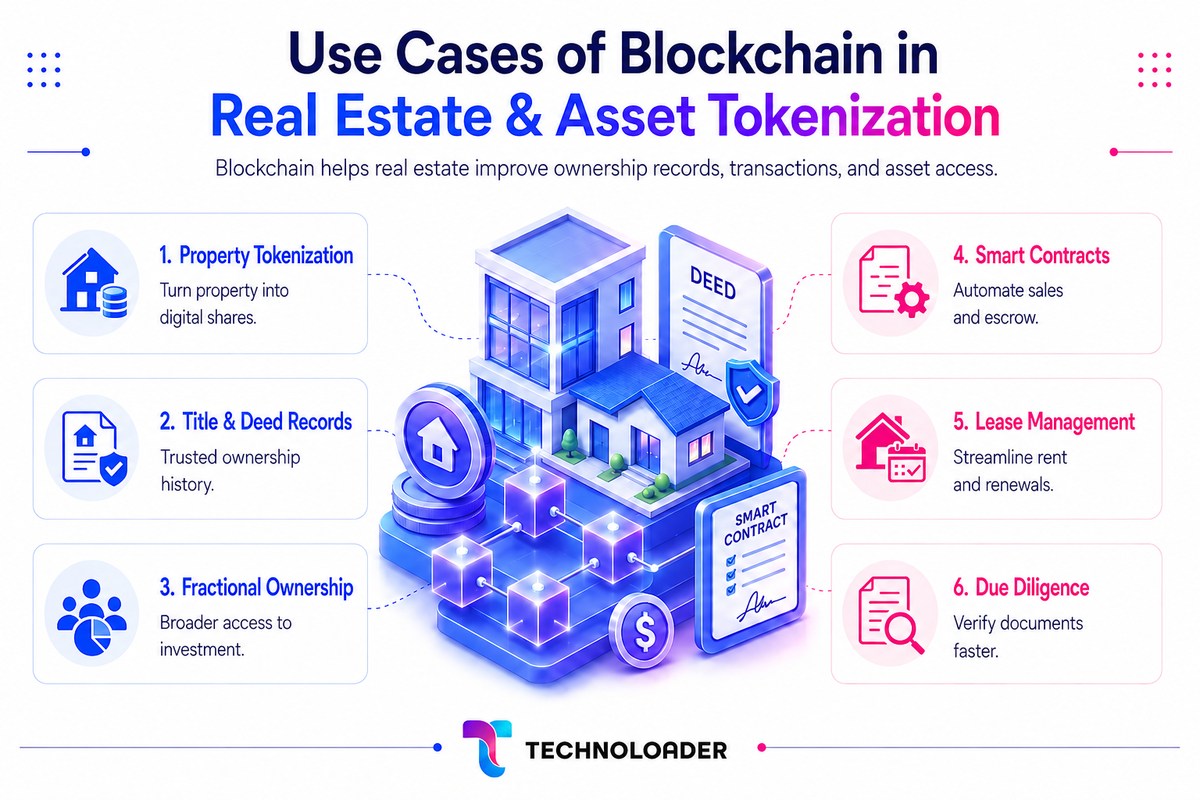 Deloitte forecasts up to $4 trillion of real estate could be tokenized by 2035. That’s up from less than $0.3 trillion in 2024.
I’ve seen real-world asset features become a common request in the platforms we’ve built at Technoloader. Our AI Tech DeFi product is one example of this demand. Shared title records could also help reduce fraud and speed up property checks.
5. Digital Identity
Digital identity is one of the more practical blockchain use cases today. People often have to prove their identity separately across different online services.
Self-sovereign identity gives people control over their verifiable credentials. They can share only the details a service needs, while the service verifies them without contacting every issuer.
The image below shows the various blockchain use cases in digital identity verification.

Europe is taking the lead on this blockchain use case. Every EU member state must offer a Digital Identity Wallet by December 2026 under eIDAS 2.0.
6. Government and Voting
Government records need to be accurate and easy to check. That’s why public records are another possible blockchain use case. A tamper-evident ledger can help protect records, such as land titles and benefit records, from quiet changes.
Estonia is the best-known example. It uses integrity technology across many government systems to help protect public data.
Blockchain use cases in this area range from trusted records to voting.
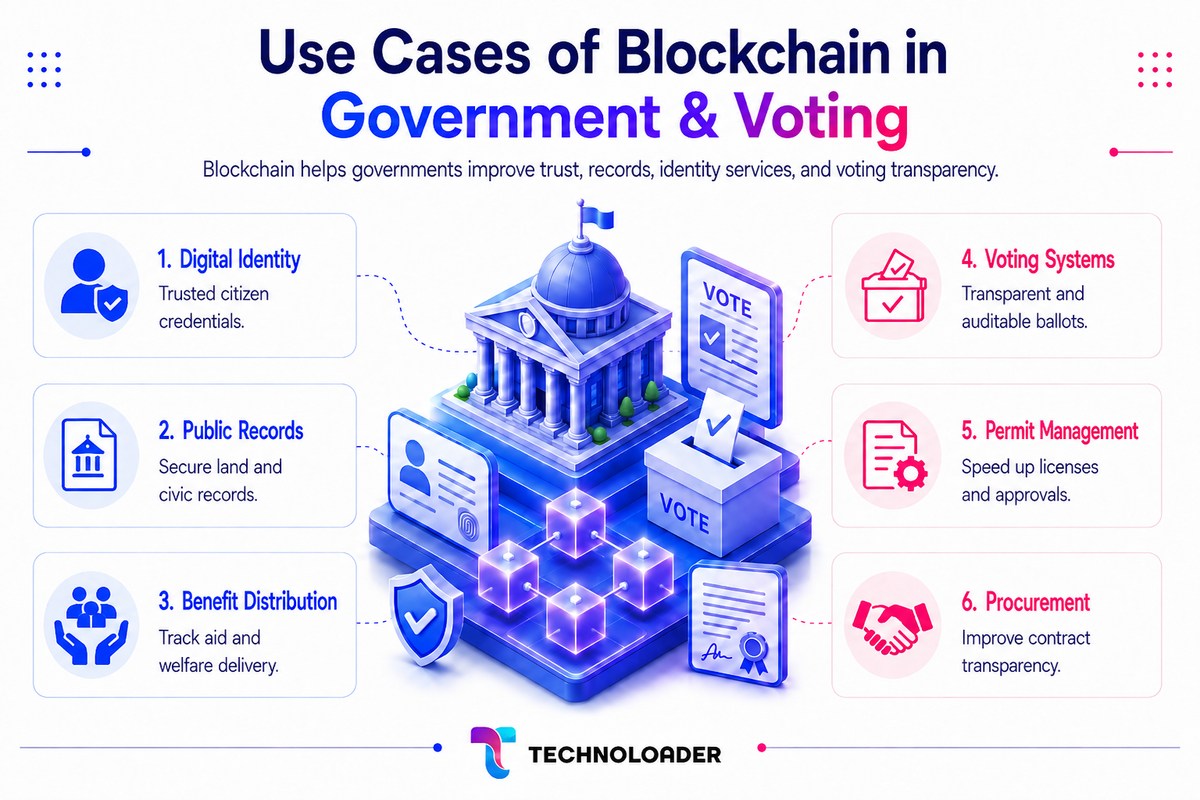 Voting needs a much more careful approach. Blockchain voting is still experimental, and researchers have found serious security issues in some systems. The Voatz app is one example that faced strong criticism from security researchers.
Strong voting systems don’t actually need blockchain, so this use case deserves caution rather than hype.
Also Read
7. Insurance
Insurance claims are often slow, costly, and open to disputes. That’s what makes it one of the common blockchain use cases.
Smart contracts can automate certain claim steps when agreed conditions are met. Parametric insurance is one example where a flight delay or storm can trigger an automatic payout.
A shared ledger can also give insurers and partners the same claims record. That makes duplicate claims easier to spot and harder to submit.
If you’re looking for more use cases of blockchain in insurance, here are some.
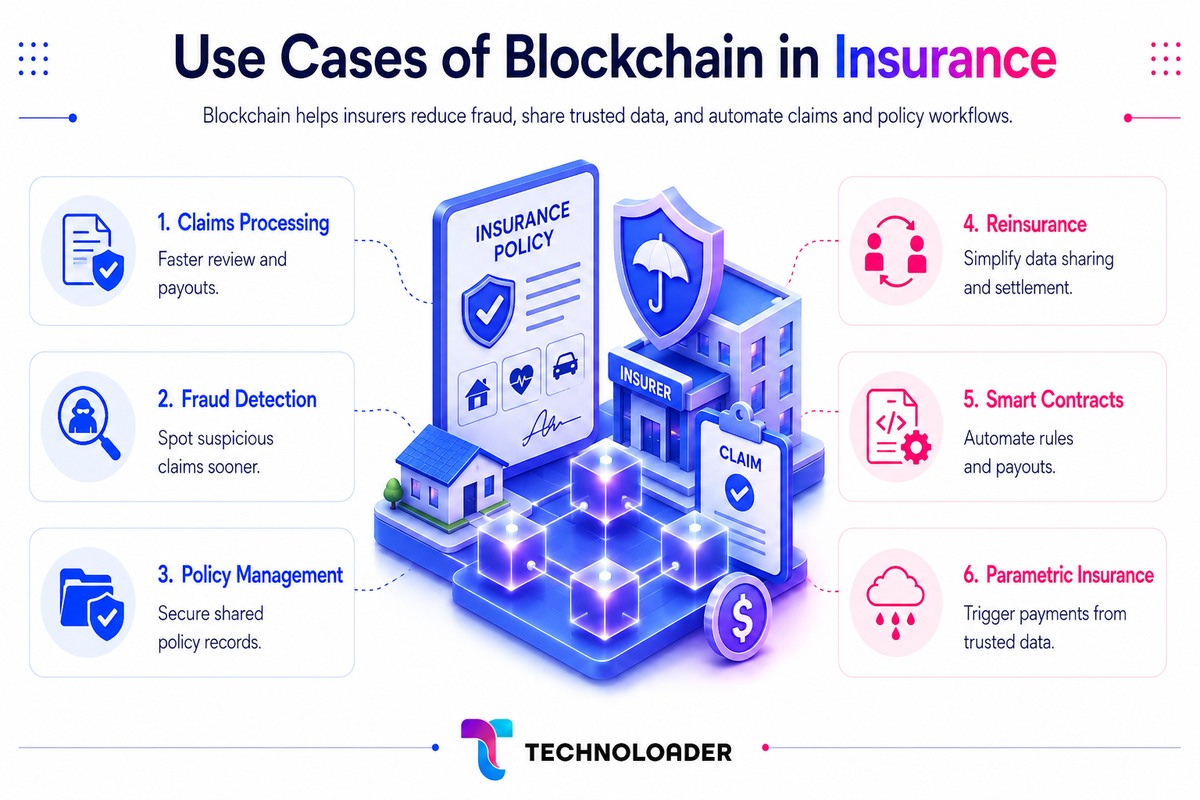
The sector is still testing these blockchain use cases. They can cut fraud and delays, but they don’t make either problem disappear.
8. Energy and Utilities
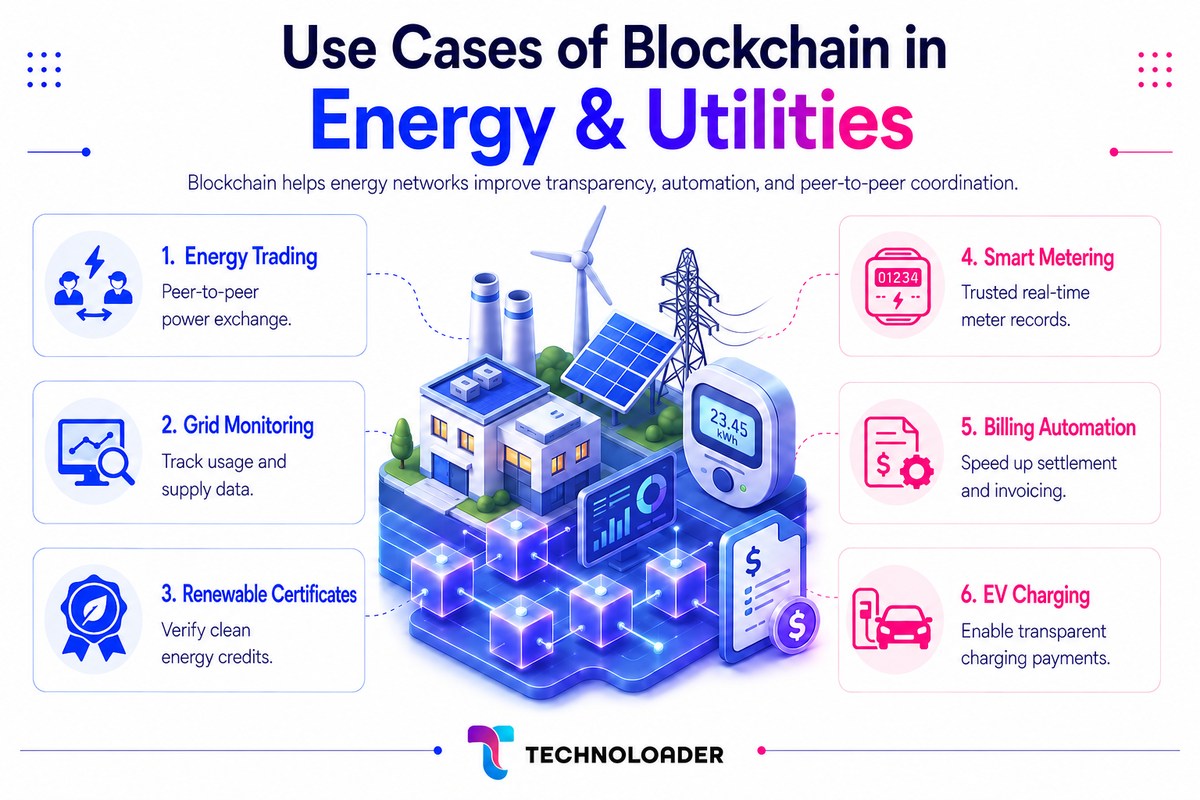
Energy markets are slowly moving toward peer-to-peer power trading. That’s one of the key blockchain use cases in this industry.
Neighbors can buy and sell rooftop solar power directly. Automated settlement handles payments without a central desk. Blockchain can also track renewable energy certificates across several parties.
Mordor Intelligence forecasts the blockchain energy market will grow from $3.46 billion in 2026 to $9.92 billion by 2031. Most projects are still pilots, shaped by local grid rules.
The image below shows some of the key blockchain use cases in this industry.
9. Retail and Consumer Goods
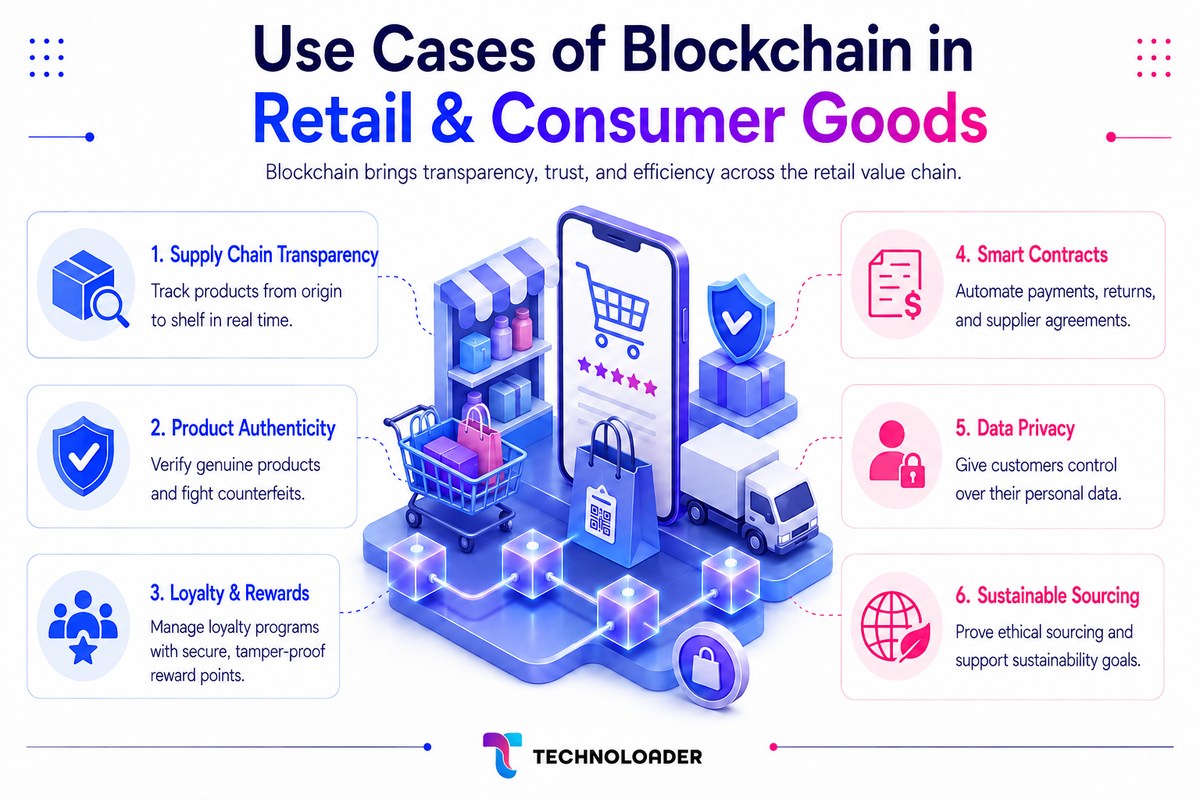
Blockchain use cases in retail include tracking products and checking where they came from. Shoppers increasingly want to know that products are genuine and made responsibly. A shared ledger can track a product from the factory to the store shelf.
Luxury and food brands can use this to fight counterfeits and back up product claims. Some also use shared ledgers for loyalty points, so rewards work across partner brands.
There are several blockchain use cases in retail, but they’re mostly in the pilot phase.
Also Read
10. Media and Advertising
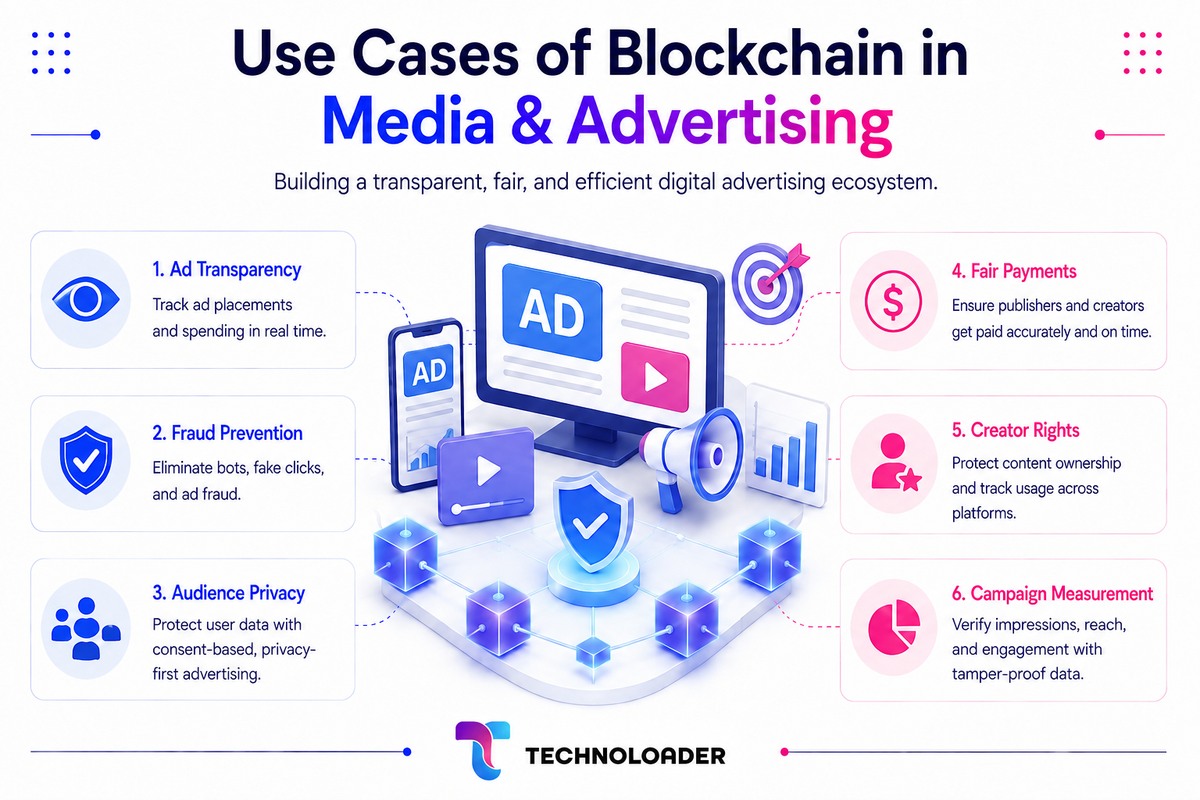
Blockchain use cases in media include royalty tracking and checking ad spending. Creators need to know who uses their work and when. Advertisers also need better ways to see where their money goes.
Blockchain can record rights and payments in a shared record. This can help creators get paid more directly and make ad fraud harder. Music and advertising pilots are leading the way.
Other potential blockchain use cases in this sector are shown in the image below.
11. Gaming and the Metaverse
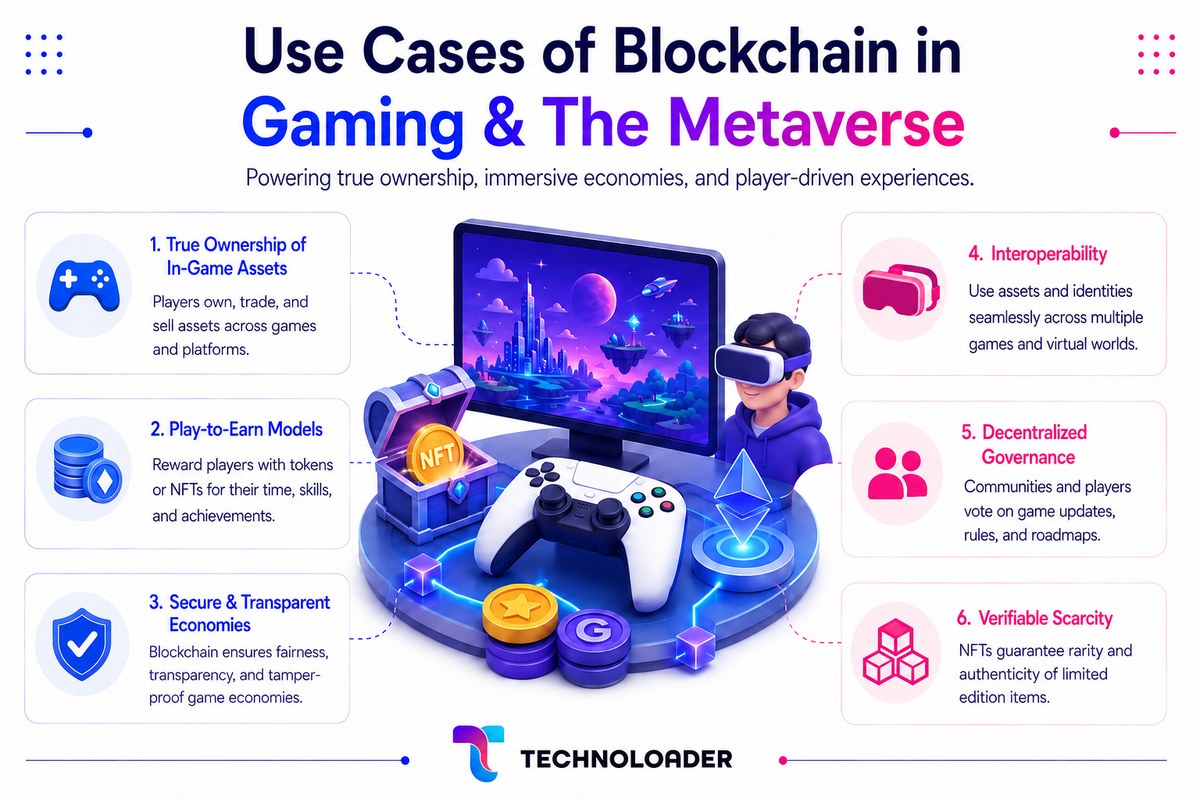
Gaming is one of the better-known blockchain use cases, thanks to in-game items that players can own. Players can hold these items as tokens and trade them or keep them. That sense of ownership is the main appeal.
There is one important catch. The token may be on-chain, while the artwork or item data stays off-chain. Play-to-earn games let players earn rewards, but those rewards can change and aren’t guaranteed.
In the games we’ve built at Technoloader, blockchain rewards work best as one part of the game.
Other blockchain use cases in gaming include:
12. Internet of Things (IoT)
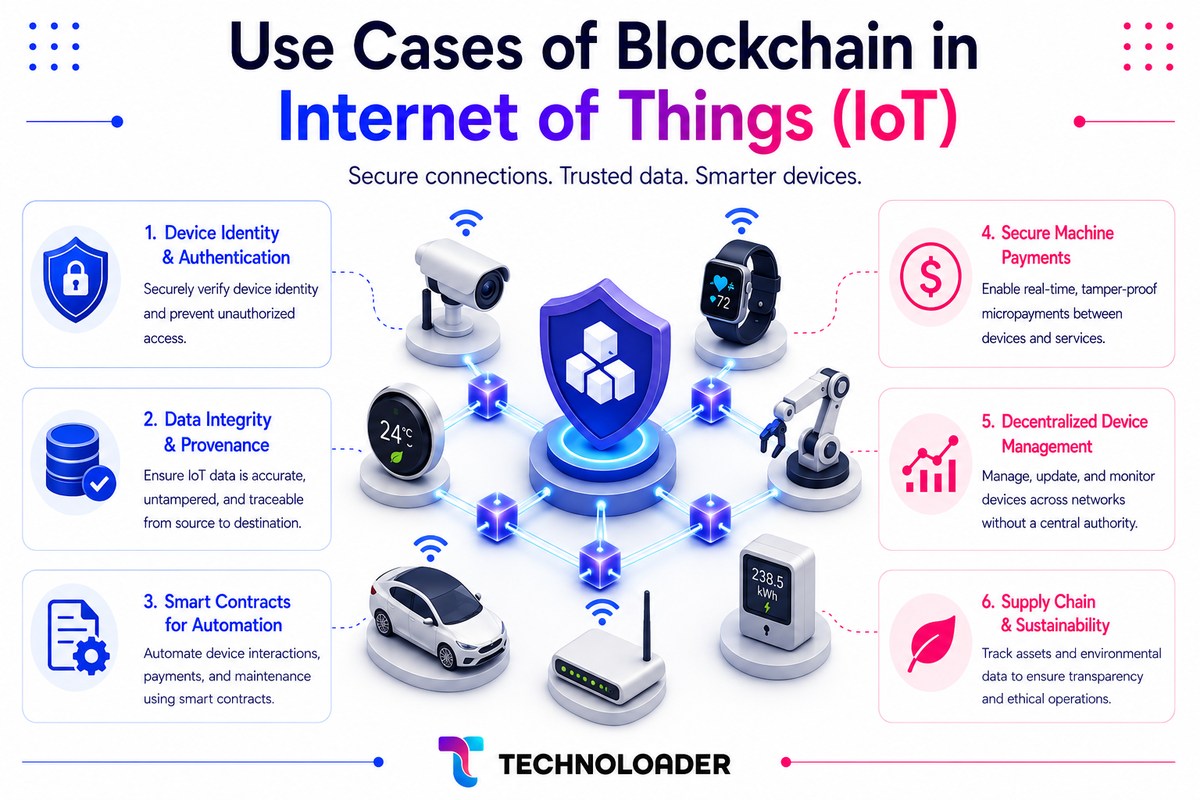
Device identity and machine-to-machine payments are two blockchain use cases in IoT.
Blockchain can give each device an identity and keep a secure activity record. It can also enable small payments between devices without a central controller.
Most work is still experimental. Device limits and blockchain costs are holding the technology back for now.
Still, there are many potential blockchain use cases in this area.
Also Read
13. Agriculture and Food
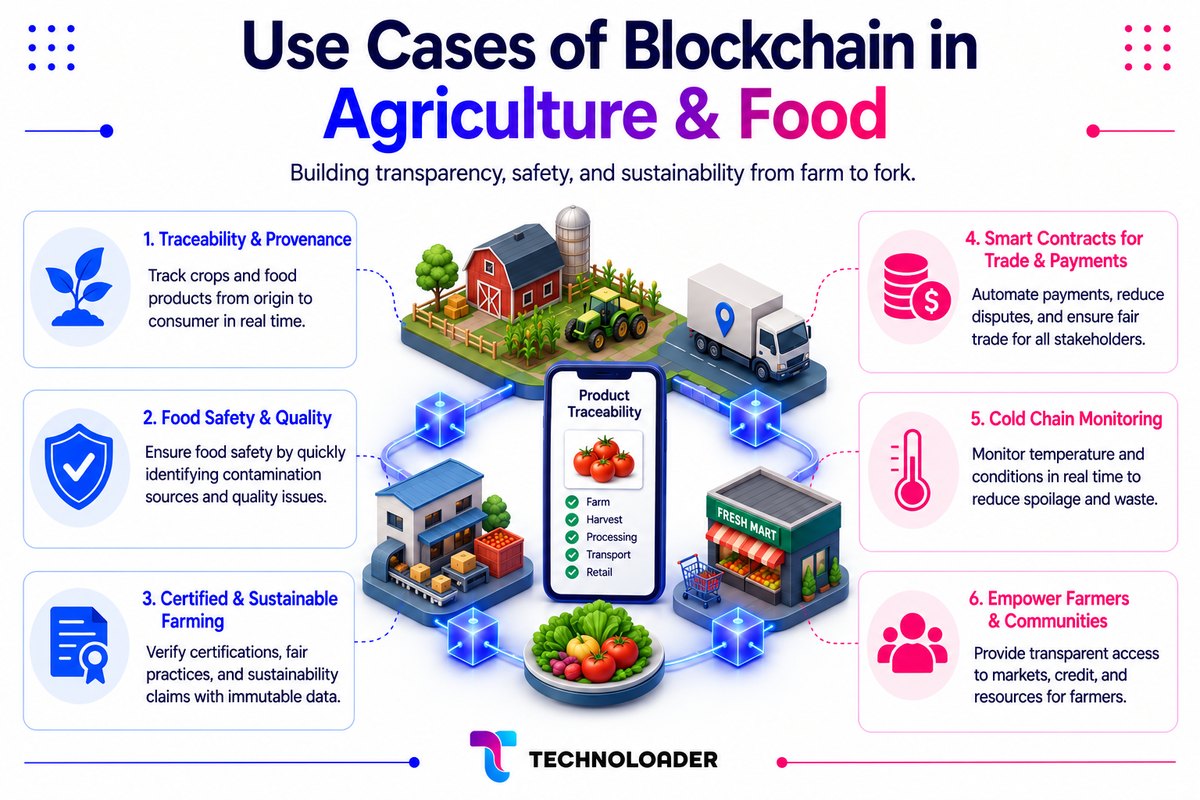
Food traceability is one of the main blockchain use cases in agriculture.
Blockchain records each handoff as produce moves from farm to shelf. This gives buyers a clearer record of where their food came from and how it moved. It can also help companies trace problems faster and speed up recalls.
Farmers can use the same records to prove compliance and seek financing. The basic process is similar to supply chain blockchain use cases.
Here are the potential and current blockchain use cases in this area.
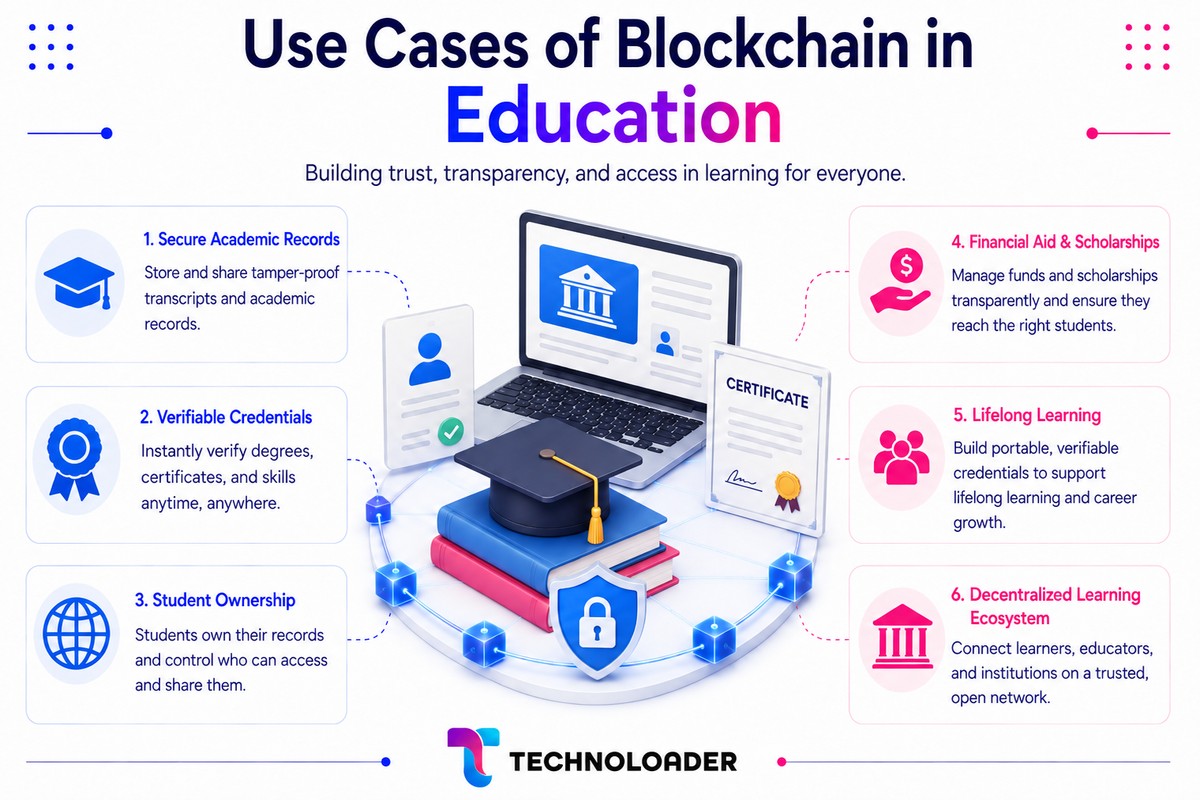
14. Education
Blockchain use cases in education include digital diplomas and verifiable credentials.
Fake degrees can make it hard for employers to check someone’s qualifications. Blockchain can create tamper-evident credentials that people can verify in seconds. Learners can keep their own records and share them when needed.
Several universities are testing blockchain-based diplomas and certificates. This can reduce the need for slow, manual verification.
The various blockchain use cases being tested in the field of education are:
15. Data and AI
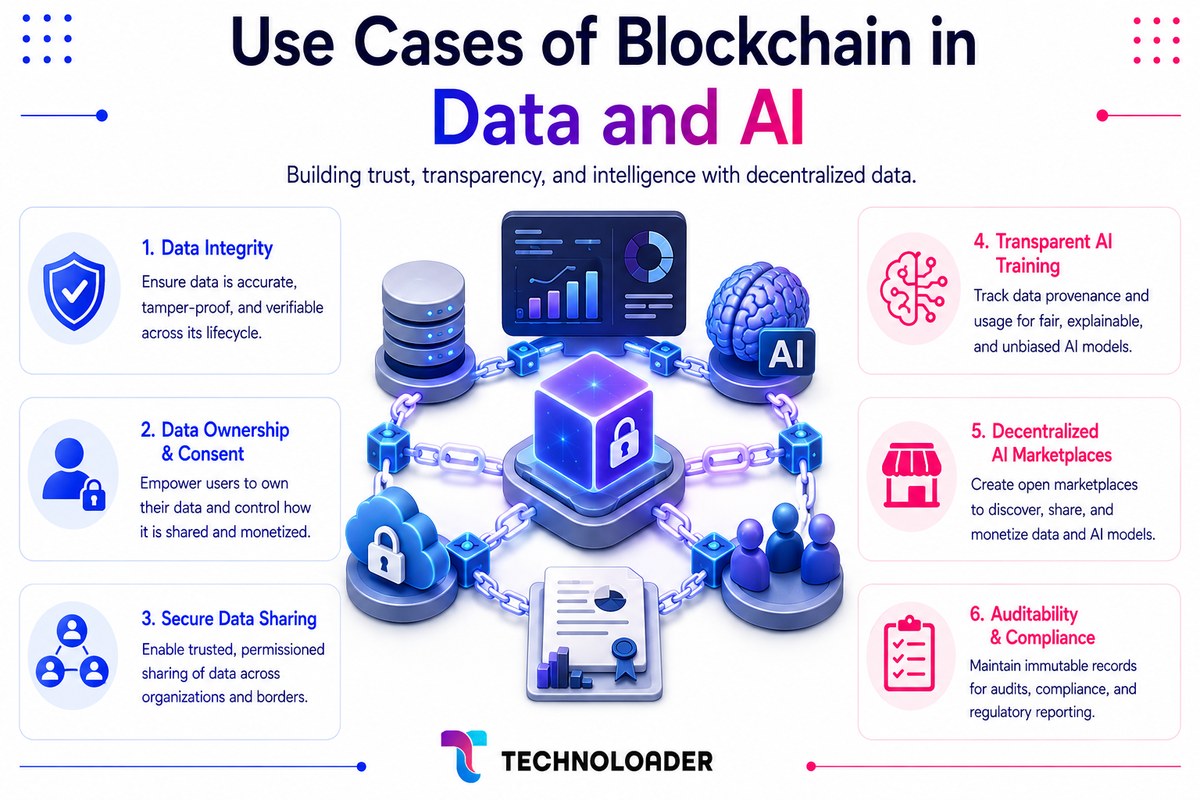
Key blockchain use cases in AI include data tracking and model records.
AI systems need reliable data, and teams need to know where that data came from. Blockchain can record where data came from and how a model was trained. This can make AI audits easier and improve accountability.
Blockchain can also support data marketplaces where buyers can check data sources. Interest is growing as more businesses start using AI.
The various blockchain use cases in this field are shown in the image below.
What Are the Most Common Blockchain Use Cases?
Finance and supply chain have some of the most established blockchain use cases today. Tokenization, digital identity, healthcare, insurance, and retail are also seeing real-world testing. IoT and AI have potential, but most blockchain use cases there are still experimental.
Also Read
How to Tell If Blockchain Fits Your Use Case
Blockchain fits when several parties need to share one record without trusting one party to control it. If one trusted company can manage the data more cheaply, use a normal database instead. A shared ledger makes sense when it solves a real trust problem.
That’s the first test I apply to a new project. One company using its own trusted data rarely needs blockchain. Shared control and frequent disputes are better signs that blockchain could help.
The table below makes the decision easier.
| Blockchain Is a Good Fit When… | Blockchain Is a Poor Fit When… |
|---|---|
| Multiple parties write to the same data | One company owns all the data |
| The parties do not fully trust each other | Everyone already trusts a central operator |
| A shared, tamper-evident history matters | Raw speed and low cost matter most |
| No lower-cost intermediary exists | A low-cost, trusted intermediary exists |
| Outsiders need to audit the records | The data is private and internal only |
You can also pick between public and permissioned rails here. Public chains suit open access and broad trust. Permissioned chains suit known partners who need privacy and control.
Still confused about how to choose the right blockchain and whether you even need it?
Use the five questions in the image below to make a decision.

When Should You Use Blockchain?
Blockchain fits when many distrusting parties must share one auditable record and no lower-cost option exists. If a single trusted owner controls the data, a normal database is the better choice.
Also Read
What Are the Challenges and Limitations of Blockchain?
The main blockchain challenges are speed, cost, privacy, regulation, data quality, and adoption. Public networks can be slow, while blockchain projects can take time and money to build. Privacy rules and changing laws add more limits.
These issues matter when deciding which blockchain use cases are worth pursuing.
These are the main issues you’ll need to consider.
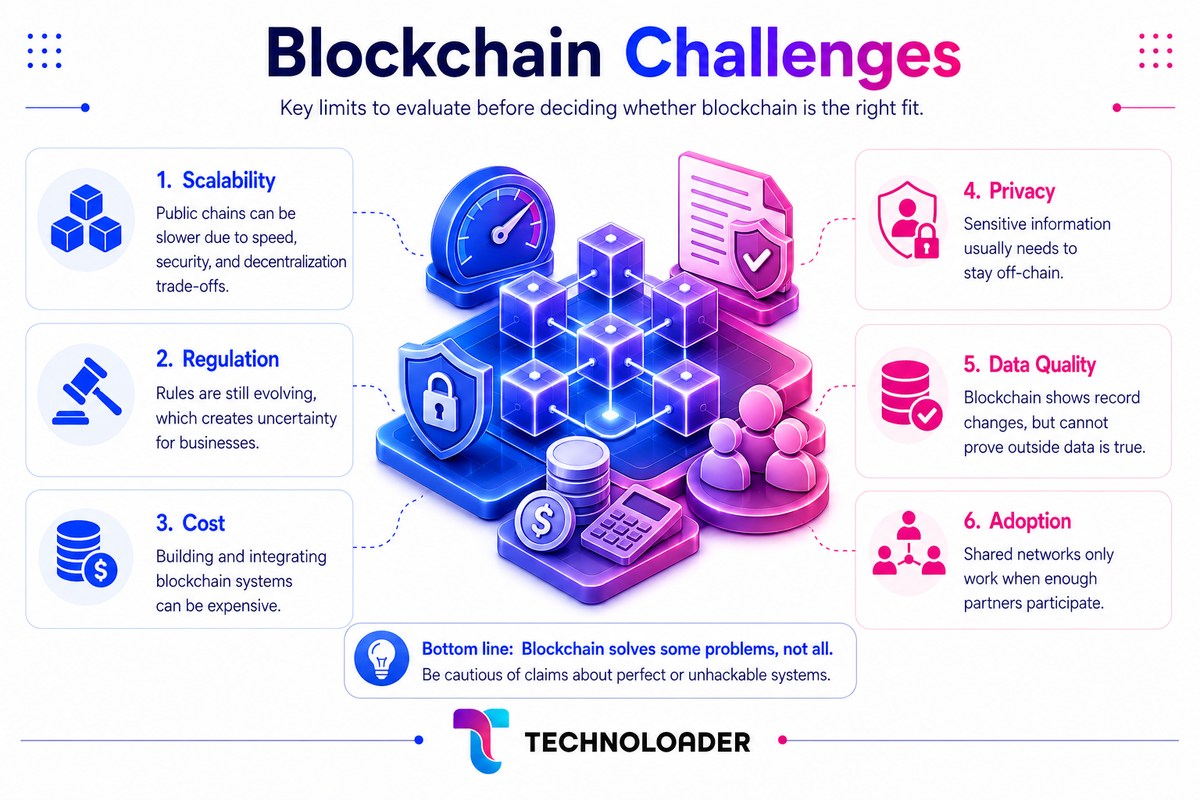
- Scalability: Public chains trade speed for decentralization and security. This trade-off is called the blockchain trilemma.
- Regulation: Rules are still forming. Europe’s MiCA framework and shifting US policy add real uncertainty. This is not legal advice, so consult counsel.
- Cost: Building and connecting blockchain systems takes time and money. The payoff has to justify it.
- Privacy: Public records can create privacy concerns. Sensitive information usually needs to stay off-chain.
- Data Quality: A ledger cannot verify that off-chain facts are true. It only proves the record was not changed.
- Adoption: Blockchain needs enough partners to make a shared network useful. TradeLens and we.trade show what happens when adoption falls short.
The bottom line is simple. Blockchain can solve some problems, but it won’t solve every problem. Treat claims about perfect or unhackable systems with caution.
What Are the Key Blockchain Challenges?
Blockchain faces challenges with speed, cost, privacy, regulation, data quality, and adoption. These issues can limit where blockchain makes sense and how well a project can work.
Also Read
How to Get Started With a Blockchain Project
A good blockchain project starts with a clear problem and a small test. First, check whether blockchain is the right fit. Then choose the network and tech stack, test your idea with real partners, and scale what works.
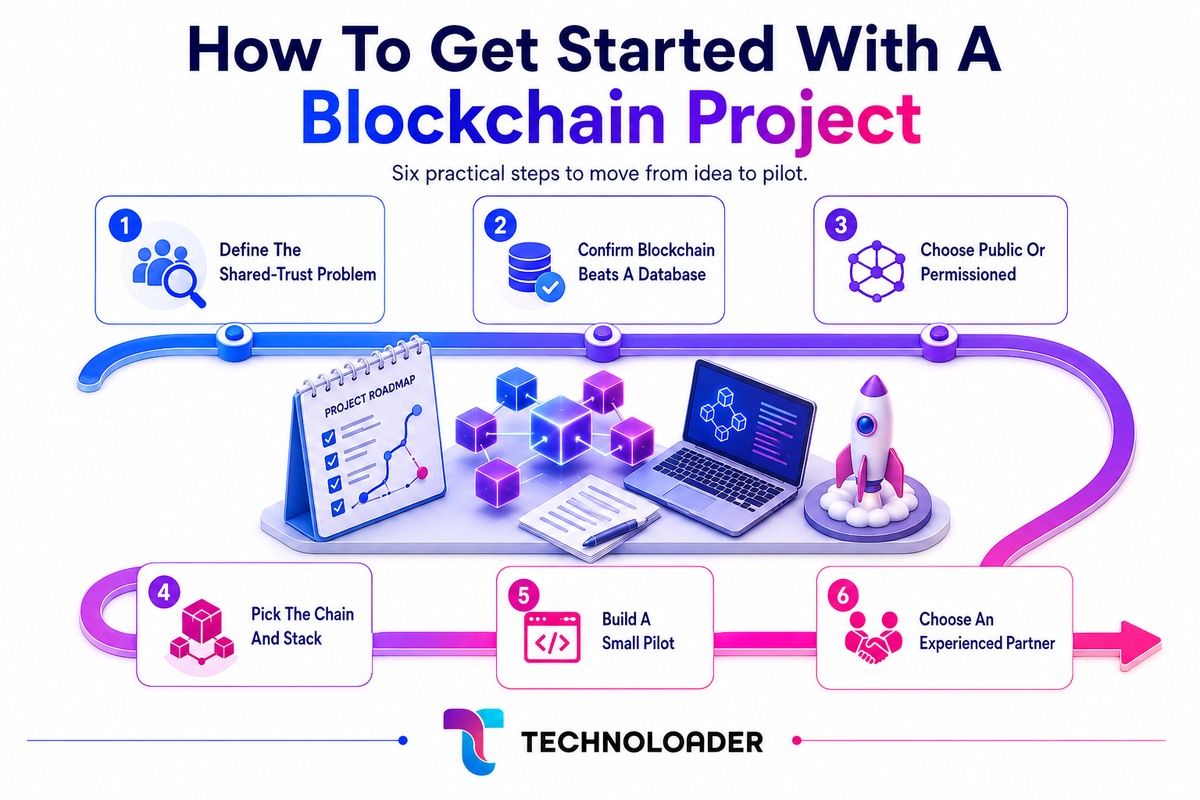
- Start with the problem instead of deciding on blockchain first.
- Check if blockchain makes sense by comparing it with a normal database.
- Choose public or permissioned based on who needs access and what data you’ll share.
- Pick the right chain and stack by weighing speed, cost, security, and layer 1 vs layer 2.
- Build a small pilot with real partners before spending more on the project.
- Choose a partner with experience so the pilot has a better chance of reaching production.
It’s also worth planning your budget before development starts. Our guide to blockchain development cost shows what can affect the final cost. Start small, see what works, then build from there.
Also Read
FAQ
1. What are the main blockchain use cases?
The main blockchain use cases are payments and settlement, supply-chain tracking, digital identity, tokenizing assets, and automating contracts. Finance and supply chain lead in real production. Healthcare, identity, energy, and many other sectors are still piloting their own blockchain applications.
2. Is blockchain only used for cryptocurrency?
No. Cryptocurrency was the first use, but it is far from the only one. Businesses now use blockchain for supply-chain tracking, tokenized assets, digital identity, and record keeping. Most enterprise projects have nothing to do with buying or selling coins.
3. What industries use blockchain the most today?
Finance and banking have the most blockchain systems in use today. Supply chain and logistics also have working examples, while several other industries are still testing blockchain use cases.
4. What problems does blockchain actually solve?
Blockchain can be useful when several parties keep their own records but need them to match. One shared record can reduce the work needed to compare everything later. It can also make a product’s history easier to follow and some fraud easier to spot.
5. What’s the difference between blockchain and a regular database?
A regular database has one party in charge of the records. Blockchain shares the record across several parties that may not trust each other. Databases are usually faster and cheaper. Blockchain makes more sense when those parties need one record they can all check.
6. When should a business not use blockchain?
Don’t use blockchain if one company already owns and controls the data. It also doesn’t make sense when you need the lowest cost and fastest performance. If a trusted third party can solve the same problem cheaply, use a regular database instead.
7. What are enterprise blockchain use cases?
Businesses can use permissioned blockchains when their partners need to share the same records. Common blockchain use cases include trade finance, cross-border settlement, supply chain tracking, and compliance. The business decides which partners can access the network.
8. Is blockchain actually secure?
Blockchain does a good job of making record changes easy to spot. But it can’t protect a system from every security problem. Lost keys, faulty smart contracts, and attacks on smaller networks can still cause damage. The way the system is built matters a lot.
Blockchain Use Cases: The Bottom Line
The best blockchain use cases solve a shared trust problem. Several parties need the same record, but no one wants one party controlling it. If one company already owns and manages the data, a database is often the better choice.
Finance and supply chain are further ahead than most industries in adopting blockchain use cases. Identity, healthcare, real estate, and others are still testing what works.
If you are weighing a project, map your idea to the right use case first. Our team has built blockchain development solutions across exchanges, wallets, and DeFi platforms. Tell us your use case, and we will give you an honest read. Get in touch for a free consultation.

Vipin Kumar
Vipin Kumar is the Founder & CEO of Technoloader, a Clutch Top 10 Blockchain Development Company for 2025. A serial technology entrepreneur and blockchain architect with a B.Tech background, Vipin has led the delivery of 450+ projects across DeFi, NFT marketplaces, AI/ML, and custom Web3 platforms for clients in the UAE, India, the US, and beyond. He also founded SALIQ (saliq.ai), an AI-driven conversational marketing platform.
Published in Blockchain Development