+91 7014607737
 info@technoloader.com





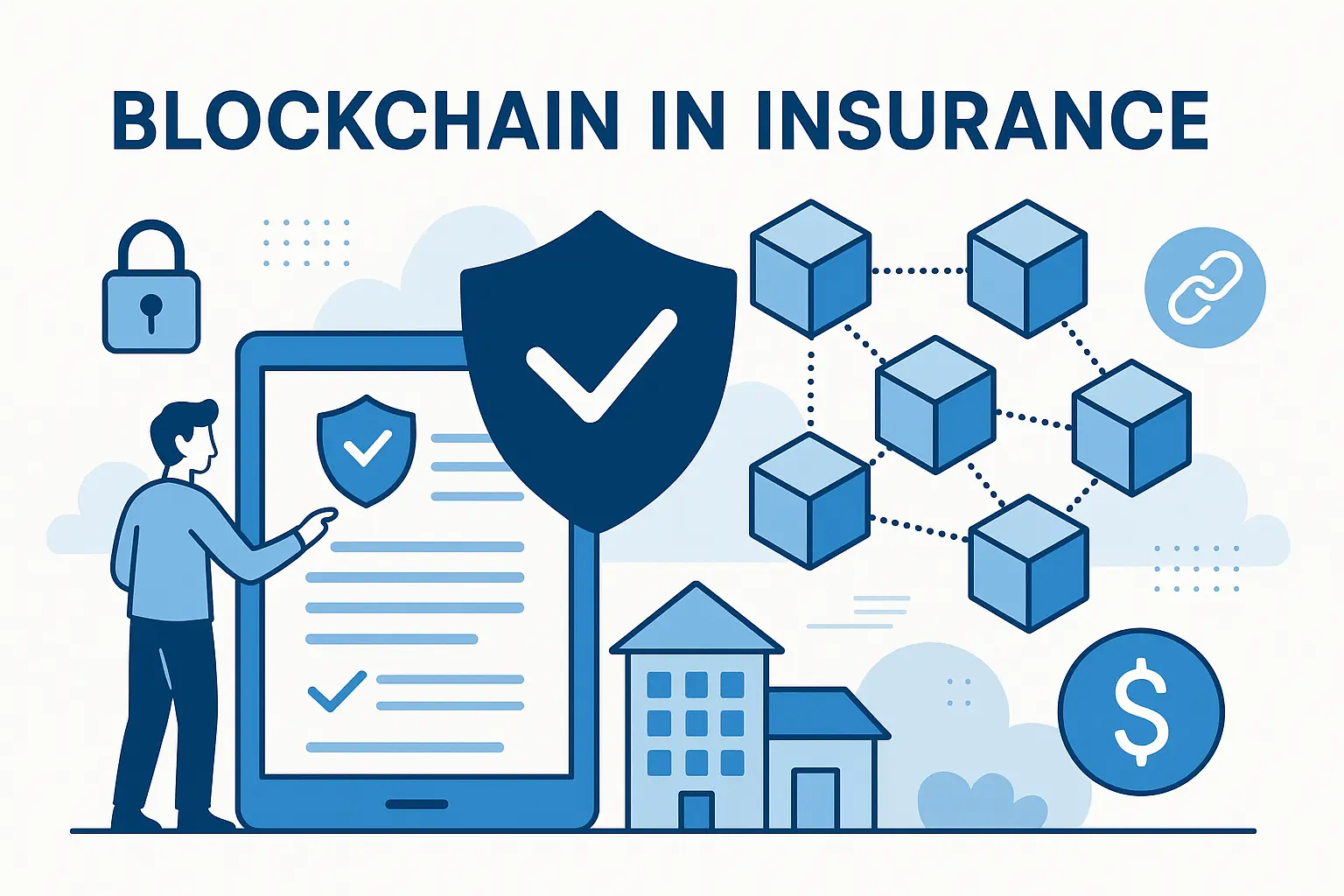
Table of Contents
Quick Summary
Blockchain in insurance creates a secure digital record of policies, claims, and payments. It helps insurers share trusted data, speed up claims, and reduce errors. It also improves transparency between insurers, reinsurers, brokers, and customers. This guide explains how blockchain in insurance works and its use cases. You’ll also discover real-world examples, benefits, possible risks, and how to build your own solution.
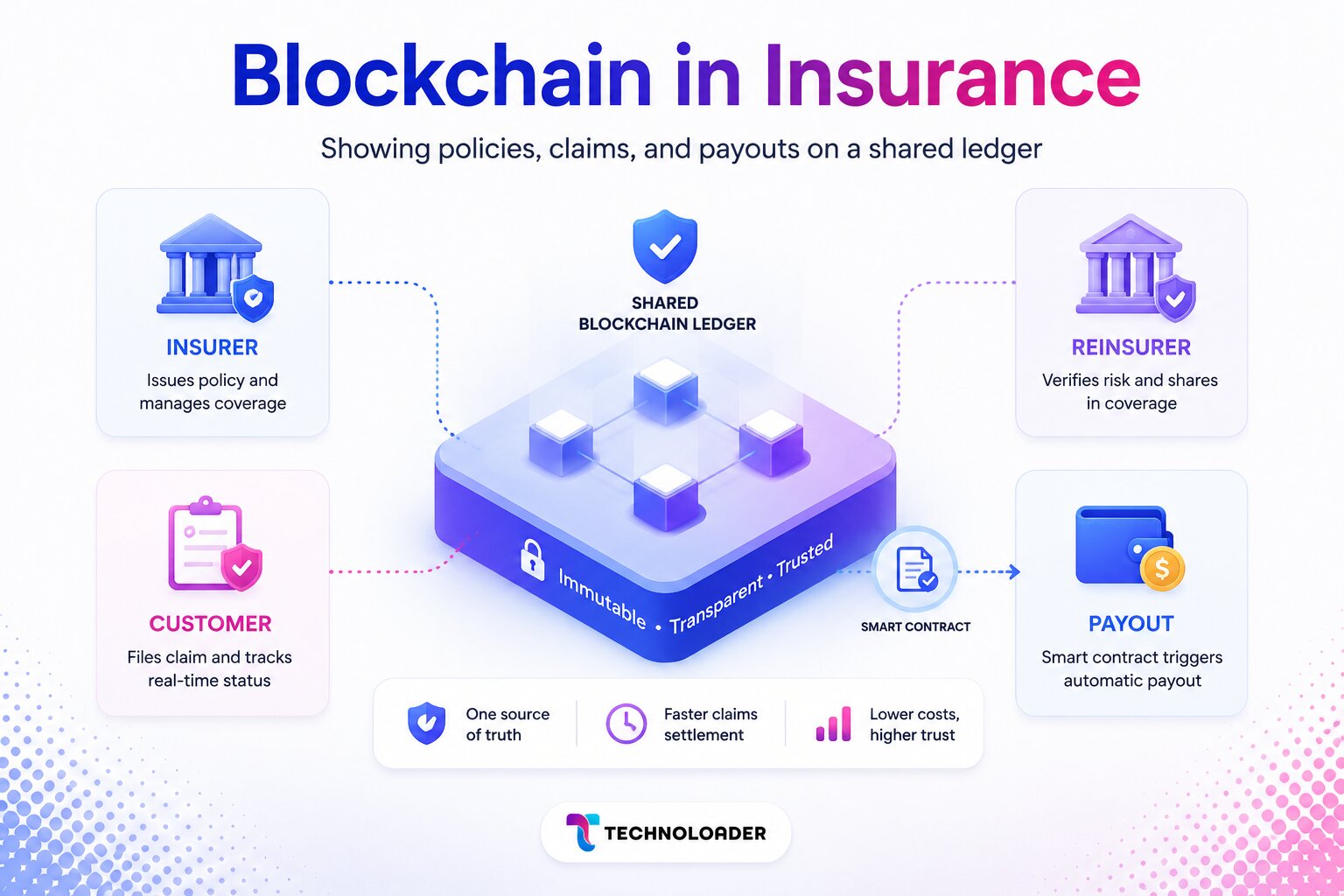
Blockchain in insurance uses a shared, secure ledger to track policies, claims, and payments. It also uses smart contracts. These are self-running programs that process claims and send payouts when set rules are met. This technology helps you settle claims faster, cut admin costs, and reduce fraud.
Many insurance teams still rely on paperwork and manual checks. Claims often take weeks to complete. Disputes can last even longer. These delays raise costs and open doors to fraud.
The FBI proves this. It estimates that non-health insurance fraud costs over $40 billion every year in the United States. Blockchain cannot stop every fraud attempt, but it closes many gaps.
In this guide, you’ll learn how blockchain in insurance works. You’ll discover its use cases and real examples. We’ll also cover its benefits, risks, and steps to build your own solution. Having built these systems myself, I know what actually works.
Key Takeaway
- Blockchain in insurance stores policies, claims, and payments on one shared, tamper-evident ledger
- Smart contracts settle valid claims automatically, cutting weeks of manual review down to minutes
- Parametric insurance, fraud prevention, and reinsurance data sharing deliver the clearest returns today
- Personal data stays off-chain, with only a secure reference stored on the ledger
- Most early projects failed on governance and business alignment, not on the technology itself
Table of Contents
- What Is Blockchain in Insurance?
- What Are the Key Use Cases of Blockchain in Insurance?
- What Are the Key Benefits of Blockchain in Insurance?
- What Are the Different Types of Blockchain Networks Insurers Use?
- What Are Some Real-World Examples of Blockchain in Insurance?
- Blockchain Insurance Market Size and Adoption
- What Are the Main Challenges, Risks, and Regulatory Considerations?
- How Do You Build a Blockchain Insurance Solution?
- What Is the Future of Blockchain in Insurance?
- FAQs
What Is Blockchain in Insurance?
Blockchain in insurance uses a secure digital ledger to record, verify, and share insurance data. These records include policies, claims, payments, and their full history. Every approved party can view the same information almost in real time.
Today, many insurers still keep records in separate systems. Each company stores its own data, and the records often don’t match. Checking and updating them manually takes time and money. A shared ledger removes much of this extra work.
How Blockchain Works in Insurance
Blockchain technology stores information across many computers, called nodes. Each new transaction joins the chain after the network verifies it.
After the network confirms a transaction, changing it becomes very difficult. That’s why we call the records tamper-evident and tamper-resistant instead of unhackable.
Smart contracts bring automation to the process. A smart contract is a program that runs automatically once set conditions happen. It can compare a claim against the policy and release a payment automatically.
Even so, blockchain doesn’t store sensitive information. Instead, it keeps a tamper-resistant record or a link to the data. Policy documents and personal details remain off the chain. This protects private, confidential info from reaching the public.
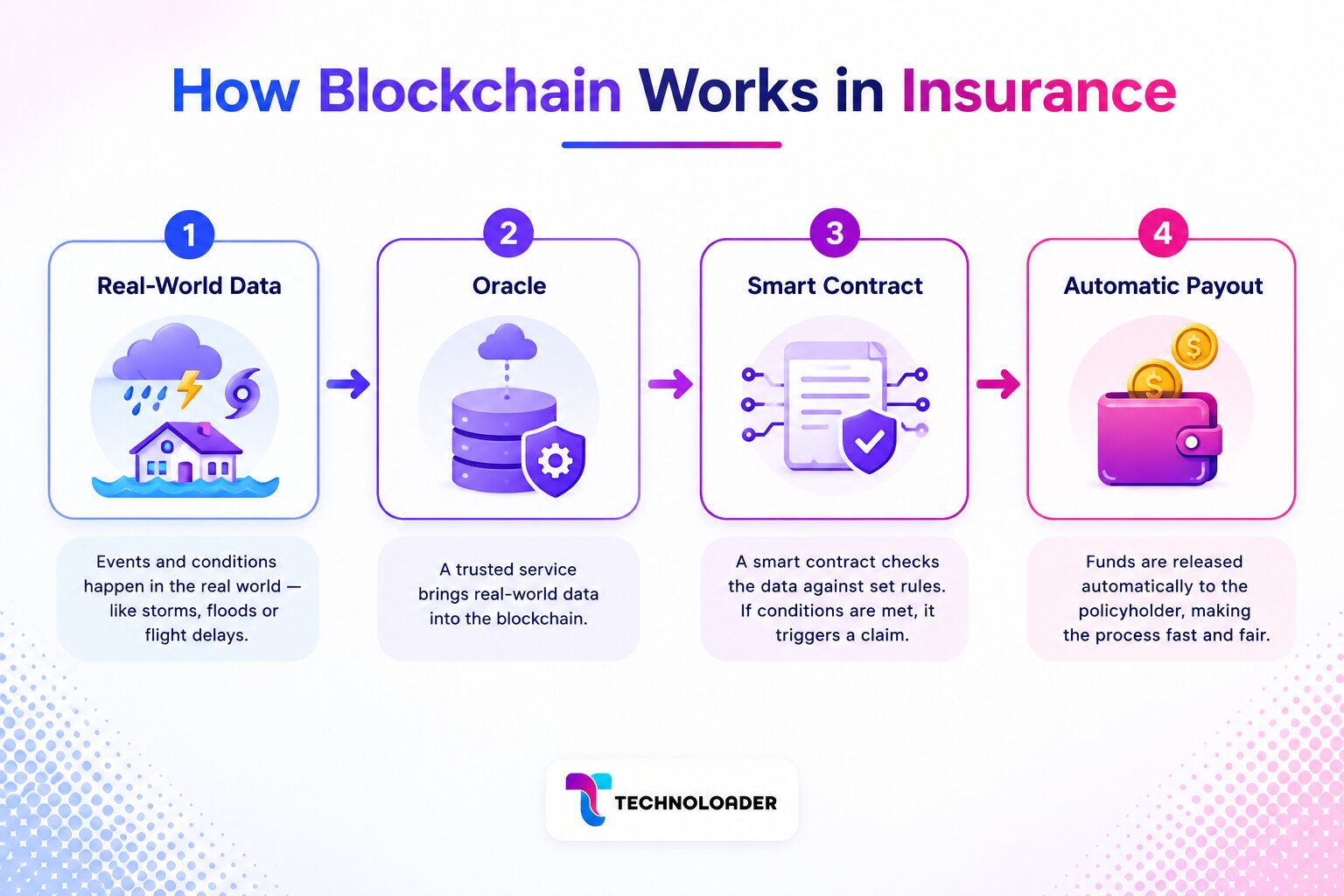
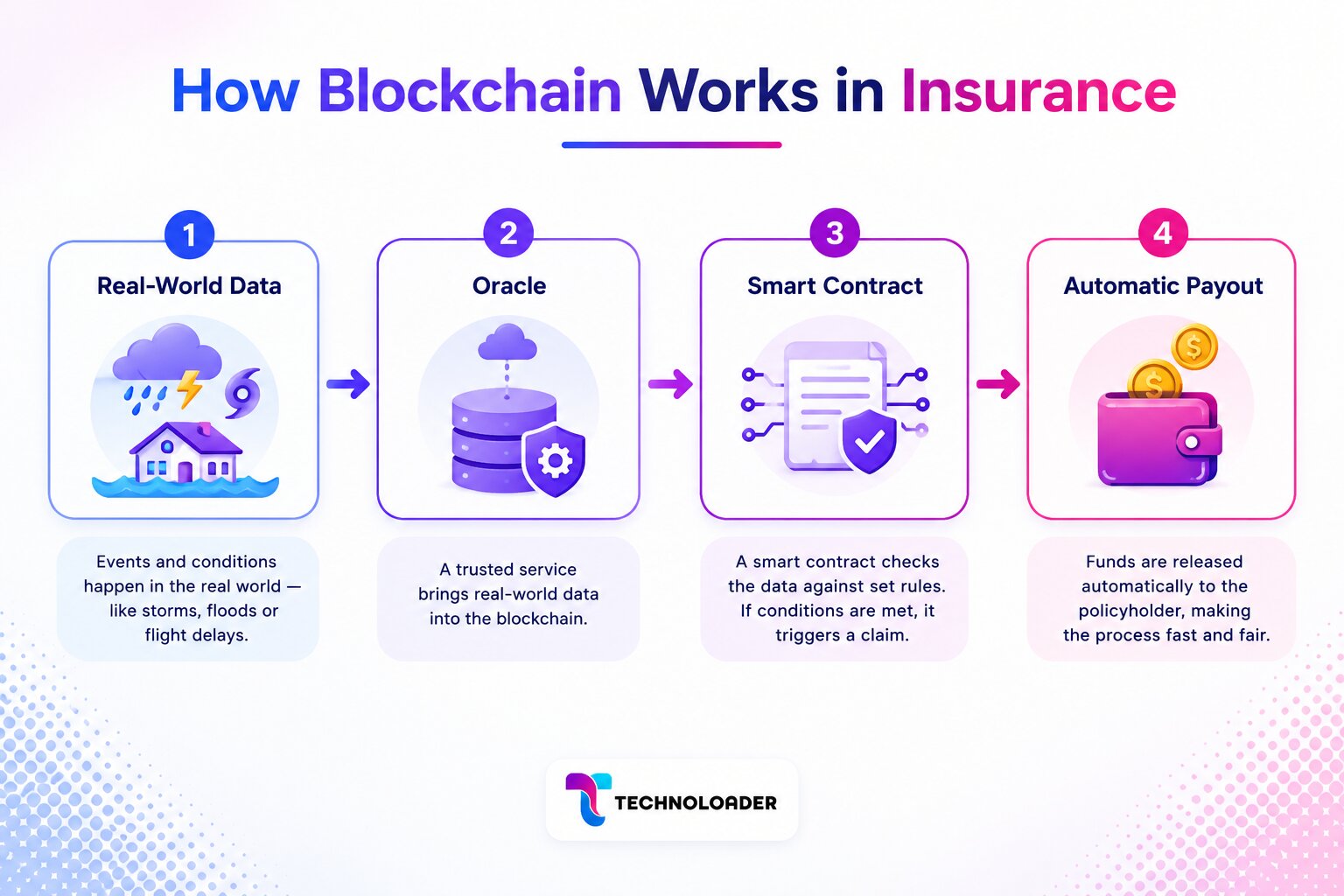
Many smart contractsalso need outside information like weather reports or flight updates. They receive this information through an oracle. An oracle is a trusted service that brings real-world data into the blockchain. It plays a key role in parametric insurance, which you’ll see later in this guide.
Blockchain vs. Traditional Insurance Process
Most traditional insurance systems depend on manual checks and separate databases. Blockchain in insurance brings everyone onto one shared, trusted record.
Comparing each approach side by side will help you see the difference clearly:
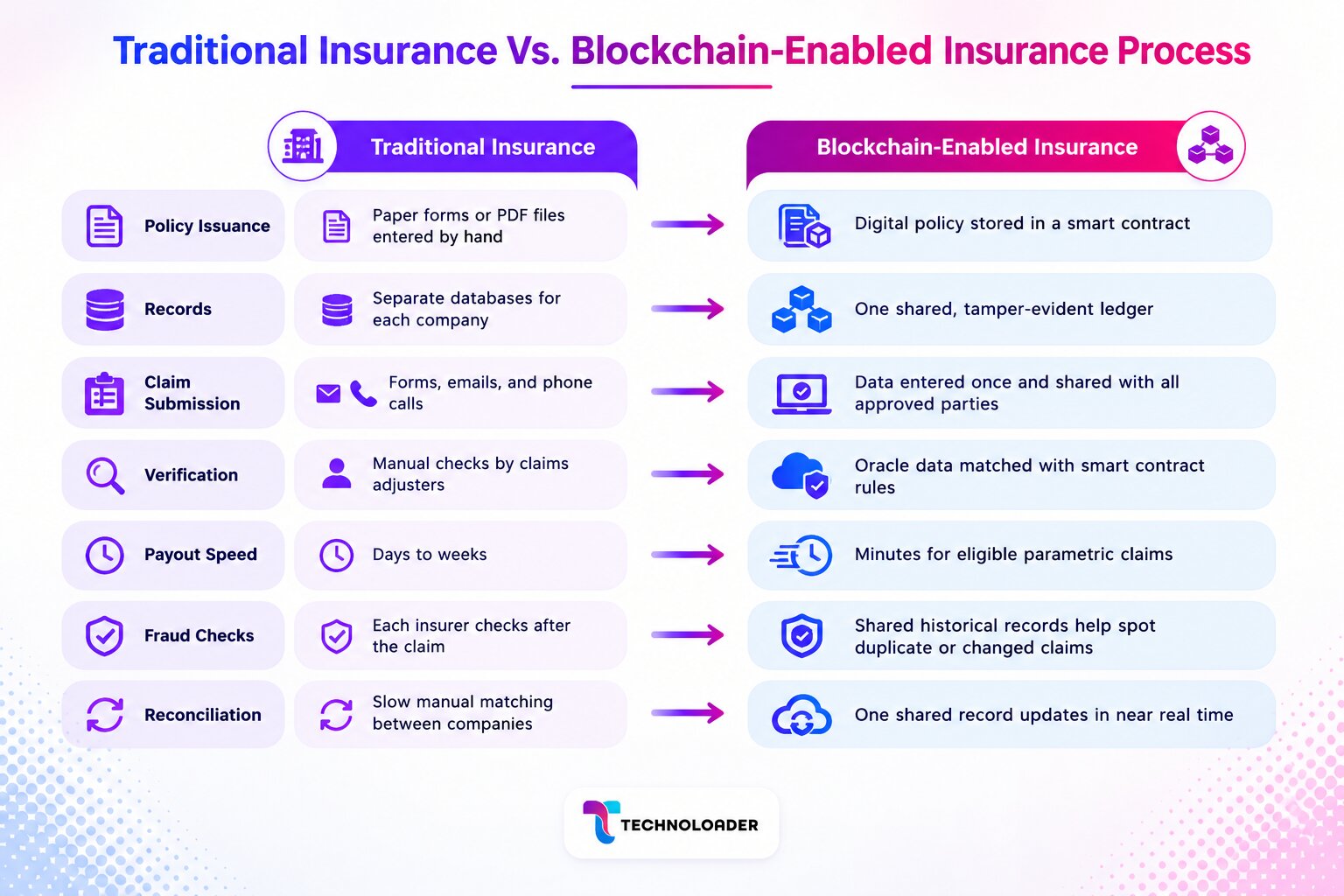
| Process Step | Traditional Way | Blockchain-Enabled Way |
|---|---|---|
| Policy Issuance | Paper forms or PDF files entered by hand | Digital policy stored in a smart contract |
| Records | Separate databases for each company | One shared, tamper-evident ledger |
| Claim Submission | Forms, emails, and phone calls | Data entered once and shared with all approved parties |
| Verification | Manual checks by claims adjusters | Oracle data matched with smart contract rules |
| Payout Speed | Days to weeks | Minutes for eligible parametric claims |
| Fraud Checks | Each insurer checks after the claim | Shared historical records help spot duplicate or changed claims |
| Reconciliation | Slow manual matching between companies | One shared record updates in near real time |
What Is Blockchain in Insurance?
Blockchain in insurance gives you a shared, tamper-resistant digital ledger to store data. Smart contracts then handle policy tasks and claims automatically. This reduces manual work, speeds up processing, and helps prevent disputes.
Also Read
What Are the Key Use Cases of Blockchain in Insurance?
The best blockchain in insurance use cases share one simple goal. They remove slow, manual steps across insurance teams. Automated claims, instant payouts, fraud checks, and shared reinsurance records lead the way.
Here are the top blockchain applications I’ve seen making a real difference:
| Use Case | How Blockchain Helps | Live Example |
|---|---|---|
| Claims Automation | Smart contracts verify conditions and make valid payments automatically | Etherisc uses smart contracts to automate parts of the claims process |
| Parametric Insurance | Pays claims instantly after oracle data verifies an event | Lemonade Crypto Climate Coalition uses weather data like rainfall or crop performance |
| Fraud Prevention | Shared records expose duplicate or changed claims | Allianz Insurance’s Incognito machine-learning tool analyses data and flags suspicious claims |
| Reinsurance | Lets insurers and reinsurers share real-time records and live capital | OnRe (formerly Nayms) connects insurers and capital providers using blockchain technology |
| Regulatory Reporting | Builds a clear, shared audit trail | openIDS provides blockchain-based regulatory reporting for the insurance industry |
| Claims Data Exchange | Allows approved organisations to swap claim information securely | RiskStream’s RAPID X allows approved insurance carriers to swap claims data securely |
Claims Automation With Smart Contracts
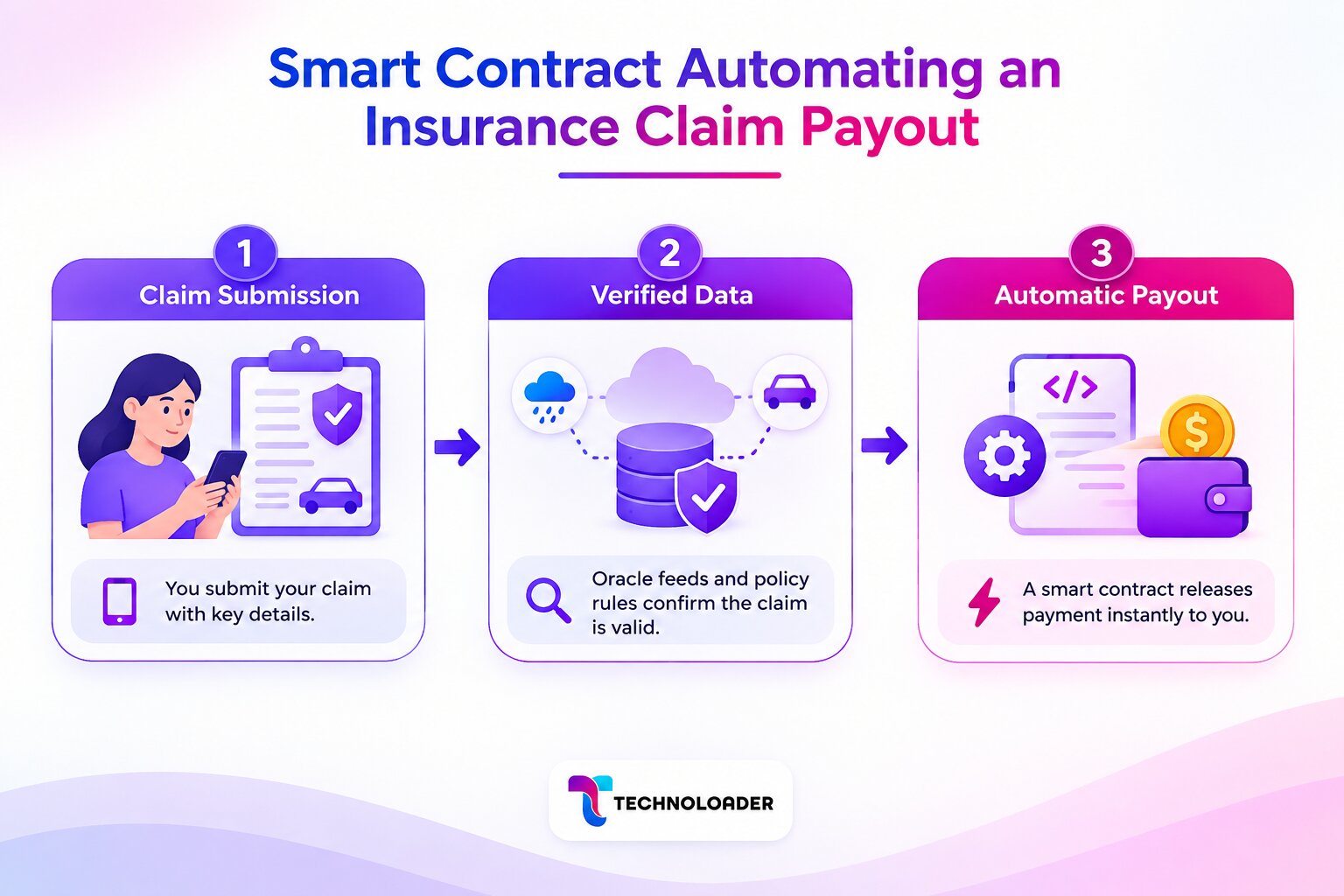
Smart contracts can settle a valid claim the moment your data checks out. The policy rules live directly inside code. That means a qualifying claim moves forward without manual review. This is one of the most valuable smart contract use cases in insurance.
Automation cuts costs and delays for routine claims. It also reduces disputes that come from unclear rules. Every claim follows the same process every time.
Parametric Insurance
Traditional insurance requires a full damage assessment. Parametric insurance works differently. You don’t need loss evaluation or proof-of-loss paperwork.
It pays a fixed amount when a measured event reaches a set limit. This could be low rainfall or a flight delayed by over two hours. Another example is an earthquake above a certain magnitude.
Blockchain in insurance offers many benefits here. An oracle sends trusted data to a smart contract. The contract then releases payment on its own. Your customer receives funds in minutes instead of waiting for weeks. That speed matters after a major disaster.
Fraud Prevention and Detection
Blockchain in insurance reduces some types of fraud, though it cannot stop every case. A shared ledger stops people from filing the same claim> with two companies. It also shows edited papers and altered histories.
Every update receives a timestamp and stays visible to approved users. That shared history builds trust between everyone involved.
Insurance fraud costs companies and honest customers billions every year. Allianz UK found over 15,800 instances of insurance fraud in the first half of 2025. These cases amounted to £92.6M ($106.8M), a 34% increasefrom 2024.
While blockchain in insurance doesn’t completely remove fraud, it makes dishonest activity harder to hide.
Reinsurance and Risk Sharing
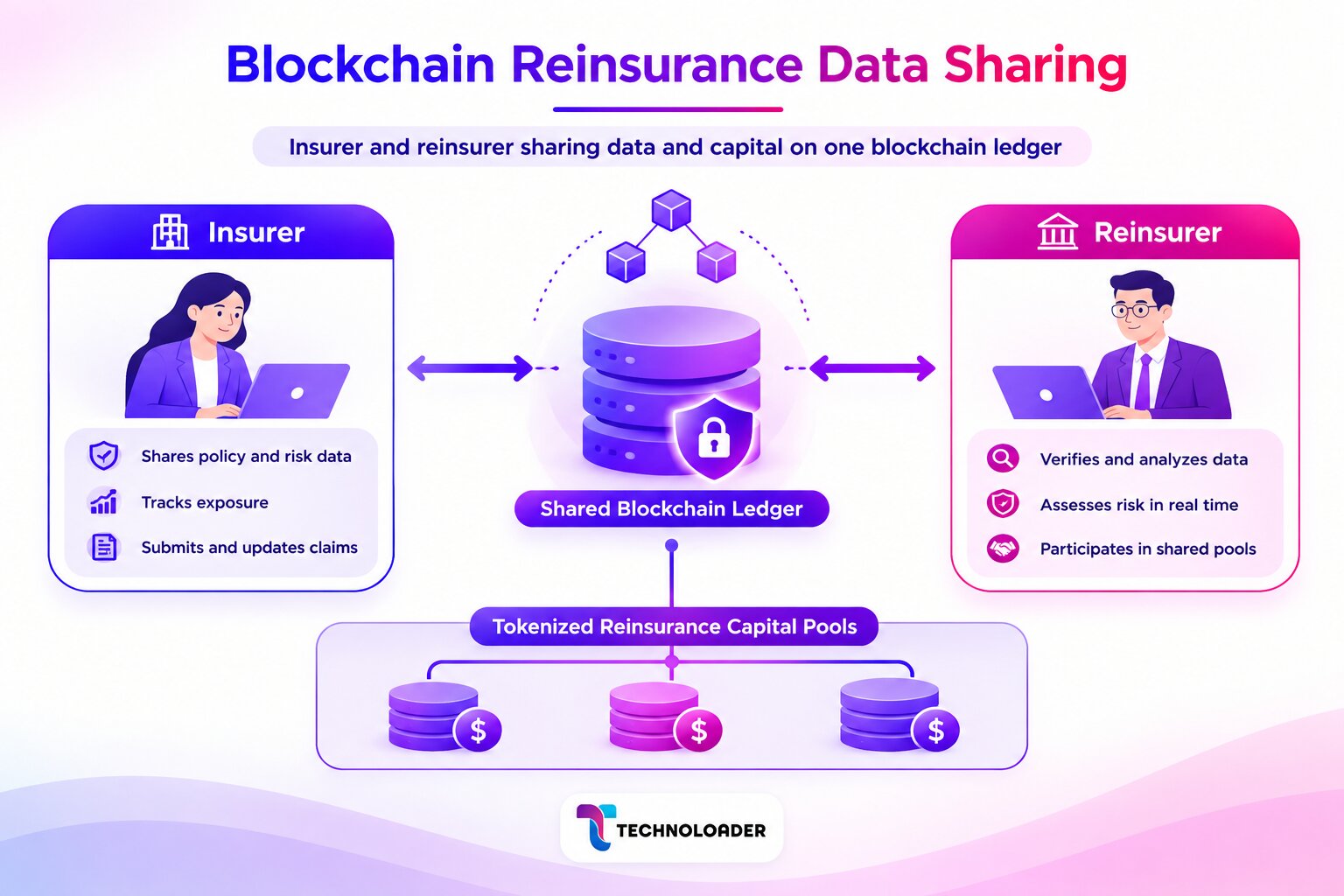
Reinsurance depends on data shared across many companies. In most cases, those records don’t match. A shared ledger gives insurers and reinsurers one trusted source of information. This reduces reconciliation work and speeds up settlements.
Some blockchain for insurance systems go even further. They bring capital onto the chain. Tokenized reinsurance pools let participants fund and track capital in real time. Nayms is one of the first regulated examples of this approach. We’ll cover it in more detail below.
Health and Life Insurance
You can use a blockchain solution for health insurance too. First, a smart contract checks your medical treatment against your policy. If it fits your plan, it sends out the payment fast.
Insurers and healthcare providers share the same record. Private medical data stays off the chain, leaving only a secure link on the ledger.
Life insurance can use the same approach for claims that use verifiable records. This reduces manual checks and improves data quality between all parties.
Auto and Usage-Based Insurance
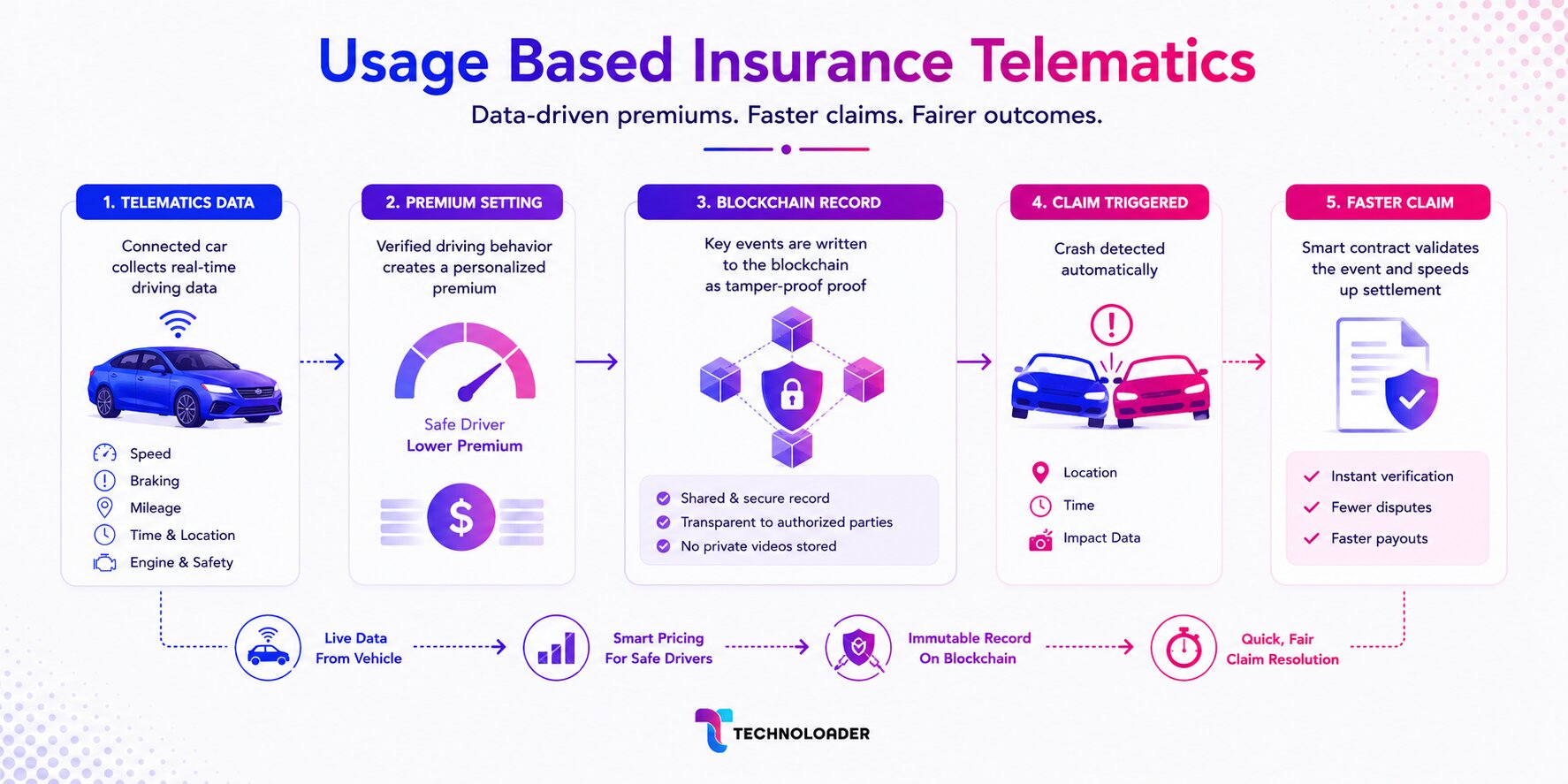
Auto policies can collect live datafrom telematics devices and car sensors. That information supports pricing for safe drivers. It also speeds up claims right after a crash. With a shared, secure record of the event, insurers can make quicker, fairer decisions.
Usage-based policies work the same way. Insurance companies use verified driving habits to figure out your premium. Since everyone can see the same shared information, there are fewer disagreements. Plus, the blockchain only stores proof of the event, never your customers’ private videos.
Peer-to-Peer, Microinsurance, and Digital Identity
In peer-to-peer setups, small groups of people pool their cash and handle claims together. Blockchain in insurance makes every single payment clear and simple to double-check.
Microinsurance uses the same method to offer affordable coverage to more people.
Digital identity links all these systems. Verifiable credentials help you prove a policy or claim without relying on one central database. This helps customers sign up faster. It also supports stronger blockchain compliance checks across the insurance industry.
Where Does Blockchain in Insurance Create the Most Value?
Blockchain in insurance helps you automate claims, prevent fraud, and speed up reinsurance. Other use cases include regulatory reporting, parametric, health, auto, and peer-to-peer insurance. These applications create a faster, cheaper, and more trustworthy process for everyone involved.
Also Read
What Are the Key Benefits of Blockchain in Insurance?
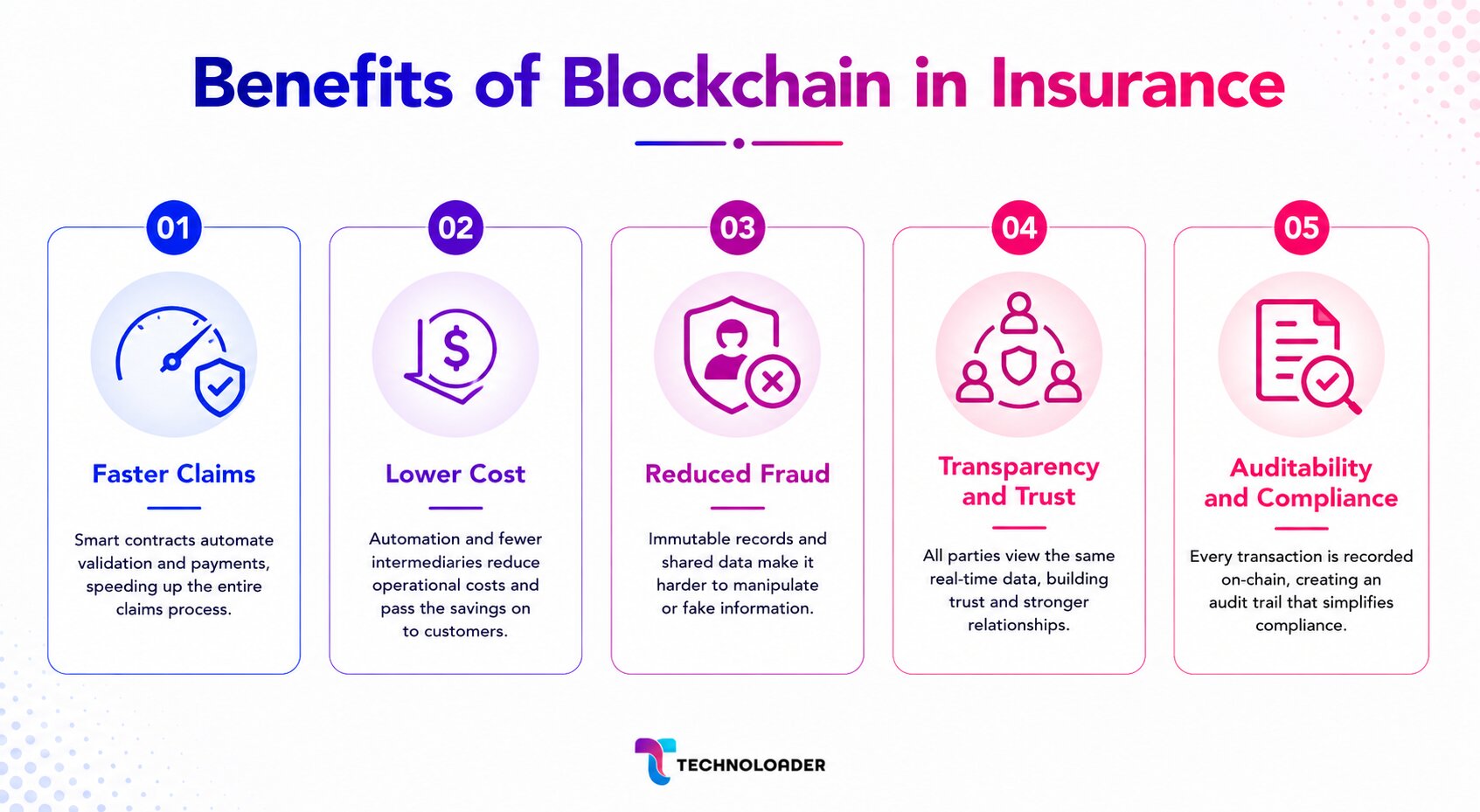
Blockchain in insurance speeds up claims, cuts costs, and lowers fraud. It also improves transparency and strengthens compliance. Insurance teams can use it to solve real problems and improve customer experience.
Here are the main benefits of blockchain technology for insurance companies:
Faster, Automated Claims
Claims often move slowly because teams verify documents by hand. That takes time and creates delays.
Blockchain in insurance speeds up this process with smart contracts. Unlike traditional contracts, smart contracts process valid claims in minutes instead of weeks. Customers get their payouts faster, and your team can spend time on more complex cases.
Lower Administrative Cost
Insurance companies spend hours typing data, checking records, and fixing errors. These slow tasks push up operating costs quickly. AutoRek’s 2026 insurance report confirms this. It found that insurance businesses spend 14% of their budgets correcting manual mistakes.
Blockchain in insurance reduces repetitive work. Your teams work from the same trusted data. This means they spend less time reconciling records across different systems.
Partnering with experienced blockchain development teams helps you design efficient workflows. It also helps you gain the full value of blockchain in insurance from the start.
Reduced Fraud
A tamper-proof ledger makes it harder to hide duplicate claims or changed records. Every approved transaction stays in a permanent history.
Blockchain in insurance cannot stop every type of fraud. That’s mainly because false off-chain data can still enter the system. Even so, it closes security gaps that cost insurance companies billions each year.
Transparency and Trust
Customers expect accurate information and clear communication. Insurers also need trusted records when working with partners.
Using blockchain in insurance gives users access to the same record. Everyone sees one trusted version of the data. That reduces arguments and builds trust between insurers, reinsurers, and customers.
Auditability and Compliance
Every action inside a smart contract receives a clear timestamp and entry. That audit trail makes blockchain compliance reports and official checks much easier. Your team can quickly trace each transaction with less effort.
Why Should You Use Blockchain in Insurance?
The biggest benefits include faster claims, lower costs, and stronger fraud protection. You also get a transparent system that simplifies compliance reporting. These perks help insurers operate more efficiently while delivering better service to customers.
What Are the Different Types of Blockchain Networks Insurers Use?
Not all blockchain in insurance projects use the same kind of network. The best option depends on your privacy, control, and access needs. Most regulated insurance companies start with consortium or private networks.
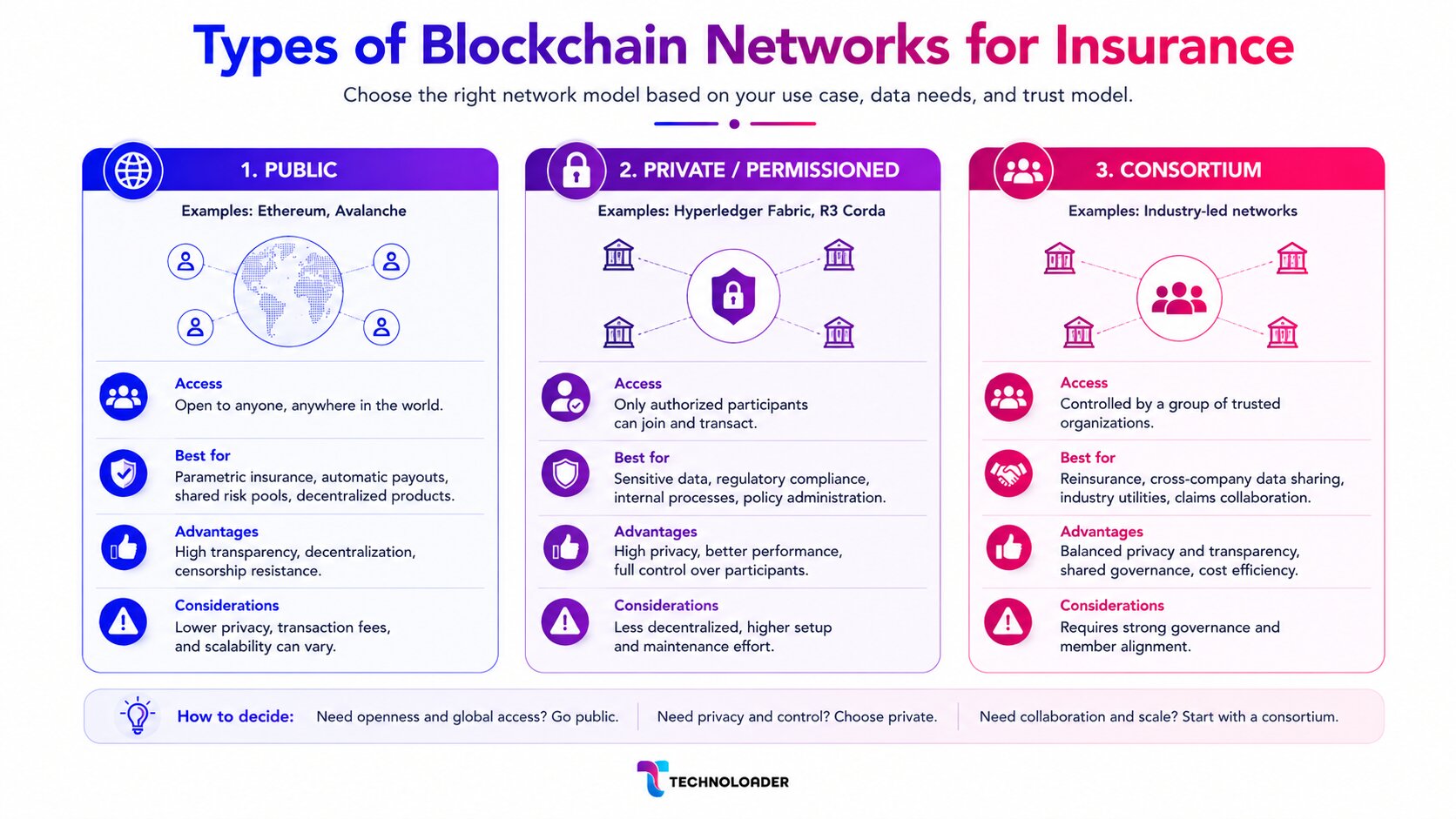
Here are the main options insurance companies can consider for their projects:
- Public (Ethereum, Avalanche): These networks are open to everyone globally. They work well for automatic payouts and shared risk pools. The main downsides are lower privacy and slower speeds during busy periods.
- Private/permissioned (Hyperledger Fabric, R3 Corda): Only approved users can join these networks. These private blockchain networks are great for sensitive data and strict compliance needs.
- Consortium: A group of trusted members shares control of the network. This model works best for reinsurance and industry-wide data sharing. Many insurers begin with this approach.
Ethereum changed to a proof-of-stake system after The Merge in September 2022. It no longer relies on energy-heavy proof-of-work mining. To choose the right blockchain network, compare each option’s strengths and weaknesses.
What Are Some Real-World Examples of Blockchain in Insurance?
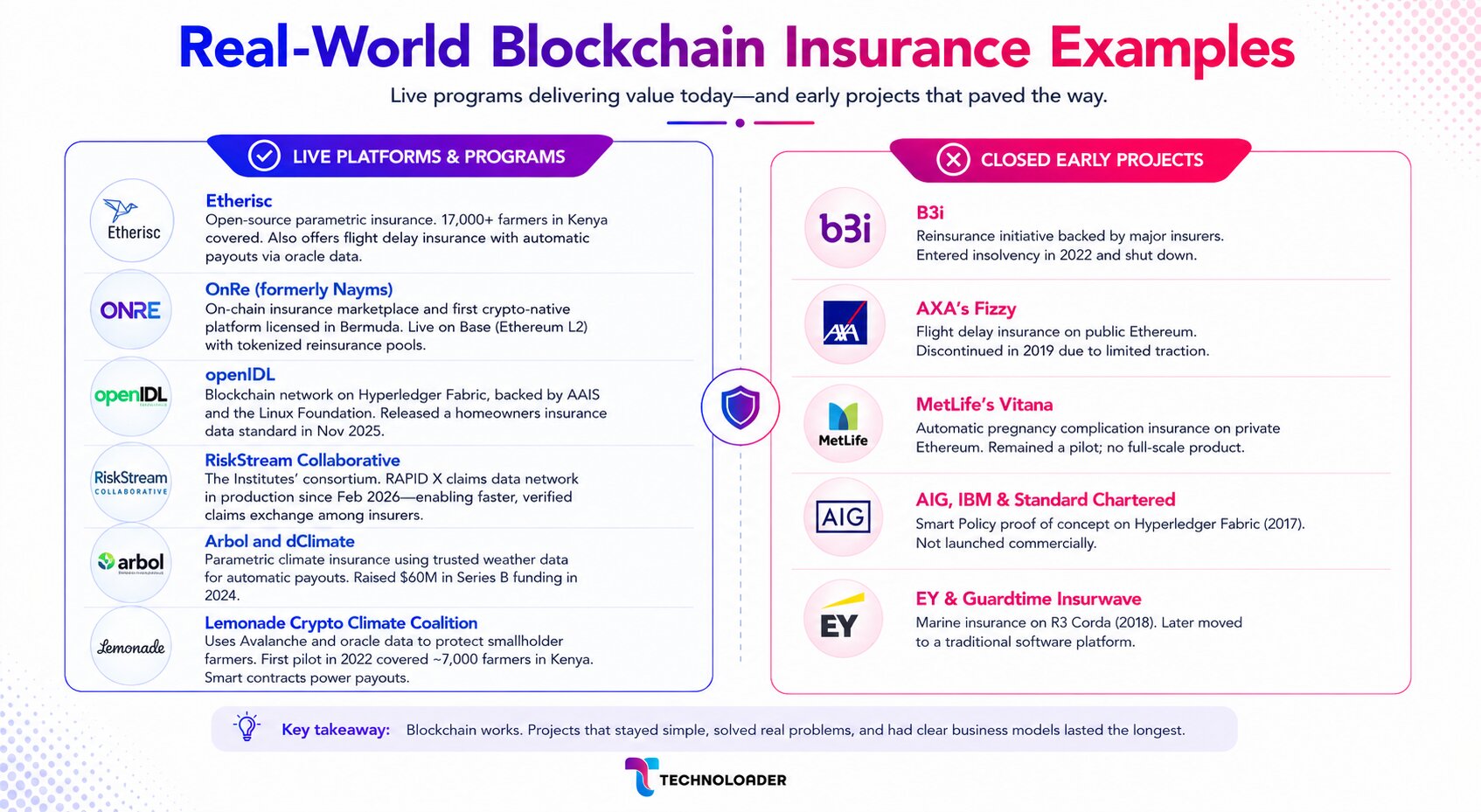
Active projects include Etherisc, OnRe (formerly Nayms), openIDS, and RiskStream. Arbol and Lemonade’s Coalition are also great examples. Many articles still mention early projects as active wins. Yet, some of them have quietly shut down.
Below, I’ll separate what is still running today from what didn’t last. You’ll also see what happened to earlier projects and what the industry learned from them.
Live Platforms and Programs Today
You can find live systems using blockchain in insurance right now. Here are six active projects that solve real business problems:
Etherisc
Etherisc offers open-source parametric insurance. Its crop insurance program with ACRE Africa has supported about 17,000 farmers in Kenya.
Etherisc also offers flight delay insurance on Gnosis Chain. Oracle data triggers payouts automatically, so customers don’t need to file claim forms.
OnRe (formerly Nayms)
Nayms, now called OnRe, runs as an on-chain insurance marketplace. It became the first crypto-native insurance marketplace licensed in Bermuda.
The platform launched on Base, an Ethereum Layer 2 network, in 2024. It brings reinsurance capital on-chain through tokenized funding pools.
openIDS
openIDS runs a blockchain network built on Hyperledger Fabric. You can use it to share trusted data for regulatory reporting.
In November 2025, openIDS released a homeowners insurance data standard. It helps companies report data clearly and consistently.
RiskStream Collaborative
RiskStream Collaborative, run by The Institutes, is a major insurance consortium. Its RAPID X claims data exchange entered production in February 2026.
The platform lets insurers share verified claims data through one trusted network. This cuts duplicate work and helps you process claims more quickly.
Arbol and dClimate
Arbol provides parametric climate insurance using its dClimate data network. It uses trusted weather information to trigger automatic payouts when policy conditions match. This approach removes much of the manual verification process.
Arbol also raised $60 million in funding in 2024. This signals growing trust in blockchain-based climate insurance.
Lemonade Crypto Climate Coalition
Lemonade Crypto Climate Coalition shows the social impact of blockchain in insurance. It uses Avalanche and oracle data to protect smallholder farmers across Africa.
Its first pilot, launched in 2022, covered about 7,000 farmers in Kenya. Smart contracts handled payouts automatically.
Lessons From the Early Projects
Not every early blockchain insurance project succeeded. We can learn from that history to build better solutions.
Most attempts below proved the technology works, but commercial problems came up.
- B3i was a well-funded reinsurance group backed by Allianz, Swiss Re, and Munich Re. It filed for insolvency in 2022 and closed down completely.
- AXA’s Fizzy offered flight-delay insurance on the public Ethereum network. The company discontinued the service in 2019 after limited commercial success.
- MetLife’s Vitana provided automatic pregnancy complication insurance on a private Ethereum network. It never became a full product.
- AIG, IBM, and Standard Chartered tested blockchain in insurance. The smart policy project started as a proof of concept in 2017 on Hyperledger Fabric. The partners never launched it commercially.
- EY and Guardtime also created Insurwave for marine insurance. The platform launched during 2018 using R3 Corda. It later switched from blockchain to a traditional software platform.
The lesson is clear. Single-company products have lasted longer than many large industry partnerships. Most projects ended because of business and governance challenges. Blockchain technology wasn’t the problem.
What Are the Best Real-World Examples of Blockchain in Insurance?
Platforms like Etherisc, OnRe, and openIDS lead the market with live, automated coverage. Others include RiskStream, Arbol, and the Lemonade Crypto Climate Coalition. Earlier projects like B3i, AXA Fizzy, and MetLife Vitana ended, leaving useful lessons.
Also Read
Blockchain Insurance Market Size and Adoption
Blockchain in insurance is growing fast, but market reports don’t report the same numbers. Each research firm uses a different method and market scope.
Mordor Intelligence placed the global blockchain insurance market size at $0.93 billion in 2025. Grand View Research values the same market at $9.5 billion during the same year. You should look at these figures as a range instead of one exact value.
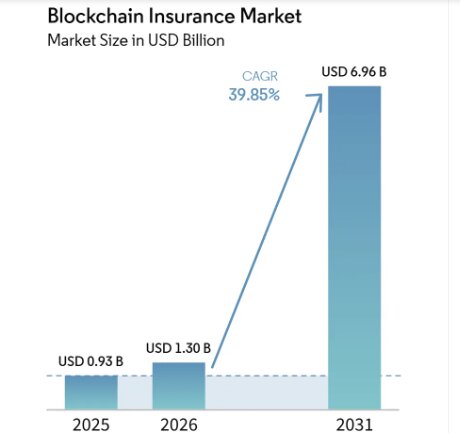
Even so, the trend points toward rapid growth from the different sources below:
| Source | Base Year (Value) | Forecast (Value) | CAGR | Scope |
|---|---|---|---|---|
| Fortune Business Insights | 2025 ($2.96 billion) | 2026 ($4.74 billion) 2034 ($95.97 billion) |
45.6% | Global |
| Mordor Intelligence | 2025 ($0.93 billion) | 2026 ($1.3 billion) 2031 ($6.96 billion) |
39.85% | Global (narrower) |
| Grand View Research | 2025 ($9.5 billion) | 2026 ($13.8 billion) 2033 ($192.7 billion) |
45.8% | Global |
| Global Market Insights | 2025 ($19.4 billion) | 2026 ($22.6 billion) 2035 ($63.8 billion) |
12.2% | Global (parametric insurance only) |
We should also keep adoption in mind. European regulator EIOPA reported that only 15% of insurers used blockchain in 2024. This shows that blockchain in insurance has strong potential. Still, most teams are in the early stages of adoption.
Blockchain delivers the most value when many parties share the same data.
How Large Is the Blockchain Insurance Market?
Current estimates value blockchain in insurance at over $1 billion. Many forecasts expect the market to reach tens of billions of dollars by the 2030s. Adoption is also increasing, but the market is still in its early stages.
What Are the Main Challenges, Risks, and Regulatory Considerations?
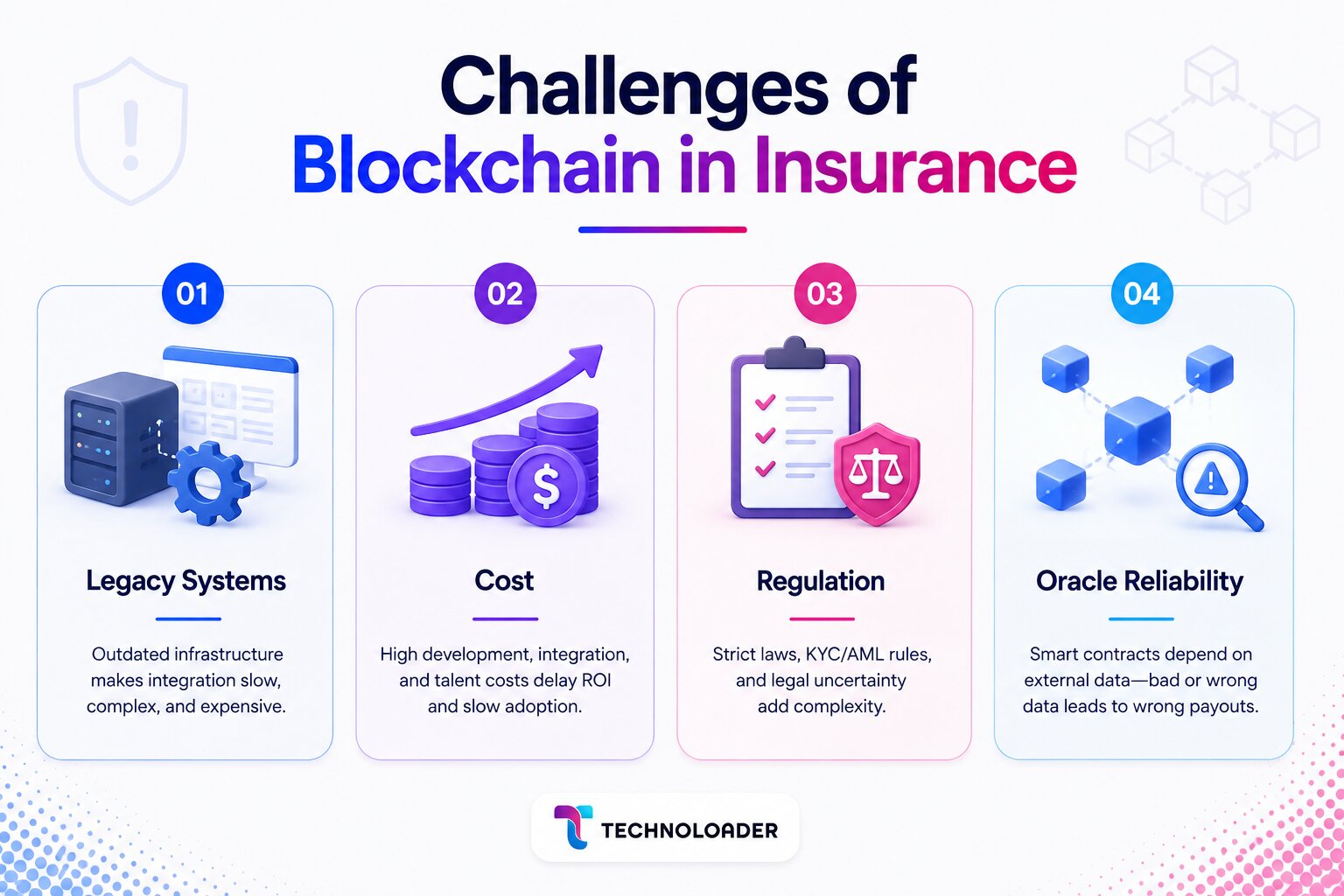
Blockchain in insurance offers many benefits, but it cannot solve every problem. You still need to deal with real business and technical challenges. Many early projects failed because teams overlooked these issues.
Here are the most important ones you should watch out for:
Technical and Operational Barriers
Many companies still rely on old systems. Connecting a blockchain platform to these systems takes time and money. Legacy software, integration work, and skilled developers all add to the costs.
Scalability and data quality matter too. Smart contracts work only as well as their data sources. If an oracle sends incorrect information, the contract can make the wrong payment.
Data Privacy and Regulation
Insurance faces strict state and federal rules. Unchangeable records can conflict with privacy laws like the right to erase data. Most teams fix this by storing personal details off-chain. They only keep a secure reference link on the chain.
You must also follow know-your-customer (KYC) and anti-money laundering (AML) laws. Smart contracts bring legal questions as well. That’s because code alone is not automatically a binding contract in court.
Why Some Early Projects Failed
Failed blockchain in insurance projects give us a valuable lesson. B3i, AXA’s Fizzy, and other solutions didn’t crash over broken technology. They struggled with governance, shared costs, and different business goals.
Many test projects also ended before reaching full production. Convincing direct rivals to share a network is a hard task. This explains why single-company solutions and smaller industry groups achieve better results.
What Are the Biggest Challenges for Blockchain in Insurance?
The main hurdles include connecting blockchain with old systems and managing costs. Meeting privacy laws and finding reliable data feeds can also be challenging. Governance issues caused more problems for early projects than the blockchain technology itself.
Also Read
How Do You Build a Blockchain Insurance Solution?
The best blockchain in insurance projects start with one simple goal. I recommend solving one problem first and showing clear results before you expand.
Here’s the step-by-step process my team follows for every client:
- Set Your Goal: Pick one expensive process that involves several parties. This could be settling parametric claims or tracking fraud. A focused project delivers better results than trying to build everything at once.
- Choose a Blockchain: Compare private and public networks. Decide based on your privacy, speed, and compliance needs.
- Smart Contract Development: Next, create the self-running code that handles your insurance rules. Make sure you audit your smart contract before going live.
- Complete Oracle and Data Integration: Connect trusted information sources to your blockchain. Your smart contracts rely on this data to make the right decisions.
- Build in Security and Compliance: Protect customer data from the start. Add strong identity checks, encryption, and access controls. Keep personal information off-chain whenever possible and follow regulations.
- Test on a Testnet: Check every workflow, payment, and smart contract. Fix every issue before moving to the live network.
What is the Best Way to Build a Blockchain Insurance Platform?
Start with one expensive shared pain point. Then pick the right network, write audited smart contracts, and hook up trusted data feeds. Finally, follow privacy and compliance rules, test your solution, and go live.
Also Read
What Is the Future of Blockchain in Insurance?
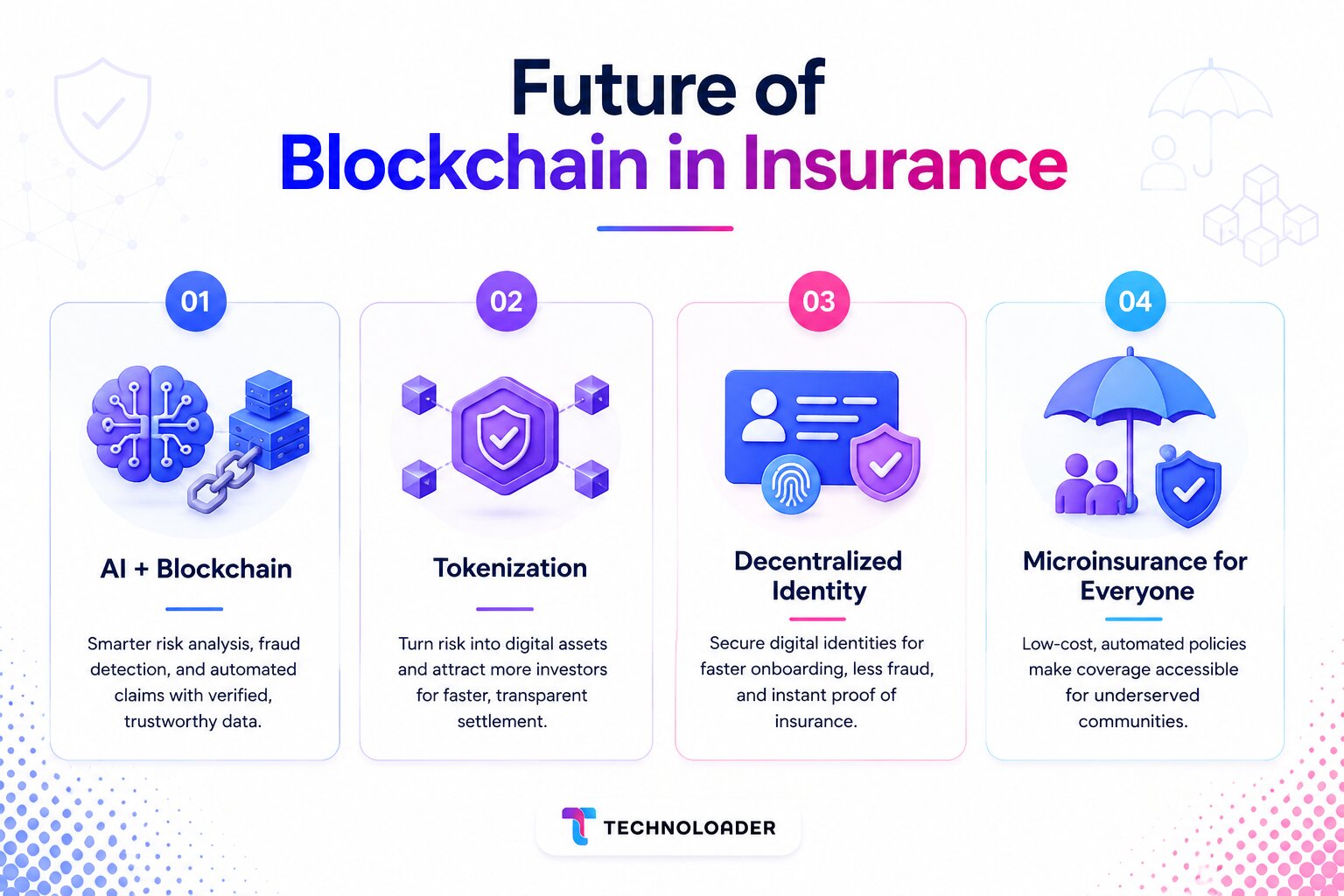
The future of blockchain in insurance will focus on practical use cases instead of hype. Networks will run inside everyday insurance tasks alongside AI tools and better data.
Here are four major trends that will gain popularity:
AI and Blockchain Together
AI and blockchain will work hand in hand to support faster and more accurate decisions. AI tools can help insurance teams find patterns in data and flag unusual activity. A shared ledger keeps that same information secure and easy to check. Each technology strengthens the other.
For example, you can use AI to review a claim first. Then, blockchain can record the result and key claim details.
Tokenization and Insurance-Linked Securities
Companies can turn risk into digital tokens. Insurance-linked securities and catastrophe bonds can move onto blockchain networks. This brings in more investors and speeds up settlement and tracking.
Decentralized Identity
People can prove who they are without relying on one central server. This speeds up customer sign-ups and reduces fraud. Customers can also verify proof of insurance in just a few seconds.
Microinsurance for the Underserved
Automation lowers the cost of running small coverage plans. This makes policies cheap enough for gig workers, small farmers, and local shops.
Blockchain in insurance creates the biggest social impact here. More people can access cheaper coverage for risks such as crop loss, floods, or illness.
What Does the Future of Blockchain in Insurance Look Like?
Expect blockchain in insurance to merge with AI, asset tokenization, and digital IDs. Microinsurance will also become more popular. That’s because automation makes small and affordable policies easier to manage.
Ready to Launch Blockchain in Insurance?
Blockchain in insurance is moving beyond small test projects into real business use. The biggest benefits come from automated claims, parametric insurance, and fraud prevention. Reinsurance and shared reporting follow suit.
Some projects still deliver strong results, while others have ended. Looking at both gives you a clear view of where the technology works best.
The key lesson is simple. Pick one clear problem, follow the law, and rely on verified data. With this approach, you can create faster and more transparent insurance services.
If you plan to launch a solution, my team can help you map it out and build it. Talk to our blockchain development team to get started today.
FAQs
What is blockchain in insurance?
Blockchain in insurance uses a shared, secure ledger to store and manage records. Smart contracts run policies, claims, and payouts automatically. This setup removes slow manual steps and delays. It also prevents costly disagreements between insurers, reinsurers, and customers.
How does blockchain reduce insurance fraud?
A shared ledger makes it much harder to hide duplicate claims or changed documents. Every update receives a timestamp and stays visible to approved users. This helps reduce some types of fraud. However, it cannot stop false data from entering the system.
What are smart contracts in insurance?
Smart contracts are self-running programs stored on a blockchain. They act when the conditions you set check out. For example, they can pay a claim after verified data arrives. They automate many insurance tasks, but they don’t create a legally binding contract.
What is parametric insurance, and how does blockchain enable it?
Parametric insurance pays out a fixed cash amount when a specific event happens. This could be extremely low rainfall or a delayed flight. An oracle sends real-time facts directly to a smart contract. The contract reads the update and releases your payment right away. You never have to fill out long claims forms or wait for an inspection.
Which insurance companies use blockchain?
Several live blockchain in insurance projects include Etherisc, OnRe, openIDS, and RiskStream. Early test projects like B3i, AXA Fizzy, and MetLife’s Vitana have since closed down.
What are the main challenges of blockchain in insurance?
The biggest issues include connecting blockchain with old software and high costs. Privacy laws and reliable oracle data also add extra friction. Most early projects struggled with business goals rather than the technology itself.
Is customer or policy data stored on the blockchain?
In most cases, no. The blockchain stores a tamper-evident record or a secure reference. Policy documents and personal information stay off the chain. This approach protects sensitive data and supports privacy regulations.
What is InsurTech?
InsurTech means using modern technology to improve insurance products and services. It includes AI, data analytics, and mobile apps. Blockchain in insurance focuses on secure record sharing and process automation.
Can blockchain support health, travel, or crop insurance?
Yes. Blockchain in insurance can verify hospital records, flight updates, or weather data. Once it confirms policy conditions, smart contracts process the claim. Live crop and flight insurance programs use this model. They keep all sensitive files off-chain.

Vipin Kumar
Vipin Kumar is the Founder & CEO of Technoloader, a Clutch Top 10 Blockchain Development Company for 2025. A serial technology entrepreneur and blockchain architect with a B.Tech background, Vipin has led the delivery of 450+ projects across DeFi, NFT marketplaces, AI/ML, and custom Web3 platforms for clients in the UAE, India, the US, and beyond. He also founded SALIQ (saliq.ai), an AI-driven conversational marketing platform.
Published in Blockchain Development