 +91 7014607737
 info@technoloader.com





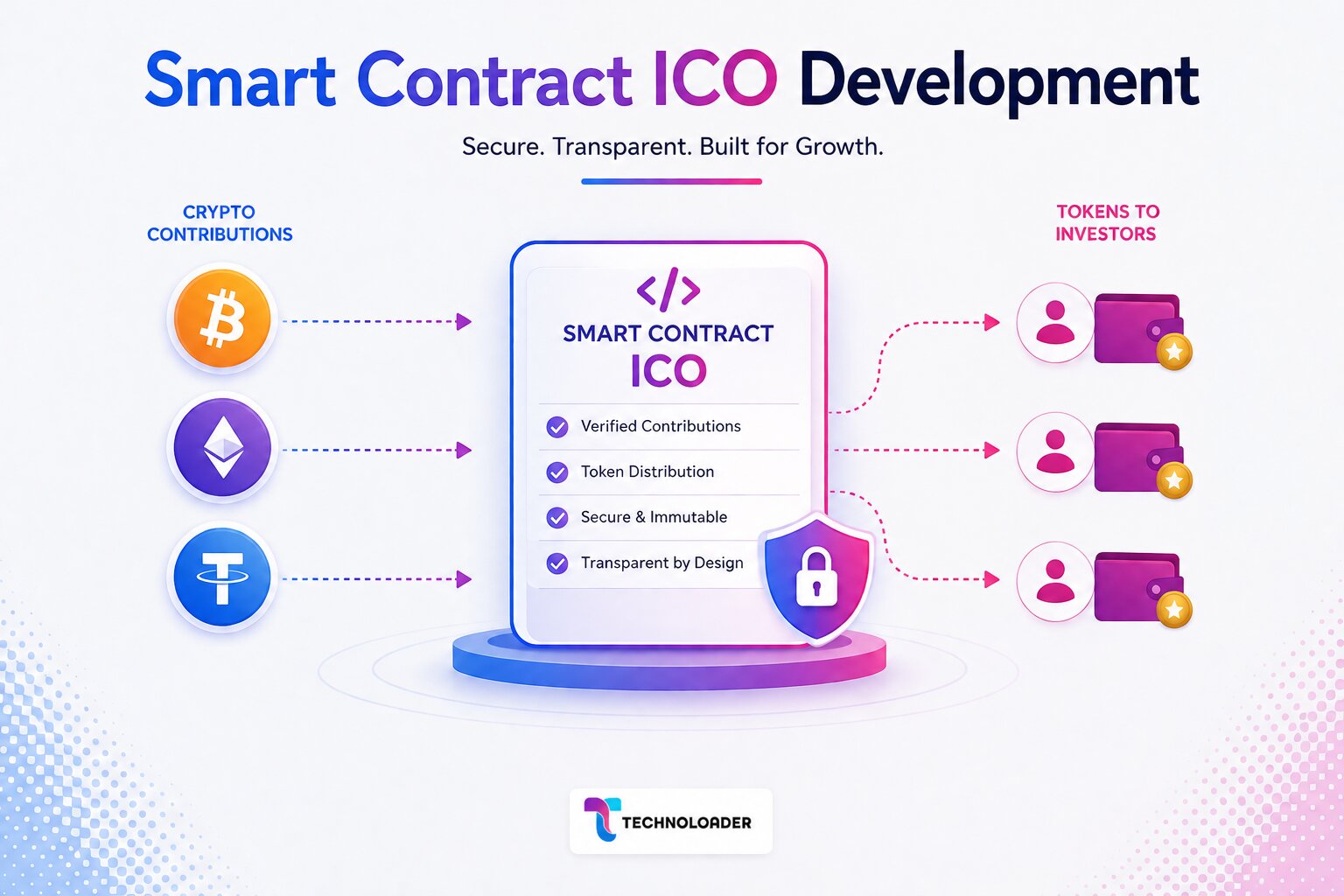
Table of Contents
Smart contract ICO development involves building a self-executing code on a blockchain. This code automatically runs every stage of your Initial Coin Offering (ICO). It handles tasks like selling tokens, collecting payments, and issuing refunds to buyers.
The best part? You don’t have to rely on middlemen to run your launch or hold your funds.
Running an ICO manually can create accuracy and trust issues. You may face payment errors, delays, or questions about fairness. Smart contracts help solve these problems by following the rules you set. Once they go live, they carry out each step automatically.
In this guide, you’ll learn what smart contract ICO development is and why it matters. We’ll explain the main parts of an ICO smart contract. You’ll also see how smart contracts power an ICO from start to finish.
I have found that clear planning before development makes a big difference. It helps teams avoid many problems later and run the ICO smoothly.
Key Takeaways
- Smart contract ICO development means building the on-chain code that runs a token sale. It handles issuance, contributions, caps, distribution, and refunds.
- The ICO is the original model. Today, the same logic usually powers IEOs, IDOs, or STOs.
- The core parts include the token contract (ERC-20 or BEP-20) and the sale contract. Caps, escrow and refunds, an allowlist, and vesting round it out.
- Compliance is mostly off-chain. KYC and AML checks gate an on-chain allowlist. The contract does not make a sale automatically compliant.
- Regulation varies by country. MiCA governs EU offers, and treatment elsewhere is still evolving. This is general information, not legal advice.
- An independent audit reduces risk but never removes it. Test on Sepolia, and note that Solidity 0.8 and later make SafeMath legacy.
What Is Smart Contract ICO Development? (ICO vs IDO, IEO, and STO)
Smart contract ICO development is writing and deploying the code that runs a token sale. It sets who can buy, how much they can buy, and when tokens become available. Once you deploy the contract on the blockchain, it runs exactly as programmed.
The initial coin offering (ICO) was the first popular way for blockchain projects to raise money. It allowed teams to sell crypto tokens directly to the public through a smart contract.
Today, developers still use the same core technology. However, they often launch cryptocurrency token sales through newer fundraising models.
One common option is an initial exchange offering (IEO). This model uses a centralized crypto exchange to manage the sale. Another is an initial DEX offering (IDO). A decentralized exchange (DEX) or launchpad hosts the event in this case.
Some projects also choose a security token offering (STO). It works well when you need to follow securities laws in regulated markets.
An ICO is not the default in 2026. It’s one branch of a token-sale family sharing the same logic. That’s why smart contract ICO development remains important. Any fundraising model you choose still relies on secure and reliable smart contracts.
Many people also compare an ICO with an initial public offering (IPO). An ICO gives buyers cryptocurrency tokens, while an IPO offers company shares. The two fundraising methods involve different assets, investor rights, and legal requirements.
Are ICOs Still Relevant in 2026?
Yes. ICOs still exist in 2026. However, they’re no longer the main way to raise money for blockchain development projects. Most teams rarely run an open public ICO. They now prefer launchpads, exchanges, or other compliant platforms.
According to a Business Research Insights report, the global ICO service market continues to grow. It’s valued at $6.5 billion in 2026 and is expected to reach $18.47 billion by 2035.

The most common ICO alternatives include IDOs, IEOs, and STOs. Each model launches in different places and follows different rules.
The table below shows where each model launches and how the smart contract works:
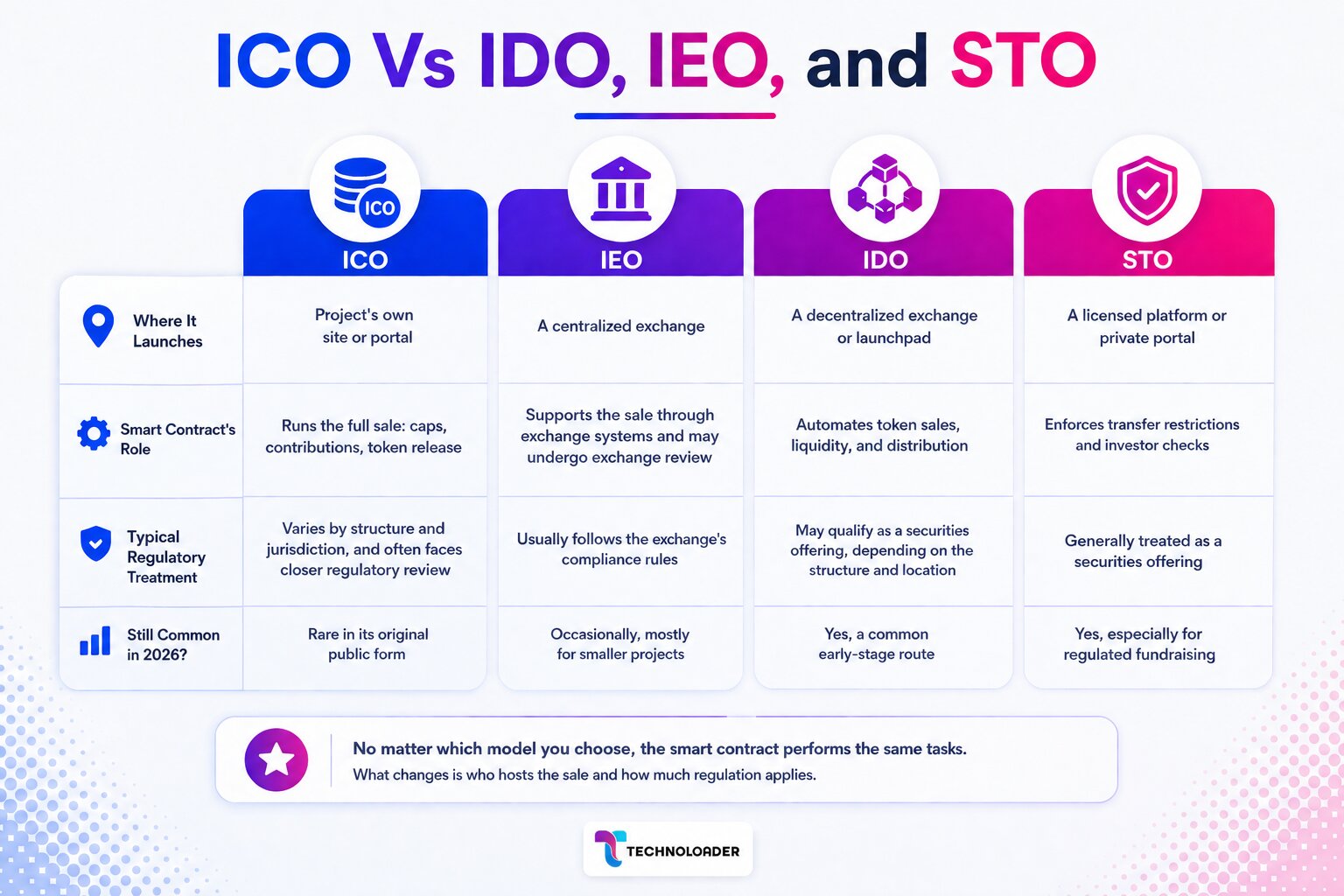
| Model | Where It Launches | Smart Contract’s Role | Typical Regulatory Treatment | Still Common in 2026? |
|---|---|---|---|---|
| ICO | Project’s own site or portal | Runs the full sale: caps, contributions, token release | Varies by structure and jurisdiction, and often faces closer regulatory review | Rare in its original public form |
| IEO | A centralized exchange | Supports the sale through exchange systems and may undergo exchange review | Usually follows the exchange’s compliance rules | Occasionally, mostly for smaller projects |
| IDO | A decentralized exchange or launchpad | Automates token sales, liquidity, and distribution | May qualify as a securities offering, depending on the structure and location | Yes, a common early-stage route |
| STO | A licensed platform or private portal | Enforces transfer restrictions and investor checks | Generally treated as a securities offering | Yes, especially for regulated fundraising |
No matter which model you choose, the smart contract performs the same tasks. What changes is who hosts the sale and how much regulation applies.
What is an ICO in Simple Terms?
An ICO is the original crypto fundraising model. The same smart contract ICO development technology powers many IEOs, IDOs, and STOs. The mechanism survived, but the 2017-style open ICO is less common.
How Do Smart Contracts Power an ICO?
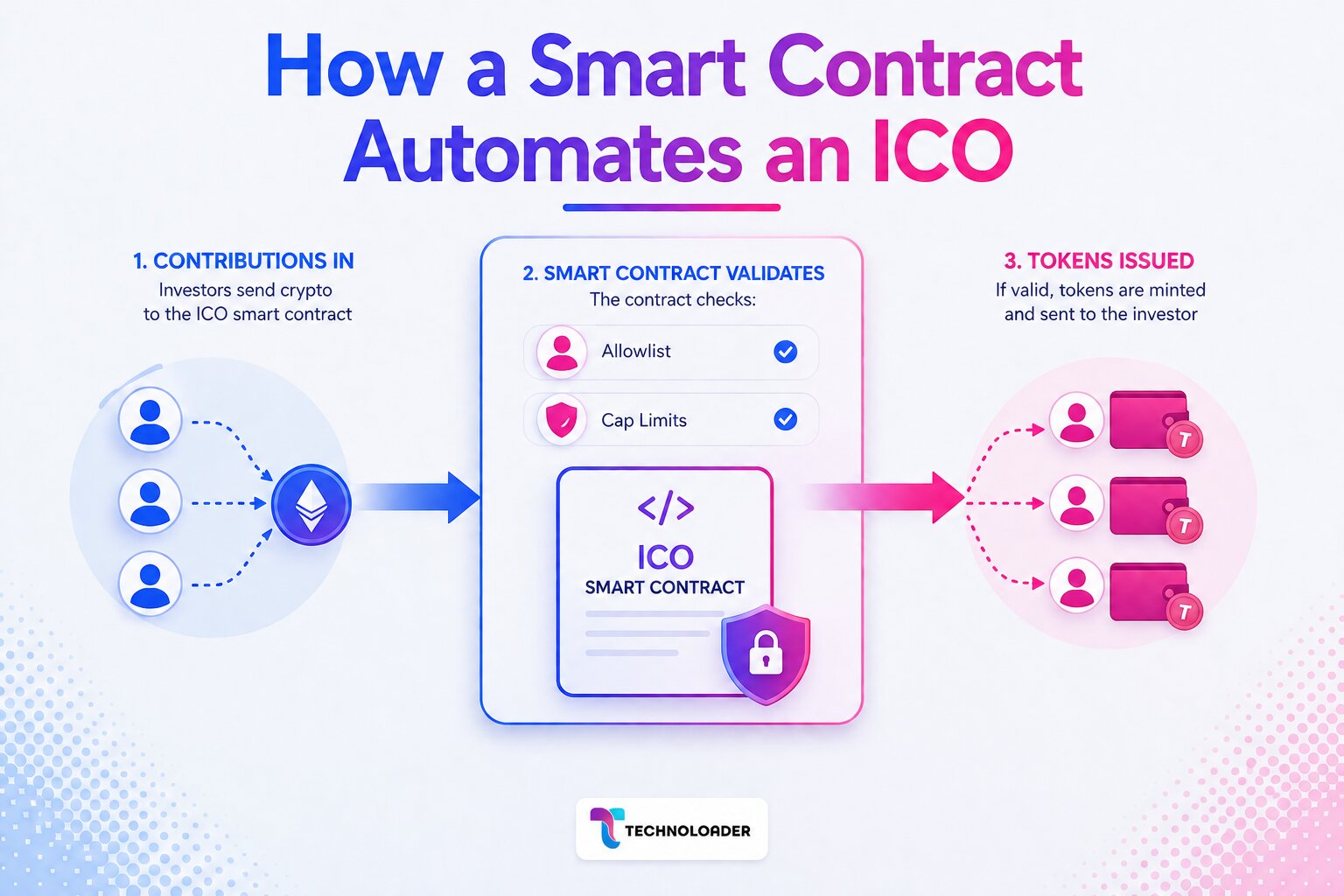
Smart contract ICO development gives your token sale secure rules that run automatically. A smart contract is a self-running code that follows the conditions you build into it. Once you deploy it, the contract executes those rules without requiring a middleman.
Whenever it needs off-chain information, such as a live token price, it uses an oracle. An oracle connects the chain to trusted real-world data.
Once live, a smart contract becomes difficult to change. That makes it tamper-resistant, but not impossible to exploit. Bugs and security flaws can still affect it. That’s why testing and contract audits are still important.
The smart contract automates four core tasks, including:
Token Distribution
The contract calculates and sends the right number of tokens as soon as it confirms a payment. It applies the correct exchange rate every time. You don’t need to calculate purchases or transfer tokens by hand.
Fund Management
Contributions flow into the contract rather than your personal crypto wallet. The code holds funds until the sale meets conditions such as a soft cap.
Unlike traditional contracts, smart contracts don’t need lawyers or banks to approve transfers.
Transparency and Security
Every contribution and token release is recorded on-chain. Anyone can verify the sales activities without asking the team.
That said, verification is not a guarantee. A tamper-resistant contract can still hide a bug if it’s not audited.
Access Control
You can easily restrict who gets to take part in your sale. The smart contract accepts funds only from approved wallets. It also enforces purchase limits that you set before the sale starts.
When the sale reaches the hard cap, the contract stops accepting new contributions. You don’t need someone to watch the sale every minute.
How Do Smart Contracts Automate an ICO?
Smart contract ICO development automates every step of your sale. This includes token distribution, fund management, blockchain recordkeeping, and wallet access controls. Instead of relying on manual processes, the smart contract follows pre-programmed rules.
Also Read
What Are the Key Components of an ICO Smart Contract?
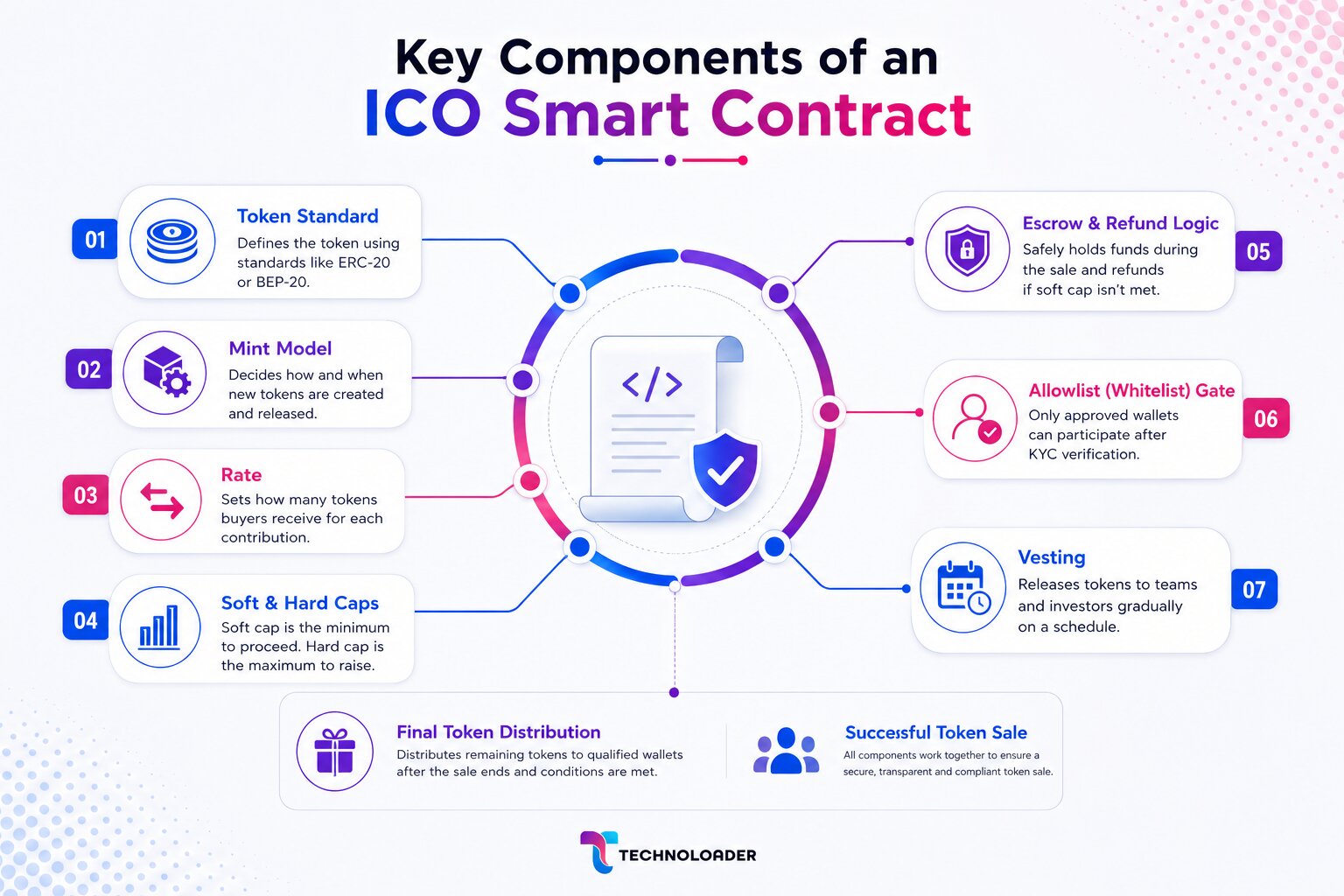
Smart contract ICO development brings together several important parts. These components help you run a successful token sale.
Each piece handles a specific job, and they typically run in this order:
- Token contract: Defines the token itself. This is usually an ERC-20 (formerly EIP-20) standard on Ethereum, or BEP-20 on BNB Chain.
- Mint model: Decides how new tokens enter circulation. You can create all tokens before the sale starts, or mint them as buyers make contributions.
- Sale or crowdsale contract: Manages the actual sale logic. This is separate from the token’s own contract.
- Rate: Sets how many tokens buyers receive for each contribution. Since ERC-20 tokens usually use 18 decimal places, the math must be precise.
- Soft cap and hard cap: The soft cap is the lowest amount needed to proceed. The hard cap is the maximum the sale will accept.
- Escrow and refund logic: Safely holds funds during the sale. If the project fails to hit the soft cap, it returns the money to investors.
- Whitelist or allowlist gate: Only allows approved wallets to participate. Contributors have to complete identity checks, such as Know Your Customer (KYC).
- Vesting: Releases tokens on a schedule instead of all at once. Teams often use it for founders and early investors.
- Final token distribution: Sends all leftover tokens to qualified wallets. This happens once the sale ends and all conditions are met.
All these parts work together as one single system. Any weak links, such as missing refund logic, can put the entire token sale at risk. Because of this, smart contract ICO development requires lots of testing and strict security checks.
What Makes an ICO Smart Contract Work?
An ICO smart contract stitches together several linked parts. These include the token contract, mint model, sale contract, caps, and rate logic. They also cover escrow and refunds, an allowlist gate, vesting, and final distribution. Each part runs in sequence to power a compliant sale.
How Do Tokenomics, Token Distribution, and Vesting Work?
Smart contract ICO development does more than manage your token sale. It supports the rules that control your token’s supply, ownership, and release schedule.
Here is how these three critical pieces fit together:
Tokenomics
Tokenomics is the economic plan behind your crypto token. It explains how many tokens will exist and how they’ll be used. It also determines how tokens will be divided and move through your blockchain ecosystem.
A good tokenomics design balances supply and demand so your token has a real purpose.
Token Allocation
This is how you divide your total token supply. You should assign tokens to different groups based on your project’s goals. This includes the public sale, project team, treasury, liquidity pools, advisors, and reserves.
Finding the right balance is important. If insiders receive too many tokens, buyers may lose confidence. If you set aside too few tokens for liquidity, trading can become difficult after launch.
Vesting and Lockups
Vesting controls when token holders can access their tokens. Instead of receiving everything on day one, they unlock their tokens over time.
You can use a cliff to delay the first release until a specific date. It’s basically a waiting period before any tokens unlock. Once it ends, the contract unlocks tokens gradually, on a set schedule.
Lockups keep tokens unavailable for a fixed period. This prevents team members and early buyers from selling all their tokens at once. If too many tokens enter the market, prices can drop quickly.
Smart contract ICO development lets you automate this entire process. I usually manage vesting through a separate vesting contract instead of the main sale contract. You can use a standard tool like OpenZeppelin’s VestingWallet. It holds tokens and releases them only on the coded schedule.
The table below shows example allocations only. Adjust percentages based on your project’s goals, location, and investor expectations.
| Allocation Bucket | Example % of Supply | Cliff | Vesting Schedule |
|---|---|---|---|
| Public Sale | 20% | None | Unlocked immediately after the ICO |
| Team | 20% | 12 months | Linear release over 24 months |
| Treasury/Ecosystem | 25% | 6 months | Monthly release over 36 months |
| Liquidity | 15% | None | Available at token launch |
| Advisors | 5% | 6 months | Linear release over 18 months |
| Reserves | 15% | 12 months | Released only when required by the project |
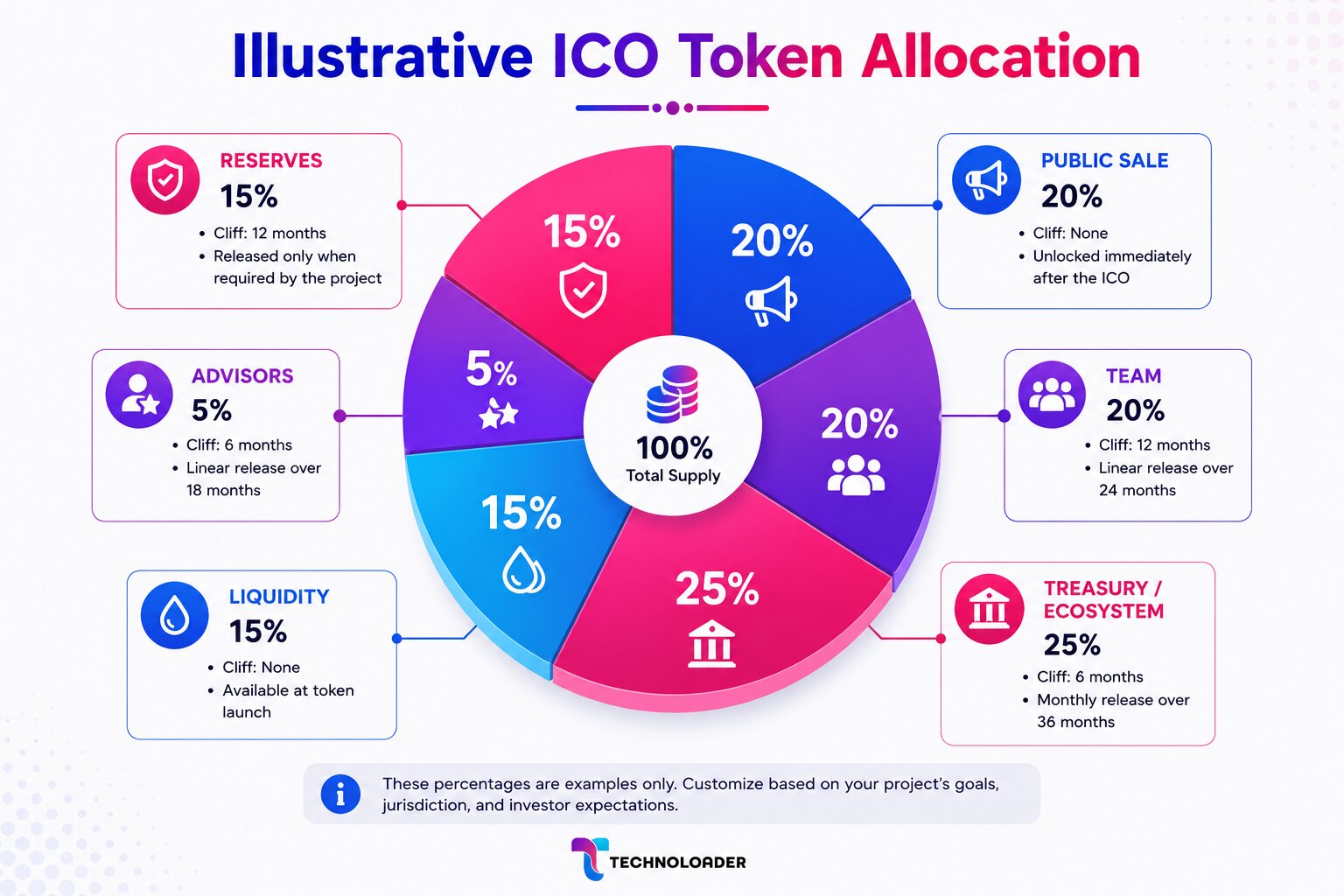
How Do Tokenomics, Token Distribution, and Vesting Work Together?
Tokenomics sets the overall economic plan. Token allocation then decides who receives the tokens. Finally, vesting controls when those tokens become available.
Also Read
How Do KYC/AML Checks Work in an ICO Smart Contract?
In smart contract ICO development, identity checks happen outside the blockchain. The smart contract doesn’t verify a person’s identity. Instead, it checks whether a wallet appears on an approved on-chain allowlist.
Code alone cannot guarantee legal compliance.
Know Your Customer (KYC) and Anti-Money Laundering (AML) checks help keep token sales safe and compliant. KYC verifies an investor’s identity while AML looks for signs of suspicious financial activity.
On-Chain vs. Off-Chain: Who Does What?
Most KYC and AML checks happen outside the blockchain. A trusted verification provider reviews identity documents, does background checks, and screens against sanctions lists. They also check for Politically Exposed Persons (PEPs). If the system finds a problem, it can stop that person from joining the token sale.
Once the investor passes the review, the result moves on-chain. The provider adds that person’s wallet address to the on-chain allowlist. Before accepting a payment, the smart contract checks whether the crypto wallet is approved.
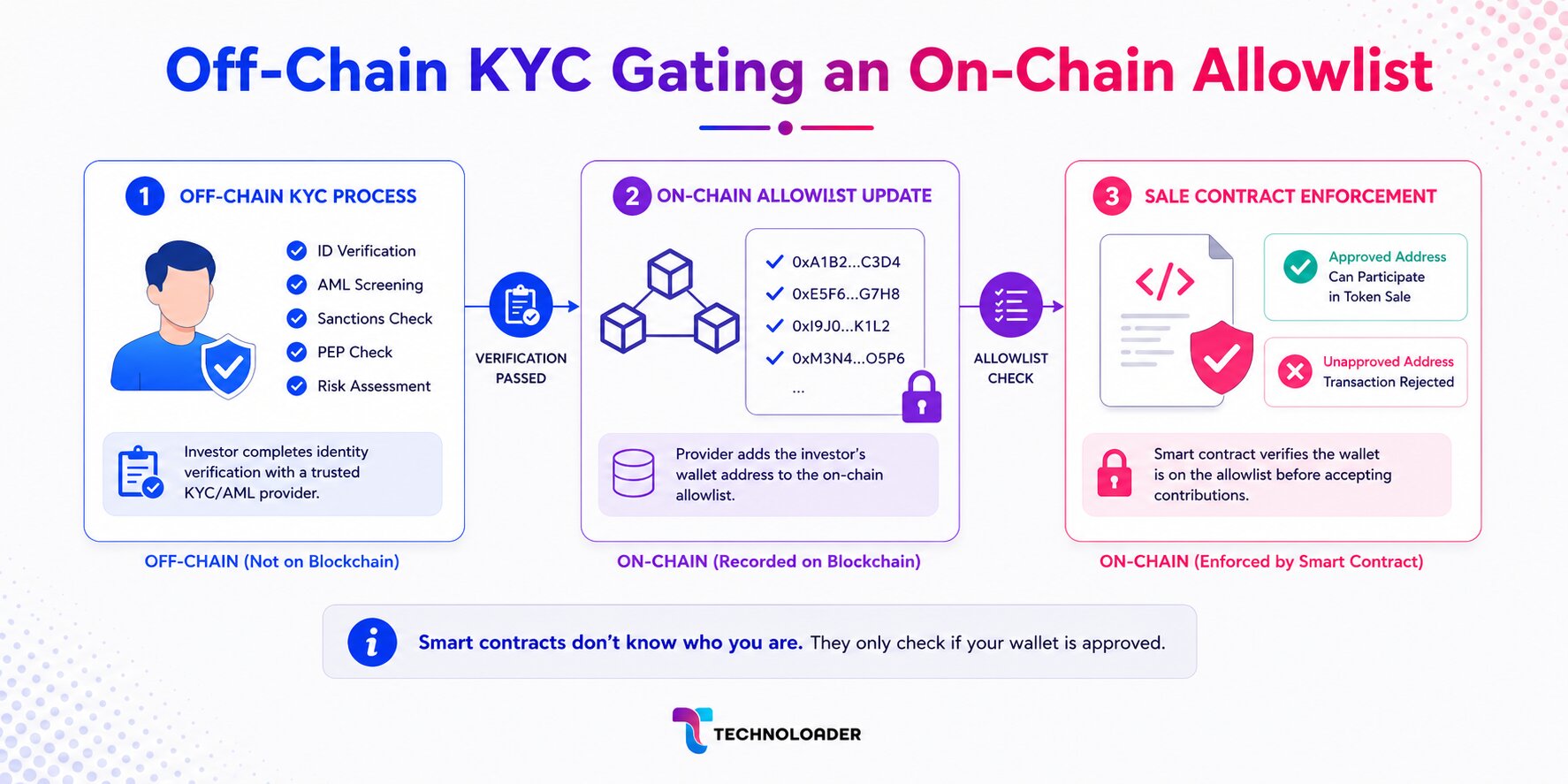
The contract cannot identify a person. It can only verify that a wallet has permission to participate.
This difference matters because public blockchains are pseudonymous, not anonymous. Users appear through wallet addresses instead of real names. However, anyone can view a wallet’s transaction history once it’s linked to an identity.
Many countries also follow the Financial Action Task Force (FATF) Travel Rule. The rule requires sender and receiver information for transactions above certain thresholds. It often applies to service providers and exchanges running token sales.
These steps don’t replace legal blockchain compliance advice. Every token sale has different rules depending on its structure and location. Work with qualified professionals before launching your project.
Where Do KYC and AML Checks Happen During an ICO?
Identity verification and risk screening usually happen off-chain. The smart contract checks the approval status on-chain before allowing investors to buy tokens. This approach protects private information while ensuring ICO compliance.
What ICO Regulations Apply in 2025-2026?
Token sale rules depend on how you design the token and where you offer it. The exact regulations vary by country. You should understand them before you start your ICO development.
Before launching a project, you need to answer two important questions.
First, does your token qualify as a security? Second, which Know Your Customer (KYC), Anti-Money Laundering (AML), and disclosure rules apply?
Here are the key regulatory frameworks for different regions:
The European Union: Markets in Crypto-Assets (MiCA)
MiCA, the EU’s Markets in Crypto-Assets Regulation, is the clearest example of a comprehensive framework.
A public token offer in the EU generally requires a crypto-asset white paper. Crypto-asset service providers, known as CASPs, need authorization to operate.
As of 2026, a key deadline applies to existing providers operating under transitional arrangements. According to ESMA, the EU’s securities regulator, the transitional period ended July 1, 2026.
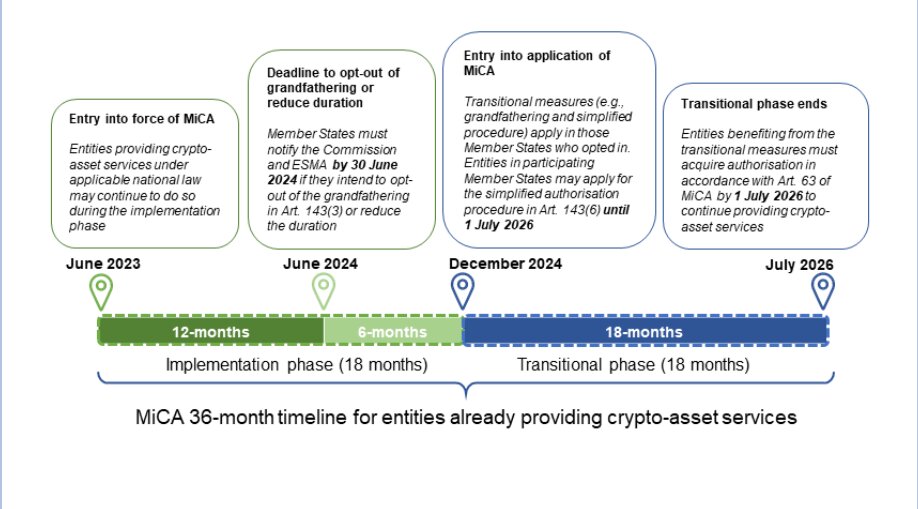
Any company providing crypto-asset services to EU citizens after that date needs a MiCA license. If you continue operating without it, you’ll be in breach of the law. This means you’ll no longer be authorized to provide your services.
The United States and Other Jurisdictions
The United States doesn’t have one law that covers every ICO. Instead, several regulators may oversee different parts of a project.
The Securities and Exchange Commission (SEC) reviews whether a token qualifies as a security. It uses a set of rules known as the Howey test. Your ICO qualifies if
- Buyers invest money
- The investment supports a common enterprise
- The buyer expects to earn a profit
- The profit depends mainly on the efforts of a third party
Regulators look at how the token works in practice, not just what the project calls it. Simply labeling a token as a “utility token” doesn’t mean it bypasses securities laws.
The Financial Crimes Enforcement Network (FinCEN) handles anti-money laundering rules. It may require certain businesses in the U.S. to follow money service business requirements.
Approaches differ meaningfully across the US, UK, UAE, India, and other markets. What satisfies one regulator won’t necessarily satisfy another.
I won’t assert specific rules as settled law here, because this area keeps shifting. Regulations that apply in 2026 may change over time.
During smart contract ICO development and token creation, legal planning is important. Work with an experienced legal advisor and ICO development company to stay compliant.
Which Regulations Apply to an ICO?
It depends on where your project operates and its structure. In the United States, regulators rely on the SEC’s Howey test and FinCEN regulations. In the European Union, MiCA requires crypto-asset white papers and CASP authorization. Regulations differ across countries and continue to change.
Also Read
How Do You Build and Deploy an ICO Smart Contract? (Step by Step)
Smart contract ICO development follows eight clear steps from tokenomics to launching and monitoring. This process is consistent across the 450+ projects we’ve delivered.
Each step helps you create secure smart contracts and launch a successful ICO. Teams that skip important stages often create security or compliance problems later.
Here is how to build and launch your token sale:
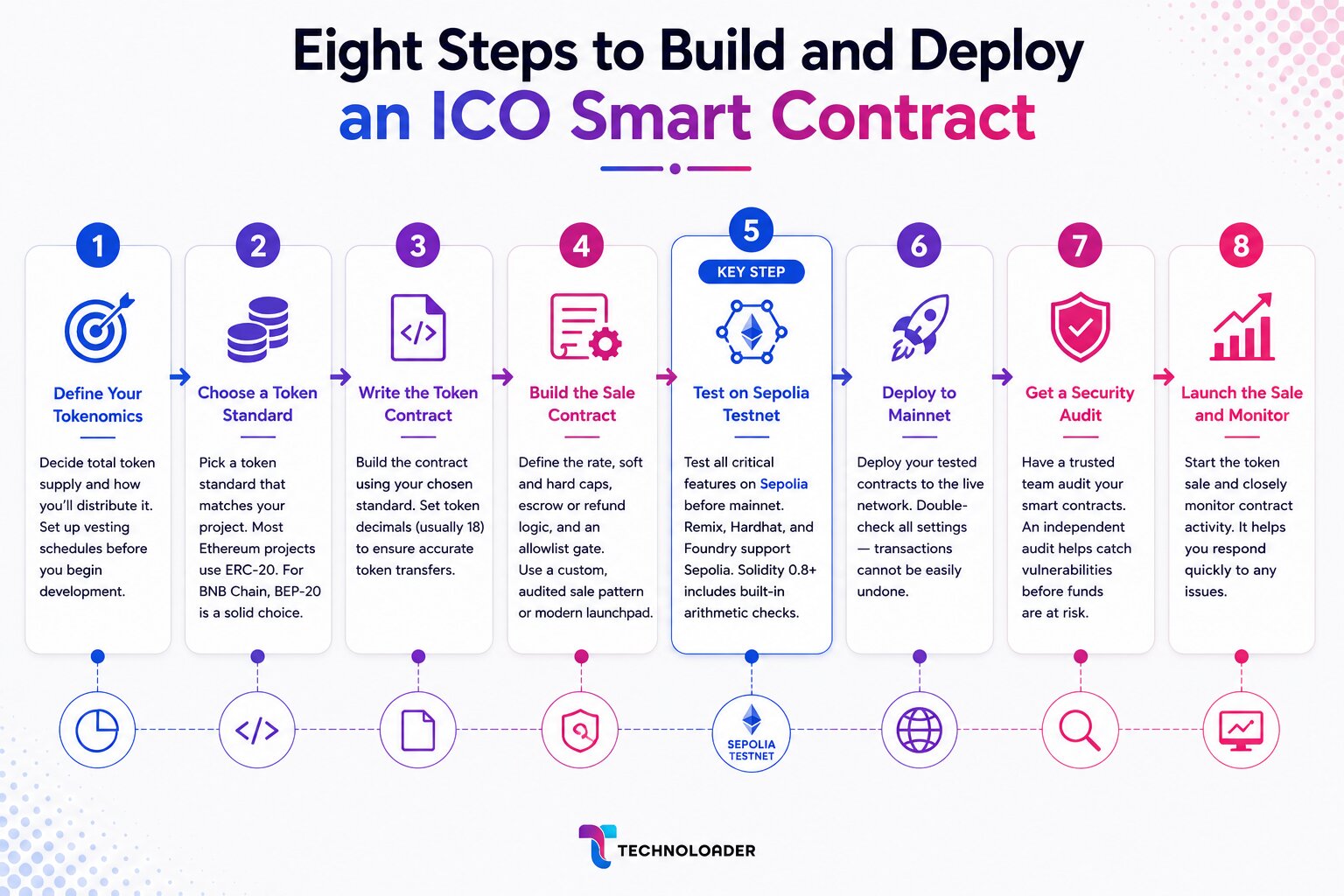
- Define your tokenomics: Decide your total token supply and how you’ll distribute it. Set up your vesting schedules before you begin development.
- Choose a token standard: Pick a token standard that matches your project. Most Ethereum projects use ERC-20 (Ethereum Request for Comments 20). For BNB (Build and Build), BEP-20 (BNB Evolution Proposal 20) is a great pick.
- Write the token contract: Build the contract using your chosen standard. Set the token decimals, which are usually 18, to allow accurate token transfers.
- Build the sale contract: Define the rate, soft and hard caps, escrow or refund logic, and an allowlist gate. OpenZeppelin removed its Crowdsale contracts in Contracts v3.0. Do not import an old Crowdsale.sol file. Use a custom, audited sale pattern or a modern launchpad instead.
- Test thoroughly on the Sepolia testnet: Sepolia lets you test essential features before moving to the live blockchain. Remix, Hardhat, and Foundry all support Sepolia testing. Solidity 0.8 and above checks arithmetic by default, so SafeMath is not needed here.
- Deploy to mainnet: Move the tested token smart contracts to the live network. Double-check all settings because you can’t easily reverse transactions after deployment.
- Get an independent security audit: Ask a trusted ICO development company to review your smart contracts. An independent audit helps identify security flaws before users begin sending funds.
- Launch the sale and monitor it: Once the sale starts, watch contract activity closely. It helps you respond quickly if any issues appear.
In the sale contracts my team has shipped, step 4 trips up teams most often. If you plan to launch your own token, get this sequence right before writing a line of code.
How Do You Build and Deploy an ICO Smart Contract?
Smart contract ICO development starts with planning tokenomics and selecting a token standard. Writing smart contracts, testing on Sepolia, and deploying come next. Finally, you can get an independent security audit before going live.
What Does a Smart Contract Audit Involve?
A smart contract audit is an independent security review that happens before your ICO launch. It helps you find coding errors and security weaknesses before users interact with your contract.
Auditors combine manual code reviews, automated scans, and detailed testing. In the smart contract ICO development process, an audit is an important step. It prevents errors that could put your project or investors at risk.
Smart contract audits improve security measures. However, they don’t remove every risk or make your code impossible to exploit.
Common Smart Contract Vulnerabilities
A security audit checks for many types of weaknesses that attackers could target. Below are some of the most common ones:
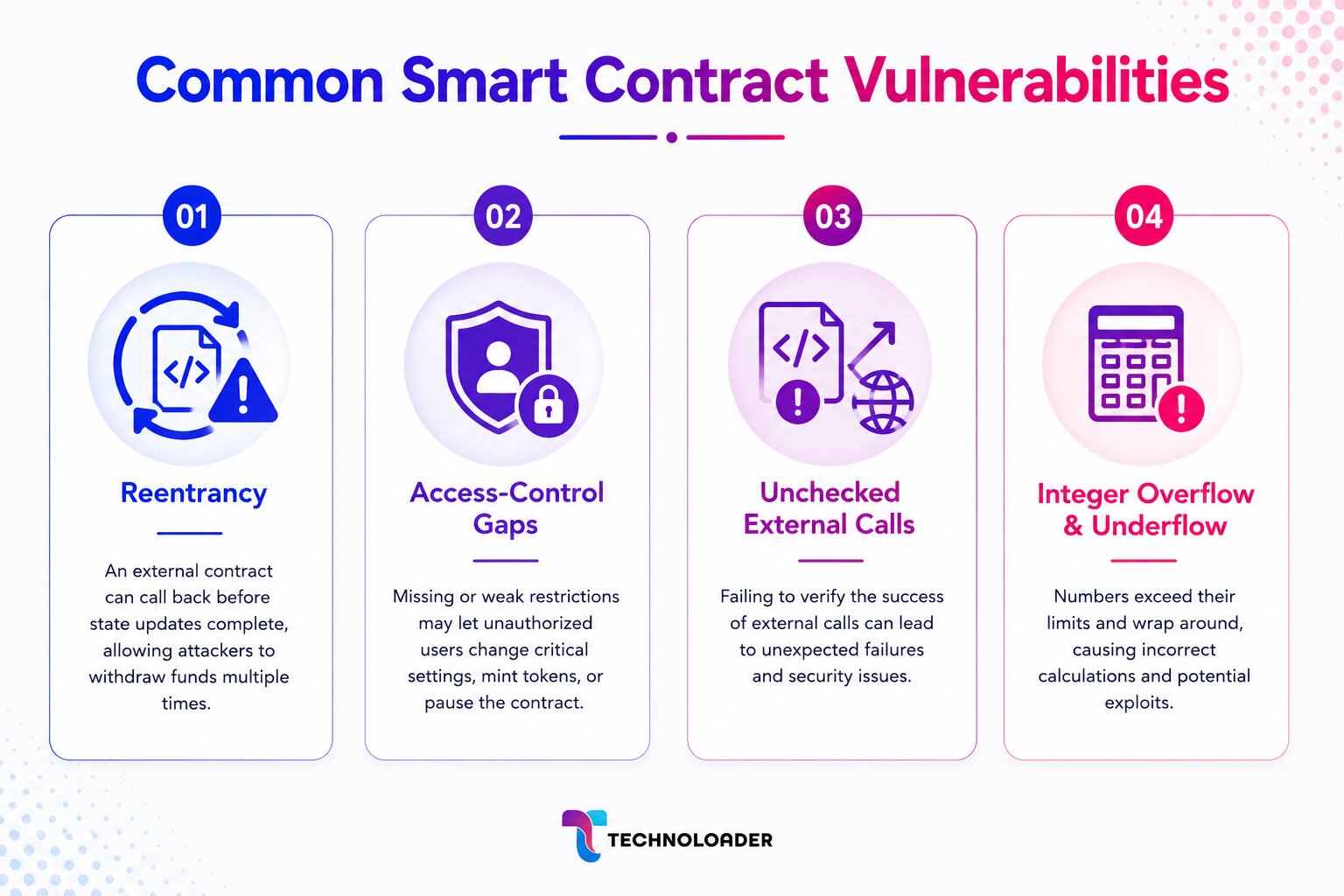
- Reentrancy: This is one of the riskiest bugs. It happens when an external contract calls a function before state updates finish. Attackers can withdraw funds more than once. Developers reduce this risk by following the Checks-Effects-Interactions pattern.
- Access-Control Gaps: Some functions should only be available to trusted administrators. These include changing important settings, minting new tokens, or pausing the contract.
- Unchecked External Calls: Your contract often has to interact with other tokens or ICO platforms. If your contract doesn’t verify external calls, security issues can occur.
- Integer Overflow and Underflow: Older smart contracts can produce incorrect numbers. This happens when values become too large or too small. Modern versions of Solidity, starting with 0.8, prevent these errors automatically.
How an Audit Works
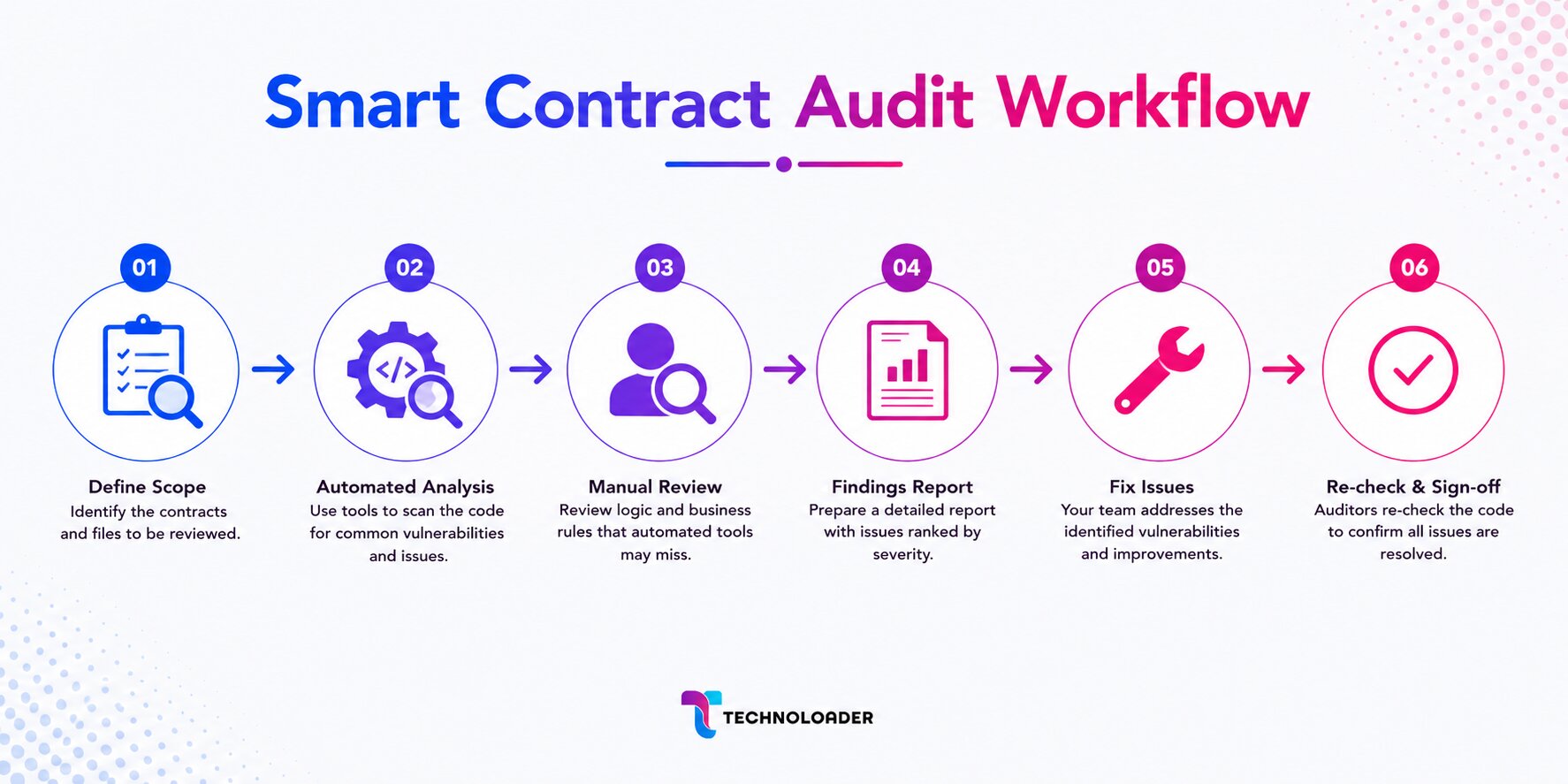
An audit begins by defining its scope. The auditors first identify which contracts and files they will review.
Next, automated and static analysis tools scan the code for common vulnerability patterns.
After that, auditors perform a manual review. They trace the contract’s logic to find business-rule errors that automated tools may miss.
Finally, the auditors prepare a report that ranks every issue by severity. Your team fixes the issues, and the auditor re-checks the code before sign-off.
According to CertiK, Web3 security losses reached about $3.35 billion in 2025. This is a 37% increase from the previous year. Halborn also analyzed the top 100 DeFi hacks from 2014 to 2024. The research found that only about 20% of the affected projects had completed security audits.
These findings show that security audits help you develop secure ICO infrastructure. Still, they don’t guarantee complete safety.
Across the 450+ projects we’ve delivered, teams that skip the audit face higher incident rates later. If you want to audit smart contracts properly, budget time for the full cycle above, not just a quick scan.
What Does an ICO Smart Contract Audit Involve?
During smart contract ICO development, a security audit combines manual reviews, automated scanning, and testing. These methods uncover issues such as reentrancy, weak access controls, and arithmetic errors. It greatly lowers risk, but it cannot eliminate every possible security threat.
How Much Does Smart Contract ICO Development Cost?
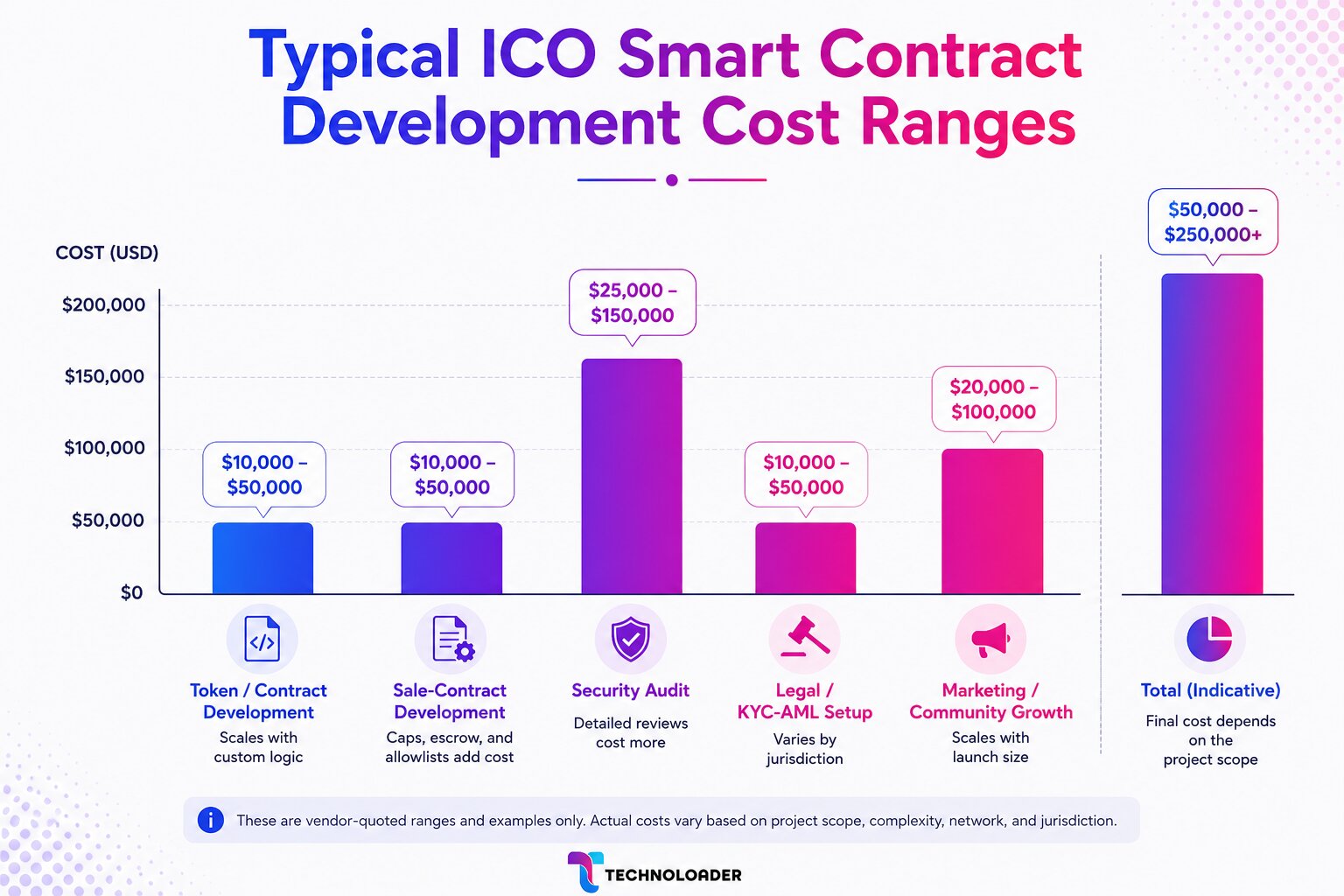
The cost of smart contract ICO development typically ranges from $50,000 to $250,000+. Your final budget will vary based on your project’s size, complexity, and provider.
No independent research house benchmarks these prices. Most estimates come from vendors offering ICO development services. A simple token sale with standard features is usually on the lower end. A custom ICO with advanced tokenomics, vesting, staking, or governance features costs more.
Security audit depth, compliance, and legal advice add to the overall budget. Marketing and community engagement costs also increase as your launch grows.
The table below shows common vendor estimates. These figures are examples only because no independent pricing benchmark exists.
| Cost Component | Indicative Range | Notes |
|---|---|---|
| Token/contract development | $10,000-$50,000 | Scales with custom logic |
| Sale-contract development | $10,000-$50,000 | Caps, escrow, and allowlists add cost |
| Security audit | $25,000-$150,000 | Detailed reviews cost more |
| Legal / KYC-AML setup | $10,000-$50,000 | Varies by jurisdiction |
| Marketing / community growth | $20,000-$100,000 | Scales with launch size |
| Total | $50,000-$250,000+ | The final quote depends on your project scope |
Most smart contract ICO development projects take 3 to 6 months from planning to launch. In the sale contracts my team has shipped, audit scheduling adds the longest delay.
A compliant launchpad or an IDO platform reduces costs and saves time. A custom sale contract makes sense when you need more advanced features.
Understanding the cost of a cryptocurrency launch helps you plan your budget upfront.
What is the Cost of Smart Contract ICO Development?
Most vendor quotes place the total cost between $50,000 and $250,000 or more. Development typically takes 3 to 6 months. A launchpad often beats a custom build on cost and speed.
Also Read
FAQ
How Does an ICO Smart Contract Work?
Smart contract ICO development runs your entire token sale from start to finish. The contract accepts contributions during the sale period. It automatically applies rules such as minimum purchases, maximum contributions, and wallet limits. Once your sale meets the required conditions, the contract sends tokens to buyers.
Are ICOs Still Legal in 2026?
Yes, but the rules depend on your country and token structure. Many projects run under MiCA in the EU or other local compliance frameworks.
This information is for general guidance only. Always seek legal advice before launching your token sale.
How Long Does It Take to Develop an ICO Smart Contract?
Most smart contract ICO development projects take roughly 3 to 6 months. The timeline depends on contract complexity, audit depth, and legal compliance rules.
Simple token sales usually take a shorter time. Projects that target several countries take longer.
Which Token Standard Is Best for an ICO, ERC-20 or BEP-20?
The right standard depends on your target chain. ERC-20, formally EIP-20, is the standard on Ethereum. BEP-20 serves BNB Chain, so choose based on where your users and liquidity already sit.
Do ICOs Require KYC and AML Checks?
Yes. In many regulated markets, ICOs must complete identity checks. They take place off-chain through a verification provider. After approval, the provider adds the user’s wallet to an on-chain allowlist. This allows only approved wallets to join the sale.
What Is the Difference Between an ICO and an STO?
An Initial Coin Offering (ICO) sells utility tokens designed for a product or platform. A Security Token Offering (STO) sells tokens that qualify as securities under the law. STOs require stricter disclosure rules and investor protections.
Can I Launch an ICO Without Coding, Using a Launchpad?
Yes, launchpads and IDO platforms handle much of the sale contract for you. They suit standard token sale structures with common terms. A custom smart contract ICO development project makes sense for advanced tokenomics.
What Is the Most Common ICO Smart Contract Vulnerability?
One common risk is reentrancy. It’s when a malicious contract calls the sale contract again before it updates its data.
Independent security audits help identify these issues before launch. Developers also reduce this risk by using the Checks-Effects-Interactions pattern.
What Is the Difference Between an ICO and an IPO?
An ICO raises money by selling blockchain tokens for a project or platform. An IPO raises money by selling company shares on a regulated stock exchange. The two methods follow different regulatory requirements and investor protections.
Ready to Start Your Smart Contract ICO Development?
Smart contract ICO development gives you a secure and reliable way to launch a token sale. It manages contributions, distributes tokens, and enforces the rules you set.
Even so, a successful ICO process depends on more than writing code. You need strong tokenomics, a clear distribution plan, and a professional security audit. Follow the right legal and compliance requirements to avoid problems later.
If you need reliable ICO development solutions, Technoloader can help. Its experienced blockchain team builds secure smart contracts that match your project goals. The team supports your ICO development journey from planning to launch and beyond.
Talk to our team to walk you through your specific project today.

Vipin Kumar
Vipin Kumar is the Founder & CEO of Technoloader, a Clutch Top 10 Blockchain Development Company for 2025. A serial technology entrepreneur and blockchain architect with a B.Tech background, Vipin has led the delivery of 450+ projects across DeFi, NFT marketplaces, AI/ML, and custom Web3 platforms for clients in the UAE, India, the US, and beyond. He also founded SALIQ (saliq.ai), an AI-driven conversational marketing platform.
Published in Smart Contract Development


