 +91 7014607737
 info@technoloader.com





Table of Contents
Key Takeaways:
-
-
- With the help of improved tools, smart contract libraries, and scalable blockchain networks, creating a cryptocurrency in 2026 is easier than ever.
- Choosing the right blockchain (Ethereum, BNB Chain, or Solana) can affect your token’s speed, cost, security, and long-term growth.
- ERC-20, BEP-20, and SPL are among the most widely used token standards that enable your token to work properly with wallets, exchanges, and DeFi platforms.
- Before development, you must plan your tokenomics, including supply, distribution, allocation, and utility.
- A smart contract security audit is important to prevent vulnerabilities and protect your project from hacks.
- The total cost of launching a token includes development, audits, legal compliance, marketing, and liquidity, not just deployment fees.
- After deployment, providing liquidity and listing your token on exchanges is necessary for trading and real adoption.
- Creating your own cryptocurrency for the first time can feel exciting and overwhelming at the same time.
-
You might have seen Bitcoin, Ethereum, or other tokens growing rapidly and wondered, “Can I launch my own crypto too?” Well, the idea sounds too simple: create a token, launch it, and watch it grow.
But once you start exploring, you realize there are many things to understand. What blockchain should you use? How does token supply work? How do you make sure people trust and use your cryptocurrency?
If you are feeling unsure, we’re here to help you!
Every week, thousands of founders, startups, and businesses explore creating their own cryptocurrency. In 2025, over 22 million new cryptocurrencies were created. This shows how fast this space is expanding and how many new projects are entering the market.
The truth is, successful cryptocurrencies don’t happen by accident. They’re created with good planning, a clear goal in mind, and the right approach right from the beginning.
Here’s a foolproof guide that will help you launch cryptocurrency successfully in 2026. Let’s begin!
Define the Purpose of Your Cryptocurrency
As we mentioned, there were millions of cryptocurrencies created in 2025, so in 2026, launching a new cryptocurrency is not just about creating a new token; it’s about creating real value.
But, before that, it’s essential to ask yourself.
- What problem do you really want to solve?
- Why would people use it over others?
Before starting, your cryptocurrency must have a clear purpose. It could be used for payments, granting access to a platform, rewarding users, enabling governance voting, or supporting a specific ecosystem. Whatever your idea is, it should be practical and meaningful.
If your token does not solve a real problem or offer something different, it may struggle to gain users’ attention in such a competitive market. Today, people usually look for strong utility, transparency, and long-term potential, not just hype.
So before starting to write code or planning a launch, focus on building a strong idea with real-world value. A clear vision is the foundation of a successful cryptocurrency project.
Additionally, since you’re planning to launch your own cryptocurrency, another crucial thing you must be aware of is the difference between a coin and a token. Let us make it easier for you!
Coin vs Token: Understand the Difference
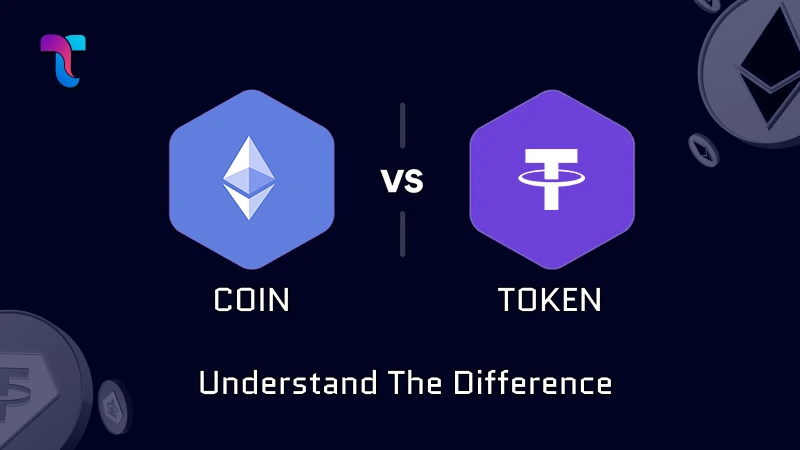
Coins and tokens are both types of digital assets, but they differ in their basic structures and functions.
Understanding Coins
A coin is a form of cryptocurrency that runs on its own blockchain.
This means to launch your crypto coin, you will have to build and manage your own blockchain network. This blockchain will handle all the transactions, security, validation, and network rules.
For example
- Bitcoin runs on the Bitcoin blockchain.
- Ethereum runs on the Ethereum blockchain.
If you choose to create a coin, you’ll need:
- Blockchain development
- Consensus mechanism (like Proof of Work or Proof of Stake)
- Node setup and validators
- Network security system
- Ongoing maintenance and updates
However, creating a coin gives you full control over your system, but it is:
- Technically complex
- Time-consuming
- Expensive
- Requires a strong development team
This option is usually chosen by large projects that want to build a completely independent ecosystem.
Understanding Tokens
A token is built on an existing blockchain like Ethereum, BNB Chain, or Solana.
Instead of building a new blockchain, you use an already established network and create your token using a smart contract.
For example:
- ERC-20 tokens run on Ethereum
- BEP-20 tokens run on BNB Chain
- SPL tokens run on Solana
When you create a token, that blockchain will already be handling:
- Security
- Transaction validation
- Network infrastructure
During development, you’re only required to focus on defining your token’s rules, like supply, distribution, and utility. This helps make your token:
- Faster
- More affordable
- Easier to manage
- Less technically demanding
That’s why most startups and new crypto projects prefer launching tokens over coins.
Core Differences Between Coin and Token
| Features | Coin | Token |
| Blockchain | It has its own blockchain | Built on an existing blockchain |
| Development Requirement | Requires building a blockchain from scratch | Requires smart contract development only |
| Technical Complexity | High | Moderate to Low |
| Cost of Development | Expensive | More affordable |
| Time to Launch | Takes longer | Faster to launch |
| Control Level | Full control over network rules | Limited to the host blockchain’s rules |
| Maintenance | Requires ongoing network maintenance | Blockchain maintenance is handled by the host network |
| Best For | Large-scale independent ecosystems | Startups, platforms, DeFi projects |
Choose the Right Blockchain Network
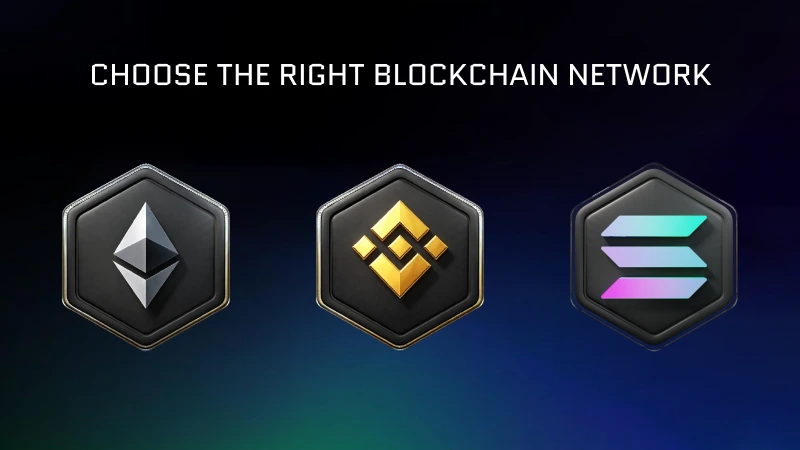
Once you’re clear whether you want to create a coin or a token, the next important step is choosing the right blockchain network.
Your blockchain choice is directly affected by transaction fees, speed, security, user experience, and future scalability. Let’s understand the main options simply.
Ethereum
Ethereum is one of the most trusted and widely used blockchain networks. It supports smart contracts and is home to thousands of tokens, DeFi projects, and NFTs. Ethereum offers strong security and a large developer community. However, transaction fees can sometimes be high during heavy network usage.
BNB Chain
BNB Chain is known for lower transaction fees and faster processing than Ethereum. The BEP-20 token development is popular among startups and DeFi projects. It is more affordable to use, making it a perfect choice for new cryptocurrency projects with budget limitations.
Solana
Solana is a high-speed blockchain designed for scalability. It can process thousands of transactions per second with very low fees. It is commonly used for gaming, DeFi, and NFT projects. Solana is a suitable option for applications that require fast performance and high transaction volume.
Layer 2 Solutions
Layer 2 solutions are built on top of major blockchains like Ethereum to improve speed and reduce fees. They help process transactions faster while still using the main blockchain’s security. Examples include Arbitrum and Optimism. They’re ideal for projects that want lower costs with strong security.
Factors to Consider in Choosing the Right Blockchain:
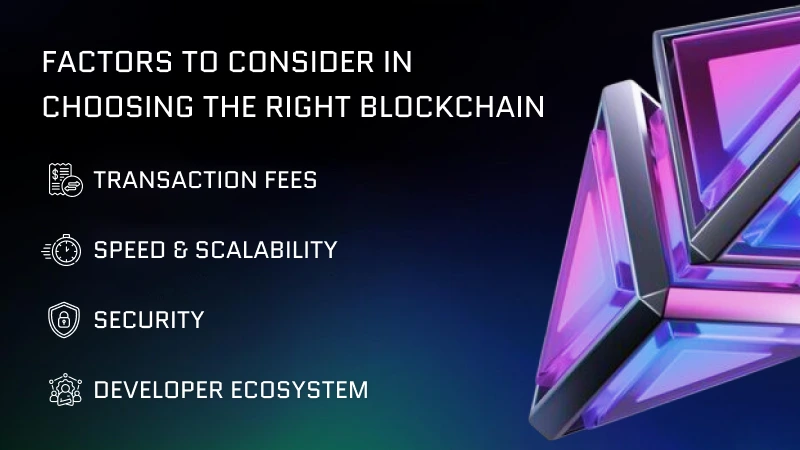
- Transaction Fees
Transaction fees are the costs users pay to send crypto. Lower fees improve adoption, especially for small transactions and frequent platform usage.
- Speed & Scalability
Speed is how fast transactions are confirmed. Scalability is how many transactions a network handles. Both are important for smooth performance and growth.
- Security
Security protects funds and transaction data from hacks or manipulation. A secure blockchain builds trust and reduces financial and technical risks.
- Developer Ecosystem
A strong developer ecosystem provides tools, support, and community help. It makes development easier and ensures long-term growth and innovation.
Plan Your Tokenomics Carefully
The next step is to carefully plan your tokenomics. Before that, do you know what tokenomics is? It is the economic design behind your cryptocurrency, which includes how many tokens will exist, how they will be distributed, and how they’ll create value over time.
First, determine the total supply. You can choose a fixed supply (limited tokens), an inflation-driven supply (new tokens added over time), or a deflationary model (tokens reduced through burning). This affects scarcity and price behavior.
After this, plan how your token will be divided between the team, investors, community, marketing, and liquidity. A proper distribution builds trust. You should also set vesting or lockup periods so team members and investors cannot sell all tokens directly after launch.
At its core, your token must have real use. It should be used for payments, rewards, governance, or platform access. Strong tokenomics promotes stability, builds trust, and ensures long-term success.
Legal & Regulatory Compliance
Once you’ve completed your tokenization planning, the next step is to understand the legal and regulatory rules. Cryptocurrency is not just a technical project; it also involves financial laws that vary from country to country. Therefore, overlooking legal requirements can lead to serious problems, including fines, penalties, or even project shutdown.
In the beginning, you have to decide whether your token is a utility token or a security token.
- A utility token provides access to a product or service within your platform.
- A security token is treated like an investment and may require registration and strict compliance with financial regulations.
In addition, you may need to follow KYC and AML rules. These regulations require verifying user identities to prevent fraud, money laundering, and illegal activities.
Crypto regulations differ globally. Some countries are crypto-friendly, while others have strict restrictions or bans. As crypto laws are complex and constantly evolving, consulting a legal expert before launching helps protect your project and ensures long-term sustainability.
Smart Contract Development & Security
Smart contracts are the core foundation of your cryptocurrency project. They control how your token works, including supply, transfers, rewards, and other rules. Since smart contracts function automatically on the blockchain, once deployed, they cannot be easily changed. That’s why writing them carefully is especially important.
If a smart contract has errors or weak code, hackers can manipulate it. Common vulnerabilities include issues like reentrancy attacks, where attackers repeatedly withdraw funds, or poorly designed systems that allow developers to misuse funds. Even small mistakes can lead to major financial losses.
To reduce risk, consider keeping your smart contract under a professional security audit before launch. For this, hiring a third-party security audit company is highly recommended. Throughout the process, auditors will examine your code to find bugs and security flaws before launch.
Furthermore, you can also choose to launch a bug bounty program, where developers are rewarded for finding security issues. Strong security protects users’ funds, builds trust, and ensures the long-term success of your crypto project.
Development & Infrastructure Requirements
Since you’re launching your own cryptocurrency, you must be aware that launching a crypto is not about creating a token. You also need proper development and technical infrastructure to support your project.
So first, wallet integration is important. Every user needs a secure place to store, send, and receive their token. Your token should be compatible with popular crypto wallets so people can easily use it.
Next, you need a professional website and dashboard. Your website defines your project, vision, and roadmap. A dashboard allows users to track balances, staking rewards, transactions, or other platform features.
A clear, detailed white paper is also essential. It explains your project idea, tokenomics, technical structure, and long-term plan. This builds transparency and investor trust. Furthermore, your token should be visible on a blockchain explorer so users can publicly verify transactions and supply details.
Finally, if you’re launching a coin with your own blockchain, you’ll also need to set up nodes and manage the network to maintain and secure the system. Developing a proper infrastructure ensures smooth performance and long-term reliability.
Funding & Budget Planning
Before the launch, you also needed to carefully plan your budget. Creating a token is not the only expense. There are several other costs that are involved in building and growing a successful project. Such as:
- Development costs include smart contract creation, website development, platform features, and technical setup.
- Legal costs, which may need legal consultation to ensure your project follows local regulations.
- Marketing and PR, because without promotion, people won’t know about your project.
- You may also need liquidity provisioning, which means adding funds to trading pools so people can buy and sell your token easily.
- Some projects also pay exchange listing fees to get listed on centralized exchanges.
- Ongoing operational costs such as maintenance, updates, team salaries, etc.
Liquidity & Exchange Strategy
Once your project is live, people must be able to buy and sell it easily. This is called liquidity. Without liquidity, your token can’t grow.
You first need to decide on which cryptocurrency exchange you’re likely to list your token on, a DEX (Decentralized Exchange) or a CEX (Centralized Exchange).
With a DEX, people can easily trade right from their wallets. Whereas, a CEX is managed by a company that usually has a higher trading volume but may charge listing fees.
To ensure trading goes smoothly, you’re required to set up a liquidity pool next. Simply lock up some of your tokens and pair them with another cryptocurrency, like USDT or ETH.
Some projects use market makers. These are professionals who help keep trading steady and reduce large price swings. You also need to avoid price manipulation, which occurs when large holders suddenly buy or sell to move the price. A good strategy helps your token grow efficiently.
Community Building & Marketing Strategy
In 2026, launching a cryptocurrency is not enough; you also need people to believe in it. That’s where community building and marketing become important.
- Today, you need a strong social media presence. Platforms like X (Twitter), LinkedIn, and Instagram help you share updates, partnerships, and milestones.
- Creating a Telegram and Discord community allows direct communication with users. Here, you’ll be able to answer user queries, share announcements, and build trust through open discussion.
- Go with the trends. Influencer marketing can also help you introduce your crypto to a wider audience and create awareness.
- You can also run airdrops and bounty campaigns that will encourage participants and increase visibility.
- Most importantly, choose to maintain transparency and give regular updates. Share progress reports, roadmap updates, and future plans to help build user trust and increase the likelihood of support for your future growth.
Whitepaper & Documentation
One of the most important documents for your cryptocurrency project is the whitepaper. It gives you a clear and detailed explanation of everything about your project. It helps people who want to invest in your idea and use it trust you.
A good whitepaper should make it clear what problem you’re solving, how your project will work, and why your token is necessary. It should also cover your plan for distributing tokens, which shows how they’ll be split up between the team, investors, the community, and liquidity. Ensuring that everything is clear.
You need to mention a clear roadmap that shows your plans for the future, important dates, and stages of development. This helps people see what you want to do in the long run.
It should also explain the technical architecture, like what blockchain you’re using and how your smart contracts work.
Risk Management & Common Mistakes
Many crypto projects fail because they avoid some of the common major mistakes. Which include:
- Launching a token without real utility is risky. If your token has no clear purpose, then people will lose interest quickly.
- Second, giving too many tokens to your team can reduce trust, because investors may fear price dumping.
- Ignoring legal compliance can further lead to serious legal trouble or even a project shutdown.
- Weak smart contract security can result in hacks and financial loss.
- Not having a clear long-term roadmap makes your project look unplanned and unreliable. Proper risk management protects your project from failure.
Other than this, there are several other things you must be aware of, of which the most important is post-launch responsibilities.
Post-Launch Responsibilities
Launching your cryptocurrency is just the beginning. To ensure it performs well and fulfils all your expectations, you must continue improving the platform through ongoing development. Regular updates show the community.
Community management is equally important. Stay active on social media, Telegram, or Discord. Answer questions, share updates, and build strong relationships with your users. As your project grows, you may need governance upgrades. This means improving how decisions are made, possibly allowing token holders to vote on future changes.
In addition, security updates are equally important for protecting your platform from new threats and vulnerabilities. Transparency reporting builds credibility. Share progress reports, financial updates, and roadmap achievements. When users feel informed and valued, they’re more likely to stay connected with your project.
Conclusion
Launching your cryptocurrency is more than just an idea. It requires proper planning, legal compliance, proper development infrastructure, and strong market strategies. During development, every choice you make, from picking the right blockchain to earning people’s trust, has a direct effect on the long-term success of your project.
Every year, a lot of new cryptocurrencies come out, but only the ones that are useful, clear, and well-executed stay in the competitive market. Since you’re planning to develop a cryptocurrency, connecting with experienced developers is a smart and strategic move.
At Technoloader, we help you turn your ideas into a secure and scalable cryptocurrency solution. From blockchain selection to smart contract development to tokenomics planning, we provide end-to-end assistance to ensure your project is built for long-term success.
FAQs
How much does it cost to create a token in 2026?
The cost of creating a token in 2026 completely depends on the project’s requirements. If you want to launch a basic token, then you may only require blockchain gas fees, which can range from low to moderate. However, a professional launch includes smart contract development, tokenomics planning, security audits, and a lot more. This means that a simple deployment can be affordable, but a complete token project usually requires a structured budget.
Which blockchain is best for creating a token?
The best blockchain depends on your goals.
- Ethereum is known for its strong security, decentralization, and a large developer ecosystem.
- BNB Chain is known for its lower transaction fees and faster confirmation times.
- Solana is popular for offering high-speed transactions and scalability.
Based on your preference, you can choose the right blockchain that perfectly suits your cryptocurrency idea. However, if you want strong credibility and an ecosystem, Ethereum is ideal. If you prefer lower cost and faster transactions, BNB Chain or Solana may be better.
Do I need coding skills to create a crypto token?
If you’re launching basic tokens, then you can simply create them using no-code or low-code platforms, but these options offer limited customization. On the other hand, if you want advanced features, custom tokenomics, security mechanisms, or unique functionalities, you will be required to have coding knowledge or a recommendation from professional blockchain developers.
Is a security audit necessary before launching?
Yes, a security audit is strongly recommended. Smart contracts are permanent once deployed on the blockchain. If there is a vulnerability, it can lead to hacks or financial loss. A professional audit reviews your contract code, identifies weaknesses, and improves security. It also builds trust among investors and users.
How do I make my token successful after launch?
Token success depends on more than just deployment. You need strong tokenomics, transparent communication, active community building, and consistent marketing. Providing real utility within your ecosystem is very important. Regular updates, partnerships, exchange listings, and maintaining liquidity also help build long-term trust and adoption.

Kanak Badaya
Kanak Badaya is a Technical Content Writer at Technoloader with over 3 years of experience translating complex technology into content that actually makes sense. He works closely with emerging domains like Blockchain, Web3, AI, and DeFi, turning intricate technical concepts into clear, structured, and engaging narratives that help businesses communicate with confidence. Rather than just writing for search engines, Kanak focuses on writing for people. He combines in-depth research with a practical understanding of the industry to create blogs, website content, and technical guides that inform, educate, and build credibility. His goal is simple - make advanced technology feel approachable while helping Technoloader strengthen its authority in the digital space.
Published in Cryptocurrency Development


