+91 7014607737
 info@technoloader.com





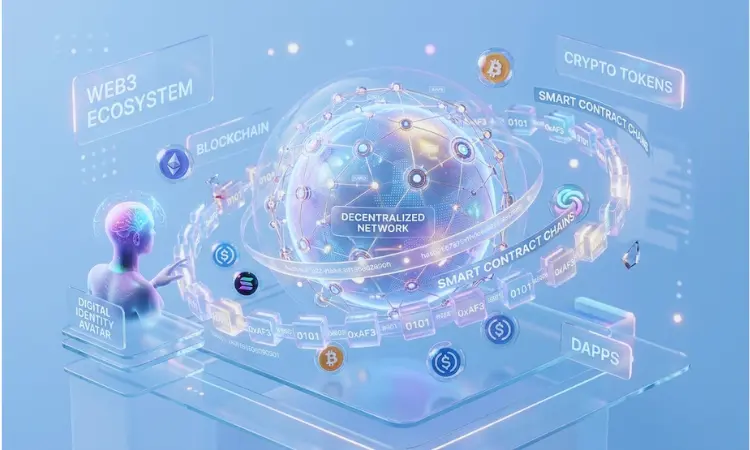
Table of Contents
Key Takeaways:
- Instead of relying on centralized platforms that control access and information, Web3 gives users true ownership of digital assets, identity, and data.
- From Web1 (read-only) to Web2 (interactive), and now Web3, the internet has evolved and now focuses on ownership, decentralization, and user control online.
- By removing centralized control and giving power back to users, Web3 solves major problems like data misuse, account bans, and platform dependency.
- By keeping records on a decentralized network, blockchain ensures transparency and security, making transactions verifiable, tamper-proof, and independent of single authority control.
- In Web3, digital wallets act as a login, identity, and storage, giving users full control but also complete responsibility for their security.
- Smart contracts automate operations without middlemen, enabling faster, trustless, and cost-efficient transactions across payments, trading, gaming, and other digital interactions globally.
- Web3 is still being developed and won’t replace the internet right away, but it does make things like global payments, digital ownership, creator monetization, and community governance possible.
Introduction
How do you use the internet daily? Generally, scroll social media apps, watch videos, shop online, send messages, etc. Well, this feels normal, but there is something that most people don’t realize: do you really own anything that you use online?
Your photos live on someone else’s server, and followers belong to an app. Your account can be blocked, deleted, or restricted anytime, without much explanation. For years, this was just “how the internet works.”
Now, that’s starting to change.
Web3 is the idea that the internet should work more like real life, where you own your money, your identity, and your digital things. Instead of depending on big tech companies, Web3 shifts ownership to individuals. It’s not about begging for technical help or getting rich; often it’s about ownership, freedom, and choice.
And the best part? You don’t need to be a tech expert to understand it.
A Simple Story of the Internet: Web1, Web2, Web3
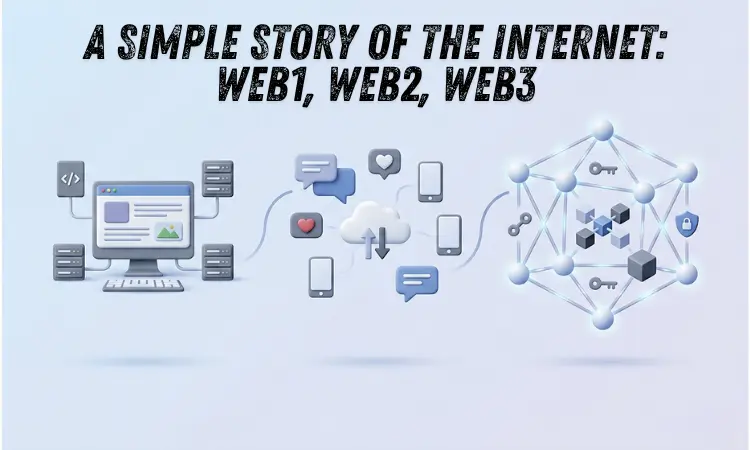
To truly understand Web3, it’s first important to understand how the internet has evolved over time. The internet did not start the way it is today; often, it slowly changed as people’s needs grew and technology improved.
Each stage of the internet shifted how users interacted online and, more importantly, who held control.
Web1
In the beginning, the internet was very basic. This stage is also called Web1; in this stage, people could only open websites and read information.
During this time, there were no comments, likes, or ways to interact with content. Most websites showed fixed information that did not change often.
Furthermore, only a few people knew about creating websites, while the remaining ones simply read what was available. Web1 helped people find out information, but it did not allow users to participate or communicate.
Web2
As the internet grew, Web2 made it more interactive and social. People are able to post photos, write blogs, watch videos, shop online, and connect with others around the world.
With the passing of time, the internet has become more useful and engaging for everyday users. This version of the internet also gives more power to big companies; as a result, they started controlling our accounts, storing personal information, and setting up their own rules.
Even though users create their own content, they don’t truly own it, and accounts or data could be removed or used without any user’s consent.
Web3
In comparison to both Web1 and Web2, Web3 is the advanced form of the internet’s evolution. At this stage, control shifts back to users. Instead of big companies controlling our data, Web3 uses decentralized systems that let people manage their own digital identity, data, and assets.
In Web3, users can simply take part without needing approval from companies, and their digital items are not tied to one single platform. Meanwhile, Web3 is especially designed to make the internet feel like something you own, not something you rent.
In addition to this, if we look at the Web3 global market size, the Web3 market is expected to grow from USD 6.94 billion in 2026 to USD 176.32 billion by 2034, with a CAGR of 49.84%.
Why Web3 Exists (The Problems We Ignore Today)
The internet has become a daily necessity, but most people don’t realize how little control they actually have over their online presence. From social media accounts to personal data and digital content, everything we use online is managed by platforms owned by companies.
While this system works smoothly on the surface, it creates several problems for users. Here are the core reasons behind the existence of Web3:
The Internet Feels Free, but Control Belongs to Platforms
People freely post photos, videos, messages, and opinions online. However, all this content is stored on platforms owned by companies. These platforms control what stays online and what gets removed. If any platform chooses to block or restrict any account, then that user can lose access to everything they created.
Your Data Is Not Truly Yours
Every time you use any app or website, your information, like what you like, search, or watch, is tracked and collected by companies. In many cases, this data is generally used for advertising or a shared purpose. Even though it’s your personal information, you don’t have full access to how it’s handled.
Accounts Can Be Removed Without Warning
Online accounts can be suspended or deleted at any time, sometimes without a clear reason. This can mean losing years of content, followers, or even income. Since platforms own the system, users usually have limited options to recover what they lose.
Users Are Locked Into Platforms
Most platforms don’t allow users to move their followers or content elsewhere. If someone decides to leave a platform, they often have to start again from scratch. This keeps users dependent on platforms, even if they’re unhappy with how those platforms work.
Why Web3 Is the Solution
Web3 was developed to address issues by providing users direct access to their data, identity, and digital assets. Instead of trusting companies, Web3 uses decentralized systems that give control back into the hands of users. The idea is simple: make an internet where individuals are owners of their information, not just users.
The Core Components of Web3
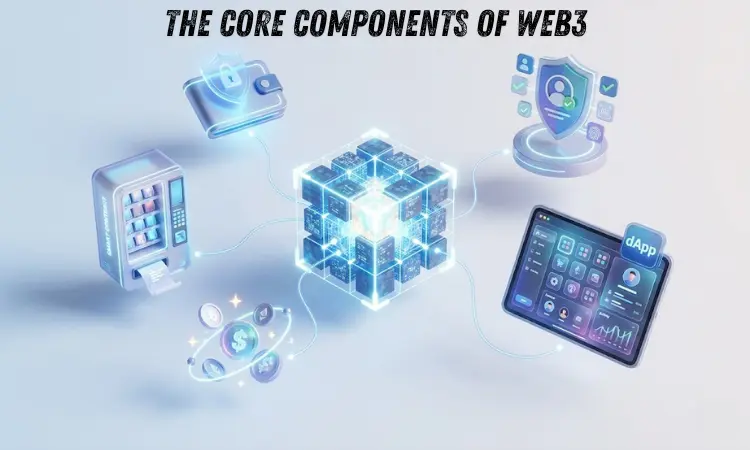
Web3 may seem complex, but in reality, it’s only because it uses new terms. This is the internet where people can own things like money, items, and identity, without the involvement of any third party. Let’s look at the main parts of Web3.
Blockchain = A Public Record Book
Think of a blockchain like a giant notebook that is shared with thousands of computers.
- Every time something happens (like A sending money to B), it gets written in this notebook.
- Everyone has a copy of the notebook.
- Once a page is written, no one can secretly erase or change it, because everyone else would notice.
Why this matters
On normal apps, one company stores your data on their server. If they change something, you can’t easily check it. But on blockchain, records are public and verifiable, so trust comes from the system, not from a company.
For example
If you send money to a friend:
- In Web2, a bank/app confirms it for you.
- In Web3, the blockchain confirms it, and the record stays there.
Digital Wallet – Your Login + Your Key + Your Storage
A Web3 wallet is not only for money. It’s more like your digital backpack + ID card. These digital crypto wallets do 3 big jobs:
A.) It’s your Login
- In Web2, you generally log in with your email + password (and the company controls your account)
- But in Web3, you log in with your crypto wallet, and you control your account.
B.) It holds your digital items
Your wallet can hold:
- Crypto
- NFTs
- Tokens
- Permissions
C.) It proves this is you
Your wallet has:
- A public address (like your UPI ID/account number that is safe to share).
- A private key/secret phrase (similar to your ATM PIN + master key) that is unsafe to share.
Important beginner rule:
If somehow your secret phrase gets leaked, then anyone with that key can take everything. No customer support can save you. That’s why Web3 gives you freedom but also responsibility.
Smart Contracts = Vending Machines for the Internet
A smart contract is simply code that follows fixed rules automatically. Think of it like a vending machine where:
- You put in money
- You choose a snack
- The machine delivers it automatically
- No shopkeeper needed
- No arguing, no delays
Meanwhile, smart contracts are powerful because they replace middlemen by doing the “rules work” automatically.
Some of the common examples of Web3 are:
- Lending without a bank: You deposit funds, and a smart contract gives loans based on rules.
- Buying an NFT: You pay, and the NFT transfers instantly.
- Trading tokens: You swap, and the trade happens automatically.
Smart contracts don’t get biased or lazy. They just do what they’re coded to do.
Tokens = Digital Points, Passes, and Power
Tokens are one of the most misunderstood parts of Web3. Most people who are new to the game think tokens are merely cash, but they’re actually digital tools that serve multiple purposes.
- Value (like money you can send or receive)
- Access (entry to an app, service, or community)
- Rewards (points for using a platform)
- Voting power (a say in decisions)
Here are some real-life examples of tokens:
- Loyalty points in a store let you get discounts
- A movie ticket gives access to a show
- A society membership lets you vote in meetings
Tokens work in the same way, but digitally and without a company controlling them. They help apps run without middlemen and allow users to directly participate.
dApps = Apps Without a Boss
A dApp (decentralized application) looks like a normal app or website, but it doesn’t belong to one company. Think of it like a public park instead of a private mall.
Understand how dApps are different
- There isn’t any central authority to control everything
- The core logic runs on smart contracts
- You log in using a wallet, not email or password
Key Features of dApps:
- The code (smart contracts) defines the rules
- Your wallet acts as your identity
- Your assets remain in your control
dApps are what make Web3 usable in real life. They allow people to trade, play games, lend money, or join communities without trusting a single company.
What Can You Actually Do With Web3?
As we’ve discussed what Web3 is and its main parts, the real question is: what can I do with Web3?
Web3 is more than just an idea; it is the future of the internet that allows people to do real things online, and that’s faster, cheaper, and with more control compared to traditional systems.
Send and Receive Money Without Banks
With Web3, you can send and receive money directly using a digital wallet. Unlike traditional banking systems, you don’t need permission from a bank or other financial institution to complete a transaction.
Payment is made automatically between two people anywhere in the world, often much faster than traditional international transfers. The blockchain keeps a record of the transaction, which makes it safe and clear.
This system cuts out the middlemen, reduces delays, and gives users direct control over their funds.
Own Digital Items Instead of Renting Them
In traditional online platforms, when you buy digital items such as game skins or subscriptions, you’re usually just renting access. Those things are still under the platform’s control.
In Web3, digital assets are stored in your wallet and belong directly to you. This means you can keep them, sell them, or transfer them freely.
Ownership is built into the system, so your digital belongings are not locked inside a single app or platform.
Play Games With Real Ownership
Web3 brings the gaming idea of real ownership into the virtual world. Along with simply playing games, players can keep their earned products, rewards, or collectibles in their digital wallets.
This helps players to trade, sell, or sometimes use their items across different platforms. Compared to traditional games, where all items remain under the control of the company, Web3 games give players a better experience and value for their time and effort.
Support Creators Directly
Web3 lets artists, musicians, writers, and other creators connect directly with their audience without relying heavily on middle platforms.
Instead of the company taking a large percentage of profits, Web3 enables creators to sell digital content, offer memberships, or provide exclusive access directly to supporters. This makes a more open and fair system where creators receive a large share of the value they generate.
Participate in Community Decisions
On Web3 platforms, users can often participate in decision-making. Through special tokens, community members may vote on updates, changes, or future plans.
This approach gives users more influence over how platforms work. Communities can work together to make decisions on projects instead of one company making all the choices.
Common Myths About Web3
When people hear about Web3, they often feel confused or doubtful. That’s normal. New technology usually creates misunderstanding. Let’s clear up some of the most common myths:
- Myth 1: Web3 Is Just Bitcoin: Web3 is not only about Bitcoin or cryptocurrency trading. Crypto is just a part of it; other than this, Web3 also includes digital ownership, decentralized apps, online communities, gaming, and creator platforms.
- Myth 2: Web3 Is Only for Tech Experts: You don’t need to be a developer to use Web3. It’s like social media; many Web3 apps are becoming user-friendly and easy to explore with basic guidance.
- Myth 3: Web3 Is All Scams: There are scams in Web3, but there are also scams in regular finance and on the internet. The technology itself isn’t a scam; it’s necessary to learn about it and be aware of it.
- Myth 4: Web3 Is Bad for the Environment: Early blockchain networks used high energy, but many modern systems now use energy-efficient technology, significantly reducing environmental impact compared to older systems.
- Myth 5: Web3 Will Replace the Internet Overnight: Web3 is still in its early stages of development. It will not replace the current internet instantly, but may gradually improve how online systems work.
Beginner Safety: What You Must Know First
Web3 gives you more freedom and control, but it also gives you more responsibility. In Web3, you’re in charge of your own security. This is different from regular apps, where customer support can reset your password. With this in mind, here are some basic safety rules you need to know:
- Don’t Ever Tell Anyone Your Secret Recovery Phrase: The master key to your crypto wallet is your recovery phrase. If someone gets it, they can get your money and move it. Also, keep it safe offline and never let anyone else see it.
- Begin With Small Steps And Learn First: Start with a small amount of money if you’re new to Web3. Before making big purchases or investments, practice sending transactions, using apps, and understanding wallet approvals.
- Be On The Lookout For Scams And Fake Links: Scammers make fake websites and send fake messages to trick people. Always double-check the URLs of websites before connecting your wallet, and don’t click on links from sources you don’t know.
- Understand What You Approve: Read the details carefully before agreeing to any deal. Some permissions let apps use your tokens. You should only give permissions to platforms you trust and understand.
- You Can’t Change Your Mind About A Transaction: Almost all transactions in Web3 are final. You can’t get your money back if you send it to the wrong person. So, before you use your wallet, always check the address and transaction details again.
Since you’re clear with Web3 and still have concerns about how to start, here’s how you can take your first step into Web3.
How to Take Your First Step Into Web3
Starting with Web3 does not mean investing large amounts of money or becoming a technical expert. As a beginner, the best approach to start is to go gently, stay safe, and be curious. Here’s how novices can start:
Choose A Beginner-Friendly Wallet
Start with making a digital wallet. This wallet will act as your login, identity, and storage space in Web3. There are plenty of wallets available, like Coinbase Wallet and Trust Wallet. These wallets are designed for beginners and offer sign-up processes. Once created, make sure to safely keep your recovery phrase offline.
Add a Small Amount (Optional but Helpful)
To start, it’s not important to put in a large sum of money. If you wish to try transactions, then start with a very small amount. This will help you understand how transfers generally work without taking any unnecessary chances.
Explore a Decentralized App
Once your wallet is ready, you can try the dApp. These apps will let you trade, play games, participate in a community, or own digital assets. If you connect your wallet with dApps, then you will see how Web3 platforms work differently from traditional apps.
Focus on Learning Before Earning
Many beginners enter Web3 expecting quick profits. But first, you must focus on understanding how wallets, transactions, and approvals work. The more you invest in your learning, the more it will help you to make safer and smarter decisions.
Conclusion
Web3 is not just a new technology, but it’s a shift towards better use of the internet. For years, users have relied on the platforms that control their information, content, and digital identity. But Web3 has completely changed this by giving people greater control and transparency over their online presence.
Today, it is very important to understand that Web3 is still in its developing phase. It’s not perfect, but it’s also not meant to replace everything overnight. But considering all its values, it has come out as a powerful idea, where users do not participate in the internet, but they’re also a part of it.
Meanwhile, to explore Web3, you don’t need to be a tech expert, but if you wish to build scalable Web3 applications, launch a dApp, or integrate blockchain into your business, then working with experienced professionals can make the process smoother and more secure.
That’s where Technoloader comes in. With great expertise in Web3 technology, we can help your business transformation ideas become scalable and secure digital products.
Frequently Asked Questions
Is Web3 the same as cryptocurrency?
No, Web3 is not the same as cryptocurrency; instead, it is just a part of the broader Web3 ecosystem. Web3 also includes decentralized apps, digital ownership, blockchain technology, and other things that allow users to control their digital presence.
Do I need technical knowledge to use Web3?
No, you are not required to have any technical knowledge to use Web3. There are many platforms that are especially designed for beginners and work similarly to regular apps. However, learning the basic concept can elevate all your experience.
Is Web3 safe for beginners?
Web3 can be safe if you follow basic security rules. Protect your wallet’s secret recovery phrase, cross-check links before connecting your wallet, and start with small amounts while learning how the system works.
Can I use Web3 on my mobile phone?
Yes. Many Web3 wallets and dApps are available on mobile devices. You can simply create a wallet, send transactions, and explore dApps directly from your smartphone.
Is Web3 legal?
Web3 is generally legal, but regulations vary by country. Most places accept cryptocurrencies, NFTs, and blockchain apps; they’re generally regulated. However, using Web3, illegal activities like fraud, scams, or money laundering are strictly prohibited everywhere.
Will Web3 replace the current internet?
Web3 is unlikely to replace the internet completely. Therefore, it is more likely to create its own place and grow alongside existing systems and systematically improve how ownership, identity, and digital assets are used to work online.
Do I need money to try Web3?
Not really. You can simply explore many Web3 platforms without investing anything. However, if you want to make transactions or buy digital assets, then you need some amount to get started.

Kanak Badaya
Kanak Badaya is a Technical Content Writer at Technoloader with over 3 years of experience translating complex technology into content that actually makes sense. He works closely with emerging domains like Blockchain, Web3, AI, and DeFi, turning intricate technical concepts into clear, structured, and engaging narratives that help businesses communicate with confidence. Rather than just writing for search engines, Kanak focuses on writing for people. He combines in-depth research with a practical understanding of the industry to create blogs, website content, and technical guides that inform, educate, and build credibility. His goal is simple - make advanced technology feel approachable while helping Technoloader strengthen its authority in the digital space.
Published in Web 3.0