 +91 7014607737
 info@technoloader.com





Table of Contents
If you were around during the 2017–18 crypto boom, you probably remember ICOs dominating headlines. Overnight token launches, massive hype, and investors rushing in hoping to catch the next 100x. At the peak, ICOs raised an estimated $6.88 billion in funds in a single year, proving how powerful blockchain crowdfunding could be.
But that same hype cycle exposed a serious problem: lack of accountability. Many projects disappeared after raising money, and investors were left holding worthless tokens.
That’s where IDOs enter the picture!
Instead of launching through private websites and hoping for exchange listings, projects now raise funds directly on decentralized exchanges with instant liquidity and transparent smart contracts.
As fundraising models evolve, understanding how IDOs differ from ICOs isn’t just crypto jargon. It is essential knowledge for anyone investing in or launching a blockchain project today.
Let’s check it out!
What Is An Initial DEX Offering (IDO)?
IDO, or Initial DEX Offering, is gaining popularity in the world of cryptocurrencies. As the name suggests, these are conducted on decentralized crypto exchanges (DEX) rather than traditional platforms. The process offers several benefits, which include enhanced security, transparency, and accessibility.
In an IDO, the tokens are offered directly on a decentralized exchange. Participants can acquire these tokens by using cryptocurrencies or stablecoins. What makes IDO stand out is the concept of liquidity pools, which allow participants to provide liquidity to the project in exchange for tokens.
Benefits of IDOs
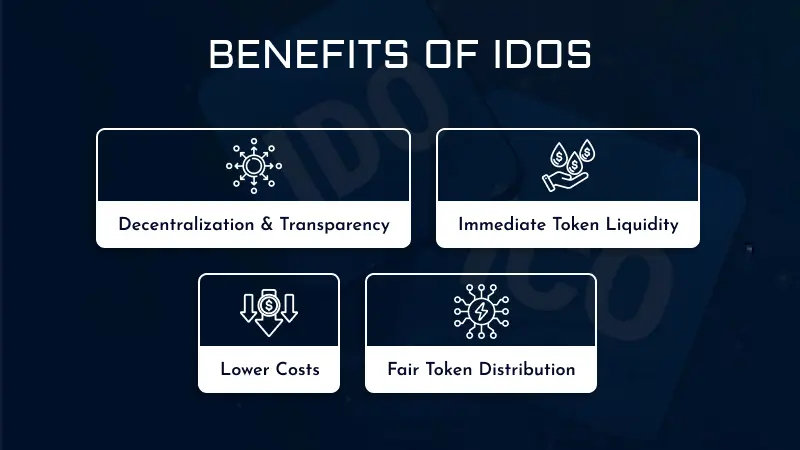
IDOs are gaining popularity due to their benefits over traditional and other crypto fundraising methods. These include:
Decentralization & Transparency
Smart contracts are the core engine behind IDO processes that are conducted on decentralized platforms, which means no single entity has the power to control it. This reduces the risk of manipulation and boosts transparency, as all the transactions are recorded on the blockchain ledger.
Immediate Token Liquidity
Unlike other fundraising models that basically require extended token or coin lockups, IDOs typically offer instant liquidity through liquidity pools. This allows investors to trade right after the sale, which further reduces the risk of being locked up.
Lower Costs
Conducting an IDO is less costly for projects than using other centralized fundraising methods. It makes IDOs more accessible to smaller projects with limited budgets. Anyone can participate in an IDO with a cryptocurrency wallet.
Fair Token Distribution
IDOs have mechanisms like whitelisting, tiered allocations, or capped investment amounts, which help participants achieve fair token distribution. This allows smaller retail investors to participate and acquire tokens.
Risks of IDOs
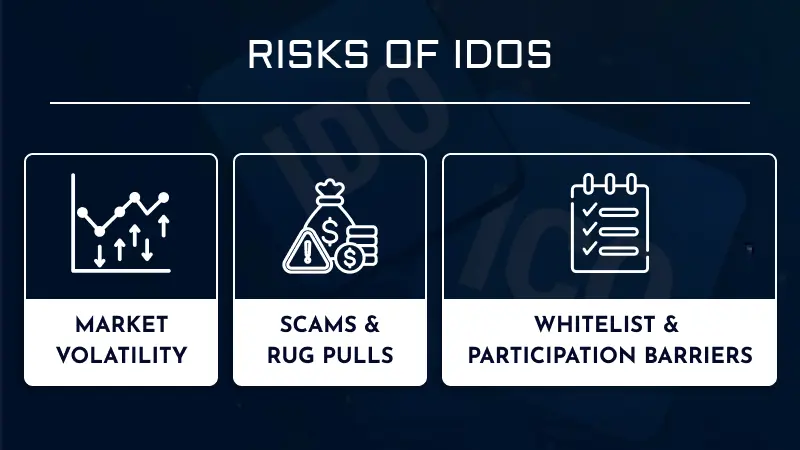
While IDOs offer certain benefits, they even come with some risks to watch out for. These include:
Market Volatility
The crypto market is volatile, and newly launched IDO tokens are no exception to that. Prices can fluctuate after launch, which can lead to potential losses for investors.
Scams & Rug Pulls
The unregulated nature of IDOs makes them vulnerable to scams, where developers abandon the project and run away with the funds raised. This leaves investors with worthless tokens.
Whitelist & Participation Barriers
Whitelisting promotes fairness, but it can also exclude participants who fail to meet the exchange’s eligibility criteria. This leads to highly competitive whitelists where only a portion of participants secure access to token sales.
What Is An Initial Coin Offering (ICO)?
An ICO, or Initial Coin Offering, is a fundraising method that is used for companies or projects to raise funds. It basically involves issuing a new cryptocurrency or token to investors in exchange for their financial investment in the project. ICOs gained immense popularity during the cryptocurrency boom of 2017, and since then, they have become one of the most important methods for raising funds.
During an ICO, investors can purchase tokens using cryptocurrencies such as Bitcoin or Ethereum. These typically represent a share or stake in the project. The funds that are raised through ICO are further used to develop the project.
Benefits of ICOs
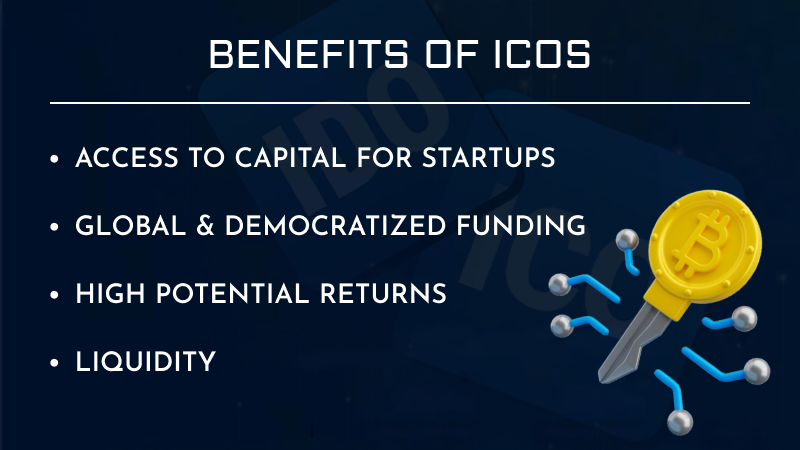
Let’s check out the benefits associated with ICOs and why so many blockchain projects choose this fundraising model!
Access to Capital for Startups
ICOs offer an effortless and cost-effective way for early-stage projects to raise capital without undergoing lengthy and expensive processes of traditional ways of raising funds, like IPOs (Initial Public Offerings).
Global & Democratized Funding
Anyone with an active internet connection can participate in an ICO. This opens up investment opportunities to a broad and global audience, rather than limiting them to specific geographic regions.
High Potential Returns
For early investors in successful projects, the value of the tokens can rise potentially after they are listed on several exchanges. This leads to significant profits.
Liquidity
Tokens can often be traded on crypto exchange platforms quickly after their ICO is complete. It offers greater liquidity as compared to traditional venture capital investments that might be locked for years.
Risks of ICOs
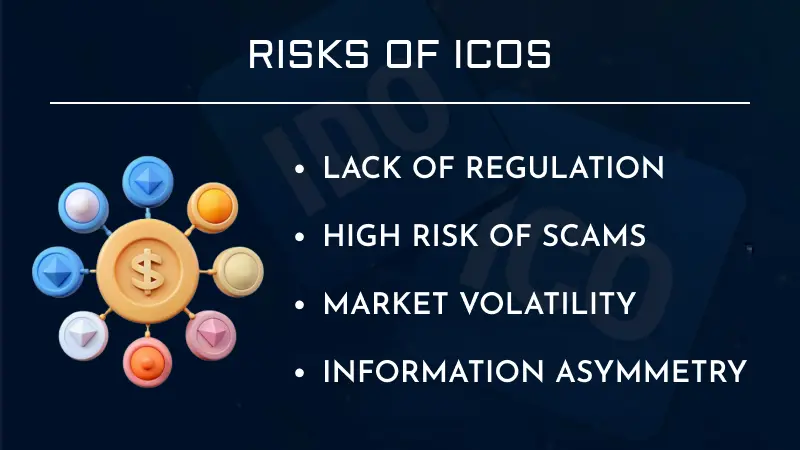
While ICOs opened exciting opportunities for investors and startups, they also came with significant risks. These include:
Lack of Regulation
The ICO market is largely unregulated in several jurisdictions. This means that investors have few or no legal protections if a project fails or is fraudulent.
High Risk of Scams
The lack of oversight makes the market vulnerable to fraudulent schemes and rug pulls, where project developers generally disappear with investor funds.
Market Volatility
The value of crypto tokens is extremely volatile and can decrease in a short period. There is no guarantee of profits, and investors can lose their invested funds.
Information Asymmetry
The data provided in whitepapers may be incomplete or misleading without disclosure of important documents. It can make it difficult for investors to assess the project’s viability and risks.
Key Differences Between ICO and IDO
While ICOs and IDOs share the common goal of raising capital, there are distinct differences between them. These include:
Marketplace Model
ICO:
In an ICO, the project team manages the token sale themselves on their website or via a smart contract. Investors send funds directly to the project, and tokens are distributed either instantly or after the sale completion. There is no marketplace involved, so the entire fundraising process is managed internally by the project.
IDO:
In an IDO, the token sale happens through a decentralized exchange or launchpad. It automates fundraising, token allocation, and liquidity pool creation. Investors receive tokens instantly through on-chain swaps, and trading becomes available immediately, which makes the process more transparent and decentralized.
Liquidity Availability
ICO:
After an ICO, tokens are not always tradable immediately. Investors may have to wait weeks or months for the token to be listed on an exchange. In some cases, a listing never happens, which leaves investors unable to sell or liquidate their purchased tokens.
IDO:
In an IDO, liquidity pools are created instantly once the sale ends, which allows tokens to be traded right away. This gives investors confidence because they can enter or exit positions immediately without depending on centralized exchange listings.
Trust and Verification
ICO:
During the ICO boom, many projects raised funds without proper checks, which led to numerous scams and failures. Because there was no third-party verification, investors relied solely on project claims, whitepapers, and promises, which created a high level of uncertainty and risk.
IDO:
IDOs offer a basic level of credibility since launchpads usually review project details before approving token sales. Although not foolproof, this screening process helps filter out unreliable projects and increases investor trust compared to ICOs.
Cost and Accessibility for Projects
ICO:
Running an ICO can be expensive because the team must manage the token sale infrastructure, investor onboarding, security, and post-sale exchange listings. Marketing costs are high, as the project must attract investors independently without platform support.
IDO:
IDOs reduce launch costs because projects rely on decentralized exchanges for liquidity and distribution. Listing fees are eliminated, and launchpads provide access to existing investor communities, which lowers marketing overhead and simplifies the token launch process.
Investor Participation
ICO:
ICO participation was often unfair, as early insiders and private investors received large allocations at discounted prices. By the time public sales opened, retail users usually faced higher token prices, smaller quotas, or limited availability, which makes it harder for regular investors to enter fairly.
IDO:
IDOs allow broader and more equitable participation because almost anyone with a compatible wallet can join the sale through decentralized platforms. This reduces dependency on private investment rounds and creates a more open entry path for the public.
The End Note
That brings us to the end of this blog!
Crypto fundraising has come a long way from the early days of ICOs.
While ICOs unlocked global access to investment, they also revealed gaps in trust and liquidity that pushed the industry toward more transparent models like IDOs. Today, IDOs offer faster token launch processes, instant liquidity, and broader participation through decentralized platforms.
Whether a project chooses an ICO or IDO depends on its goals, compliance needs, and launch strategy. What matters is understanding how each model works so founders and investors can make informed decisions and avoid past pitfalls.
If you are planning to launch your token, secure liquidity pools, or build a complete fundraising ecosystem, Technoloader offers end-to-end ICO and IDO development services.
Get in touch with us to discuss your requirements!

Kanak Badaya
I’m Kanak Badaya, a technical content writer with 2+ years of experience. I like turning complex technology topics into simple, reader-friendly content that's easy to understand and practical to use.
Published in IDO Development


