+91 7014607737
 info@technoloader.com
 10ms Order Execution Latency
- Next-Gen AI Trading Infrastructure
- 99.99% Uptime Under Market Stress
- Enterprise-Level Security
- 15+ Built-In Revenue Generation Streams
8+ Years
Experience in Blockchain
80%
Blockchain Expert
450+
Project Completed
150+
Client Worldwide
Cryptocurrency Exchange Development Company in India
Technoloader is a government-certified crypto exchange development company headquartered in Jaipur, Rajasthan, India, and serving investors and entrepreneurs since 2019. We specialize in building fully functional and regulation-ready trading platforms – from high matching engine architecture in CEXs to privacy-first DEXs, we deliver it all.
Be it you are launching your first exchange or scaling an existing platform, our team of developers delivers end-to-end crypto exchange development solutions. We even help you with architecture design, smart contract development, order book system, liquidity integration, KYC/AML compliance, and post-launch support.
So, ready to turn your exchange into a revenue-generating platform? We’re here to help you!
The Market Opportunity Behind Crypto Exchange Development




Proven Market Demand
$55.38 billion is not speculative money. It is real capital flowing through crypto exchanges every single day. This means demand already exists for your platform.
Market Keeps Growing
A 14.4% annual growth rate means the market nearly doubles every 5 years. Every exchange built today becomes more valuable as user adoption rises year over year.
Increasing User Base
580 million crypto owners are looking for exchanges they can trust. The top exchanges serve only a fraction, and your exchange can capture the users that are missing.
Disclaimer: The data above is sourced from third-party market research reports and is provided for informational purposes only. It does not constitute financial or investment advice. Cryptocurrency markets are volatile, thus, you must always conduct research before making investment decisions.
Our Expertise in Different Types of Crypto Exchange Development
We specialize in offering cryptocurrency exchange development services across every platform type. Each of them is built for performance, security, and long-term revenue generation. Choose your exchange type below and let us help you build and launch in the market!
Our Cryptocurrency Exchange Development Solutions
As a leading service provider in the field, we can help you launch a crypto exchange that reflects your vision. Our solutions cover everything from core trading engines to advanced security, such that you scale fast and lead confidently in this space.

Crypto Exchange Consulting
Our expert consultants can help you define a complete development roadmap, including strategy, compliance, features, and tech stack, to successfully plan, launch, and scale your cryptocurrency exchange.

Custom Exchange Development
We build secure, scalable, and fully customized crypto exchange from scratch through expert development processes tailored to your business model, trading features, and more.

White-Label Exchange
Launch your branded crypto exchange quickly using our customizable white-label solution. It includes built-in features, functionalities, and robust security to help you step into the market quickly.

Crypto Payment Gateway Integration
We integrate a secure crypto payment gateway directly into your exchange. This enables fast multi-currency transactions, real-time payment processing, and smooth fiat-to-crypto conversion.

Integration Services & Solutions
We provide easy integration of third-party APIs, wallets, liquidity providers like Binance and Kraken, and blockchain networks. This ensures seamless, secure, and scalable exchange functionality.

Crypto Trading Bot
We build powerful automated crypto trading bots that perform trades in real-time, increase profits, reduce risks, and adjust to market changes for seamless and efficient trading experiences.

Crypto Wallet Integration
We are experts in crypto wallet development. This means your exchange is integrated with secure wallets that support hot and cold storage, multi-sig protection, and deposit and withdrawal flows for every user.

Crypto Exchange Script
Launch your exchange quickly with our fully customizable crypto exchange script. Built on proven architecture, it even supports all major trading features and can be modified to match your needs and goals.

Cryptocurrency Legal Solutions
Our legal solutions cover exchange licensing, KYC/AML compliance frameworks, jurisdictional advisory, and regulatory documentation, such that your platform operates legally across every market you target.
Our Powerful Trading Solutions for Crypto Exchanges
A great exchange is defined by the trading experiences it delivers. At Technoloader, we deliver advanced trading solutions that traders demand today. Have a look at our trading solutions mentioned below and find the right fit for your exchange!
Copy Trading
Copy trading lets new traders automatically copy the strategies of pro traders. Our crypto copy trading software mirrors trades instantly, displays transparent performance metrics, and gives users complete control over risk limits.
Spot Trading
Spot trading gives users the most direct way to buy and sell cryptocurrencies at live market prices. We build advanced spot trading platform that creates high-speed matching engines that process orders instantly and display accurate market rates.
Margin Trading
Margin trading helps users to trade beyond their existing balance by borrowing funds. We offer margin trading exchange development solutions that integrate smart leverage controls, collateral tracking, automated liquidation triggers, and live risk monitoring.
Options Trading
Options trading gives users the right to buy or sell crypto assets at a predetermined price before a set expiry date. Our built options trading crypto exchange offers real-time Greeks calculation, multi-strike support, and risk management tools.
Futures Trading
Futures trading allows users to agree today on the price of a crypto asset for settlement at a future date. Our crypto futures exchange delivers high-frequency matching engines, contract types, funding rate mechanisms, and liquidity aggregation.
The Crypto Exchanges Winning in 2026 Are Powered by AI
The most successful crypto exchanges in 2026 are not just fast and secure. Well, they are intelligent. At Technoloader, we build AI-powered crypto exchanges that give your platform a genuine competitive edge. It automates complex processes, predicts market behaviour, detects fraud in real time, and delivers personalised experiences that keep traders coming back.
Here are the AI features we integrate into every exchange we build:
- AI-Powered Real-time Fraud Detection
- Voice & Chat-Based AI Trading Assistants
- AI-Based Liquidity Prediction
- AI-Powered Market Sentiment Analysis
- AI-Based Risk Management
- AI-Powered Portfolio Management
- AI Token Reports
- AI-powered Smart Order Routing
Ready to give your exchange the AI edge? Get in touch with us today!

Advanced Features Of Crypto Exchange Platform Development
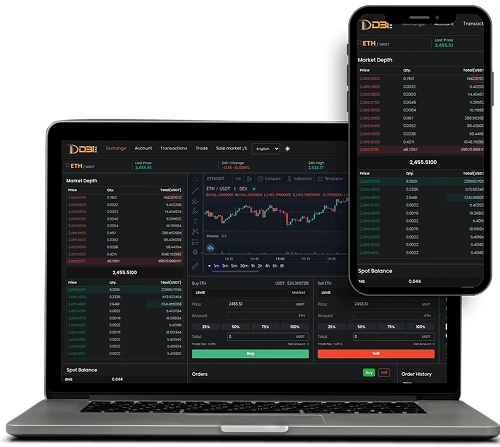
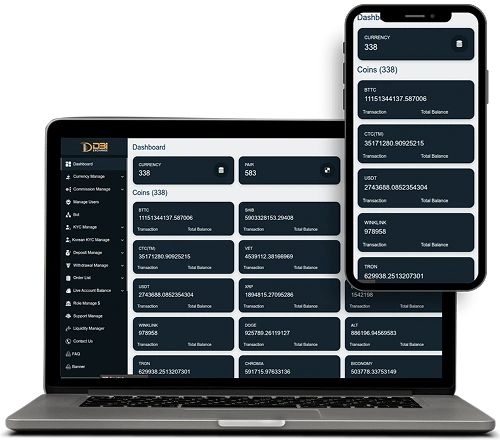
Our crypto exchange software is packed with advanced trading features, robust security mechanisms, and a versatile admin panel. It gives your users a seamless experience while giving you complete visibility and control over every transaction and activity on your platform.
- Real-Time Dashboard
- KYC/AML Control
- Fee Management
- Trading Pair Control
- Withdrawal Approval
- Revenue Analytics
- User Risk Scoring
- Liquidity Pool Management
- Referral Management
- Suspicious Activity Alerts
- TradingView Charts
- Stop Loss / Take Profit
- Multi-Currency Wallet
- API Key Management
- Multi-Chain Swap
- Staking & Lending
- Portfolio Tracker
- Price Alert System
- Fiat On/Off Ramp
- One-Click Trading
- 2FA Authentication
- Biometric Login
- 256-Bit Encryption
- Cold Wallet Storage
- DDoS Protection
- IP Whitelisting
- Multi-Sig Authorization
- AML Screening
- Smart Contract Audit
- Anti-Phishing Protection

Benefits of Using Our Crypto Exchange Software Development Services
When you choose Technoloader for crypto exchange development solutions, you gain a powerful set of benefits designed to benefit both entrepreneurs and users. Our solutions are built to drive success and deliver effective trading experiences. Here are the key benefits:
Robust Security Measures
We use crypto exchange security practices such as 2FA authentication, multi-sig authorization, DDoS protection, and encrypted systems. This keeps user assets safe and even helps build the trust your exchange needs to grow.
High Liquidity Solutions
Our exchanges connect with the best liquidity providers and deep order books. This ensures less than 0.1% slippage on high-volume trades, smooth execution, and consistently high daily active trader counts from launch.
Rapid Time-to-Market
Our white-label crypto exchange software lets you launch your exchange platform in as little as 30 days. It helps reduce development time, upfront costs involved, and time spent waiting to generate revenue.
Customizable and Scalable Architecture
Every exchange is tailored with a custom UI/UX, distinct trading features, and scalable infrastructure. Our exchanges can seamlessly handle growing transaction volumes as your user base and business grows.
Multiple Revenue Streams
Our exchange includes built-in monetization options, such as trading fees, withdrawal fees, staking rewards, listing fees, and support for token sales. This ensures consistent income from multiple sources.
Broad Regulatory Compliance
We implement KYC/AML compliance modules directly into your platform, such that you meet local and international legal standards, reduce operational risks, and operate confidently across multiple jurisdictions.
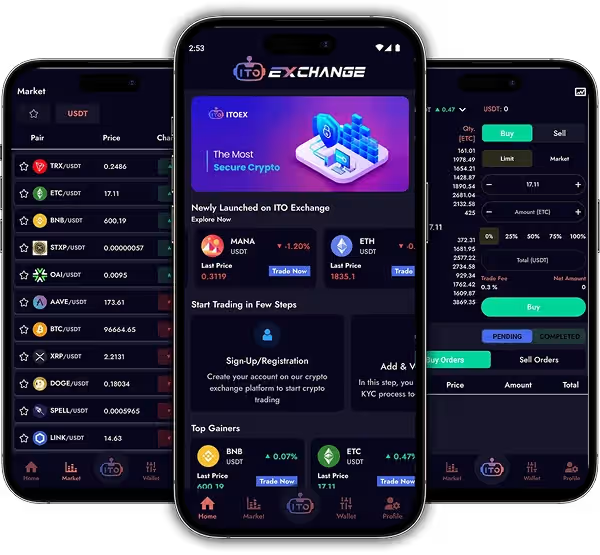
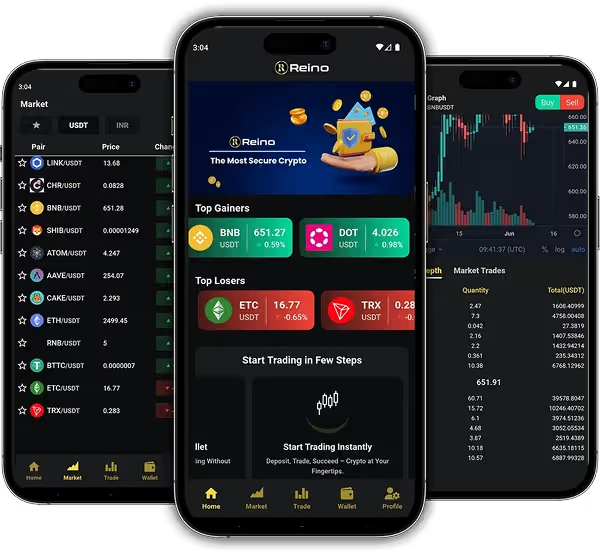
Crypto Exchanges We've Built: Our Portfolio
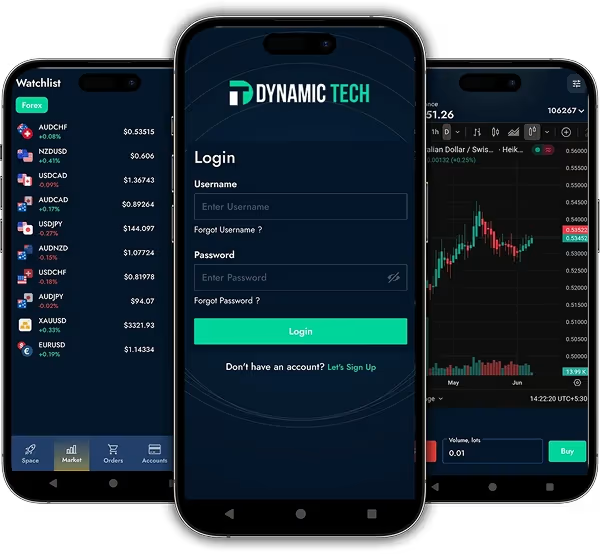
At Technoloader, we take pride in using secure and scalable crypto exchange development frameworks. Our portfolio displays successful projects that we have meticulously crafted to ensure security, scalability, and a seamless trading experience for users worldwide. Have a look into each cryptocurrency exchange we’ve built!
Revenue Models We Integrate in Our Crypto Exchange Platforms
We integrate multiple proven revenue models into every exchange we build. That's because profitability should be built in from the architecture level, not added as an afterthought. Have a look at the revenue models we add to our exchanges!
 Trading Fees
 Withdrawal Fees
 Token Listing Fees
 Staking
 Yield Farming
 Subscription & Membership Plans
Our Crypto Exchange Development Process
We follow an agile crypto exchange development process that involves various important steps to ensure the exchange's security and reliability. Have a look at how we approach it!
Tech Stack We Use for Crypto Exchange Development
We develop crypto exchanges on a modern and scalable tech foundation that ensures smooth trading, efficient backend processing, and strong security. Our platforms offer reliability and trust through encrypted transactions, multi-layer protection, and real-time monitoring. Check out what powers our crypto exchange platforms!
Back-End & API Frameworks :
 Node.js
 Python
 Java
Java
 Go
Go
 NestJS
 FastAPI
Frameworks:
 Express.js
 Django
WebSocket:
 Socket.io
Databases:
 PostgreSQL
 MySQL
MySQL
 MongoDB
 Redis
Redis
 AWS RDS
Front-End Technologies
 React
React
 Redux Toolkit
 Tailwind
 Bootstrap
 Next.js
 Web3.js
 Typescript
Message queue:
 Apache Kafka
 Redis Streams
 RabbitMQ
KYC:
 Digitap
 Sumsub
Cloud / DevOps:
 AWS
AWS
 Docker
 Nginx
Nginx
 GitHub Actions
 BitBucket
 CI/CD Piplines
 GCP
GCP
 DigitalOcen
 Apache2
Security:
 JWT
JWT
 Bcrypt
 2FA
2FA
 CORS
CORS
 SSL/TLS Encryption
Libraries/SDKs:
 Web3.js
 BitcoinJS
 Binance Chain SDK
 Etherjs
 wagmi
wagmi
Supported Chains:
 Ethereum
 Tron
Tron
 BNB
BNB
 Polygon
 Solana
 Avalanche
 SUI
SUI
 TON
TON
 Cardano
 Astar
Astar
 Arbitrum
 Polkadot
Regulations & Compliance Necessary for Crypto Exchange Development
Building a crypto exchange without regulatory compliance is a risk that no investor should take. At Technoloader, we integrate globally known compliance frameworks directly into your exchange architecture. This ensures your platform operates legally and confidently across every market you enter.
- KYC & AML
- GDPR
- PCI-DSS
- SEC
- PSD2
- FATF
- FINRA
- FIU-IND
How Much Does it Cost to Create a Crypto Exchange Software?
The crypto exchange development cost can vary a lot based on a few different factors. Here's an estimate of the cost breakdown for different cryptocurrency exchange platforms:
Centralized Exchange
The cost required to build a centralized cryptocurrency exchange platform ranges somewhere between USD 40,000 and USD 80,000. Costs might increase based on performance requirements, user traffic, and security features.
Decentralized Exchange
Developing a decentralized crypto exchange may cost between USD 40,000 and USD 50,000. The budget cost even depends on smart contract complexity, blockchain integration, and user experience customization.
P2P Exchange
The estimated cost to create a peer-to-peer cryptocurrency exchange is between USD 20,000 and USD 30,000. This varies with features such as escrow systems, dispute handling, and KYC integrations.
Hybrid Exchange
A hybrid exchange platform may require a capital investment between USD 30,000 and USD 125,000. This relies on the desired balance between centralized speed and decentralized security protocols.
White-Label Solution
White-label crypto exchange solutions typically cost somewhere between USD 15,000 and USD 30,000. These are pre-built platforms that can be tailored to business needs, which minimize time and development costs.
Ready-to-Launch Crypto Exchange Clone Scripts
Why build from scratch when proven exchange models already exist? Our crypto exchange clone scripts give you a battle-tested foundation, that are fully customizable, rapidly deployable, and built to your exact specifications.

Develop a Binance-like exchange with 250+ trading pairs, advanced order matching, spot and futures trading, high liquidity, and top-notch security, which is ready to customize and deploy quickly.

Build a beginner-friendly exchange modelled on Coinbase. It even features a clean interface, fiat on-ramps, instant buy or sell, multi-currency wallet support, and full KYC/AML compliance built in from day one.

Create a crypto aggregator platform like CoinSwitch. It enables users to compare and swap cryptocurrencies across multiple exchanges at the best available rates with less fees and more convenience.

Develop a feature-rich exchange like KuCoin. It supports spot trading, futures, staking, lending, and trading bot integration, with API access and multi-language support for a global user base.

Launch an INR-supported crypto exchange like WazirX with P2P trading, token listing capabilities, staking features, and a smooth user experience personalized for the fast-growing Indian crypto market.

Develop a decentralized exchange on BNB Chain similar to PancakeSwap. It offers automated market making, liquidity pools, yield farming, staking, and token swapping with low transaction fees and high speed.

Create a trustless DEX like Uniswap, which is powered by smart contracts on Ethereum. It enables permissionless token swapping, liquidity provision, and decentralised governance with no central authority involved.

MEXC Clone Script
Launch a high-performance exchange like MEXC. It even supports spot, futures, and ETF trading across 1,500+ cryptocurrencies, with high liquidity, low fees, and a powerful API for professional traders.
Why Choose us as your Crypto Exchange Development Company?
Choosing the right crypto exchange partner affects the success of your exchange in the long run. We, at Technoloader, deliver top crypto exchange development services backed by proven experience, deep technical expertise, and scalability in mind. Take a look at why you should choose us to build your crypto exchange platform!
Expert Team
We have a team of industry experts who have a solid track record of creating secure and scalable crypto exchanges customized to fit your needs and goals. They can also easily manage complex projects and help you get the results you want in no time.
Quick Launch
We simplify the development process to ensure a quick launch, which allows you to enter the market faster and grab the emerging opportunities with no delay. This method will help you stand out and boost your chances of success.
Robust Security Measures
We integrate strong security measures while developing a crypto exchange platform. We do so by using advanced encryption, multi-signature wallets, and rigorous protocols, which help protect your crypto exchange platform against potential cyber threats and fraud.
Customized Solutions
We understand that each business has different needs and preferences, thus, we offer tailored solutions to our partners that can be designed to fit your unique business requirements, with scalable architectures that grow effortlessly.
Adherence to Standards
By using our deep expertise in exchange development standards, you can seamlessly navigate complex global regulations with confidence. Our experts have specialized knowledge in integrating GDPR, KYC and AML practices, ensuring both legal and operational integrity.
Round-the-Clock Support
We provide complete support, starting with the initial consultation and development, and continuing through thorough testing and regular maintenance. We're here to make sure your exchange succeeds, focusing on improving its performance and reliability every step of the way.
Hire Crypto Exchange Developers from Technoloader
If you want to launch a robust, scalable, and feature-rich crypto exchange platform, hiring the right development team makes all the difference. At Technoloader, we have a dedicated team of blockchain specialists who have built 100+ live exchanges, which include CEX, DEX, P2P, Hybrid, Derivatives, and more.
Our crypto exchange developers are experts in smart contracts, trading engine infrastructure, multi-sig wallet architecture, KYC/AML compliance, and liquidity management solutions. Every step of your project is communicated transparently and every change request is handled promptly. Hire us and get a team that treats your exchange like their own!
Frequently Asked Questions
The right crypto exchange model depends on your business needs. It includes:
Centralized is ideal for control and liquidity. Decentralized offers privacy and transparency. Hybrid blends both.To choose one, you need to check user experience, compliance needs, and your target market.
Client Testimonial: Real Clients, Real Results
Client satisfaction is at the core of everything we do. Our testimonials reflect our dedication to quality, innovation, and delivering technology solutions that create measurable impact. See what our clients say about their experience, success, and the value delivered through our technology solutions!
Antonio
Working with Vipin and his team was a smooth experience from start to finish. They handled our project professionally, delivered on time, and provided excellent support throughout the development process.
Reviewed on
Mornage
Our AI product idea was successfully turned into a working solution with the right guidance and fast execution. The team understood our requirements quickly and built a dashboard that improved our real-time decision-making.
Reviewed on
CEO, V Logistics (P) Ltd
The blockchain solution developed by Technoloader helped streamline payments and improve overall user experience. Their responsive approach and strong project management played a major role in the project’s success
Reviewed on
Managing Director, Top Stroke Sports
Technoloader delivered our sports analytics mobile app MVP on schedule with excellent flexibility and dedication. The team responded quickly to feedback and maintained a smooth development workflow throughout the project.
Reviewed on
Umrav Singh, CEO at Ai Tech
We were satisfied with both the quality of work and the overall development cost. Technoloader understood the staking platform requirements clearly and delivered dependable blockchain development support.
Reviewed on
Rakesh Handa, CEO at Miner Edge
Their team paid close attention to every stage of the project and ensured issues were resolved quickly. The overall experience was smooth, professional, and well-managed from beginning to end.
Reviewed on
David Morgan, Marketing Manager
Our cryptocurrency exchange platform was delivered with strong security, scalability, and stable performance. The team handled complex blockchain integrations efficiently while maintaining consistent communication throughout the project.
Reviewed on
Dave Bonez, Founder
Technoloader handled the complete development of our crypto exchange platform, including wallet integration, staking, and admin management features. The process was transparent, technically strong, and delivered good value overall.
Reviewed on


Awards & Recognition