 +91 7014607737
 info@technoloader.com






Table of Contents
Are you looking to build a blockchain game for your business expansion? If yes, you have landed on the right page.
The blockchain gaming industry is transforming how players interact with digital worlds by enabling true ownership, transparent economies, and decentralized governance. If you’re looking to build a blockchain game, now is the right time to start.
With more than $7.6 billion invested in blockchain gaming in 2022 alone, the demand for immersive, tokenized gaming experiences is skyrocketing.
This guide will walk you through everything you need to know from concept to deployment to build a blockchain based game successfully.
Why Blockchain in Gaming?
Blockchain introduces a paradigm shift in gaming. Traditional games rely on centralized servers where in-game items and player progress are controlled by developers. Blockchain changes this by enabling decentralized ownership.
Players can own assets like characters, skins, and items as NFTs, which can be traded or used across multiple games. Furthermore, blockchain ensures a tamper-proof, transparent record of all transactions, reducing fraud and enhancing trust.
It also allows for the implementation of Play-to-Earn (P2E) models where users are rewarded in cryptocurrencies. With over 1.3 million daily active users on blockchain games as of 2024, the growth is undeniable and signals a sustainable future.
Blockchain Gaming Global Market Size
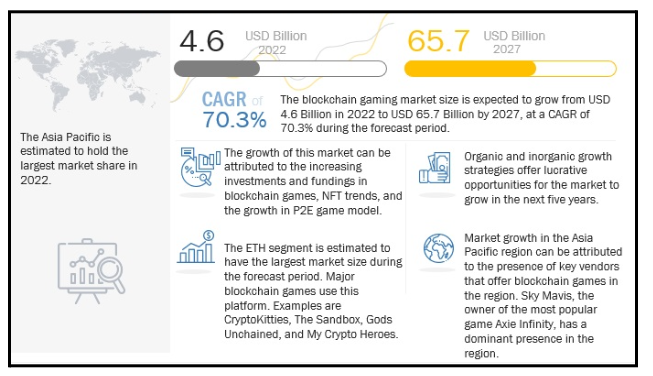
The global blockchain gaming market generated over $4.6 billion in revenue in 2022 and is projected to surge to approximately $65.7 billion by 2027, reflecting a remarkable compound annual growth rate (CAGR) of 70.3% between 2022 and 2027.
This rapid expansion is largely fueled by increasing investments in blockchain-based games. However, a lack of widespread understanding of blockchain technology and NFTs could potentially slow down the industry’s progress.
Step-by-Step Guide to Build Blockchain Game
Building a blockchain game requires a strategic blend of game design, smart contracts, and decentralized tech. Here’s a step-by-step guide to help you develop a successful blockchain-powered gaming experience.
Step 1: Define Your Game Concept
Before jumping into development, it’s essential to define a strong, engaging game concept. Decide on the genre whether it’s a card game, RPG, battle royale, or simulation.
Determine how blockchain will enhance gameplay. Will it be through tokenized rewards, NFT ownership, or decentralized governance?
The core gameplay should be enjoyable even without blockchain features, ensuring users stay engaged for the long term. A successful blockchain game strikes a balance between entertainment and economic incentives.
Step 2: Choose the Right Blockchain Network
Selecting the appropriate blockchain platform is critical to your game’s success. Ethereum, while popular, suffers from high gas fees and limited scalability.
Alternatives like Polygon, BNB Chain, Solana, and Immutable X offer faster transactions and lower fees. For example, Solana boasts up to 65,000 transactions per second (TPS), making it ideal for real-time games. Immutable X offers zero gas fees and is optimized for NFT-heavy games. Your choice should depend on your technical requirements, user base, and desired transaction speeds.
Step 3: Design Game Architecture
Game architecture refers to the overall structure of your game, including its backend, frontend, and smart contract layers. The backend manages game logic, user data, and server interactions.
The frontend is the user interface players interact with. Smart contracts handle transactions, rewards, NFT creation, and in-game economics. It is vital to design a scalable and modular architecture so the game can be easily updated and expanded.
Partnering with a firm that provides blockchain development services ensures this architecture is robust, secure, and future-ready.
Step 4: NFT Asset Creation
NFTs are at the heart of most blockchain games. These can be anything from characters and skins to weapons and collectibles. Creating NFT assets involves designing visuals, assigning rarity levels, and deciding their in-game utility.
Standards like ERC-721 and ERC-1155 are commonly used to mint NFTs. To prevent data loss, store these assets using decentralized storage solutions like IPFS. In 2024, 76% of blockchain games utilized NFTs, highlighting their importance in building player value and engagement. NFTs can also be monetized on marketplaces like OpenSea or Rarible.
Step 5: Smart Contract Creation
Smart contracts automate the core functionalities of your game such as distributing rewards, facilitating NFT trades, and managing staking mechanisms. These contracts are coded using languages like Solidity or Rust and deployed on your chosen blockchain.
Given that over $2.1 billion was lost to exploits in DeFi and blockchain games in 2023, smart contract security is paramount.
Every contract should undergo thorough auditing and testing. It typically includes audit solutions or collaborates with external auditors to ensure your contracts are safe.
Step 6: Integrate Crypto Wallets
For players to interact with the blockchain components of your game, wallet integration is essential. Popular wallets like MetaMask, Trust Wallet, and Coinbase Wallet allow users to sign in, store NFTs, and handle in-game transactions.
It’s beneficial to support multiple wallets for wider accessibility. Additionally, consider integrating WalletConnect to support mobile users. Offering guest modes or social logins alongside wallet connections can increase adoption among non-crypto-savvy users.
This step bridges the gap between Web2 users and Web3 features, making your game more inclusive.
Step 7: Develop Game Mechanics & UI
Game mechanics refer to how your game works its rules, progression systems, battle logic, and reward systems. Meanwhile, the UI/UX design determines how intuitive and enjoyable the game feels to users.
Both should be developed with the player experience in mind. Responsive gameplay, smooth navigation, and visually appealing interfaces are crucial. Additionally, incorporating leaderboards, daily missions, and tournaments can enhance user engagement.
Step 8: Test on Testnet
Testing is a critical stage in game development. By deploying your game on a testnet such as Ethereum Goerli, Polygon Mumbai, or BSC Testnet, you can simulate real-world usage without incurring costs.
This step allows developers to identify and fix bugs, verify transaction flows, and test smart contracts under load.
Players can also be invited to beta test, providing valuable feedback on gameplay, bugs, and wallet integration. This iterative process helps ensure a smooth launch on the mainnet.
Step 9: Launch and Market Your Game
Once testing is complete, it’s time to go live on the mainnet. But launching isn’t just about deployment. A well-planned marketing strategy is essential.
Start by creating buzz on social platforms like Twitter, Discord, and Telegram. Collaborate with influencers and NFT communities. Get listed on NFT marketplaces and consider offering early-bird or exclusive NFT drops.
In 2025, community-driven platforms accounted for 35–60% of traffic to new blockchain games. Marketing plays a pivotal role in user acquisition and token circulation.
Step 10: Post-Launch Support & Scaling
After launch, your work continues. Regular updates, bug fixes, and the introduction of new content such as levels or events are vital to maintaining player interest. You may also implement DAO-based governance to allow players to vote on future updates.
This enhances user retention and decentralization. A competent blockchain game solution provider will offer post-launch support, helping you scale infrastructure, improve features, and expand globally.
Building Blockchain Game: From Scratch vs White-Label Solution
Building a blockchain game from scratch can be highly rewarding but it depends on your goals, timeline, and budget. Here’s a comparative table that evaluates developing from scratch vs using white-label or pre-built solutions:
| Criteria | From Scratch | White-Label/Pre-Built Solutions |
| Customization | Full control over features, design & mechanics | Limited to what’s available in the template |
| Ownership & Scalability | 100% ownership, highly scalable | Partial control; scalability may be limited |
| Time to Market | 4–12 months depending on complexity | 1–2 months for launch |
| Initial Cost | High ($50,000 – $150,000+) | Moderate ($10,000 – $30,000) |
| Unique Gameplay Experience | Completely unique; ideal for branding | Generic, may resemble existing games |
| Technical Complexity | Requires experienced developers | Less technical; faster deployment |
| Long-Term ROI | Higher ROI due to uniqueness & monetization models | Moderate ROI; depends on user base |
Building a blockchain game from scratch is worth it if you’re aiming for long-term success, unique game mechanics, and full ownership. While white-label solutions are quicker and cheaper, they lack the flexibility and uniqueness needed to stand out in the competitive blockchain gaming market.
Cost of Developing a Blockchain Game
The cost of developing a blockchain game varies based on the game’s complexity, chosen features, and target platforms. For instance, a simple Play-to-Earn (P2E) game might cost between $20,000 to $40,000 and take 2 to 3 months to complete.
For more advanced games like NFT trading platforms or mid-level RPGs, the development budget typically ranges from $50,000 to $100,000, requiring around 4 to 6 months. Meanwhile, creating an immersive 3D game or one with metaverse integration may exceed $150,000, with a timeline of 6 to 12 months.
Partnering with a blockchain game development company can help ensure cost-effective solutions, timely delivery, and high-quality performance.
Cost Breakdown Table:
| Game Type | Estimated Cost | Development Time | Key Features |
| Basic P2E Game | $20,000–$40,000 | 2 – 3 Months | Basic UI/UX, Wallet Integration, Token Support |
| Mid-Level RPG or NFT Game | $50,000 – $100,000 | 4 – 6 Months | NFT Marketplace, Multiplayer, Tokenomics |
| Advanced 3D / Metaverse Game | $150,000+ | 6 – 12 Months | 3D Graphics, VR/AR Integration, Smart Con |
Future Trends in Blockchain Gaming
The future of blockchain gaming is rapidly evolving, driven by innovations in gameplay and decentralization. With advanced blockchain games the creators are unlocking new levels of ownership, interactivity, and monetization.
- AI-Enhanced NPCs for Dynamic Gameplay
Artificial Intelligence will bring NPCs (Non-Player Characters) to life by enabling them to adapt, learn, and react like human players. This will create deeper storytelling and more engaging, player-driven experiences in blockchain games.
- AR/VR-Based Immersive Game Worlds
Integration of Augmented Reality and Virtual Reality will allow players to explore decentralized gaming environments in 3D. Blockchain ensures ownership of virtual assets within these immersive worlds, making experiences more interactive and rewarding.
- Cross-Chain Interoperability of Game Assets
Future blockchain games will support asset transfers across different blockchains. This cross-chain interoperability means NFTs, tokens, and in-game items can move seamlessly between platforms, increasing utility and player freedom.
- Tokenized Esports & Competitive Rewards
Competitive blockchain gaming will rise through tokenized esports tournaments. Players will earn real cryptocurrencies as rewards, creating new income streams and encouraging professional gameplay within decentralized gaming ecosystems.
- DAO-Driven Game Governance
Decentralized Autonomous Organizations (DAOs) will give players voting power over in-game updates, rules, and economy. By 2025, over 65% of blockchain games are expected to adopt some form of DAO governance.
- Player-Owned Economies & Monetization Models
With blockchain, players will own in-game assets and have the ability to trade or monetize them freely. The future points toward a user-owned economy where gamers participate in creation, governance, and profit.
Final Thoughts
Blockchain games are redefining entertainment. With real-world economies, digital ownership, and decentralized gameplay, they offer unmatched value to both players and developers.
To build blockchain game from scratch, it involves strategic planning, technical execution, and ongoing support.
While the process can be complex, working with an experienced game development company simplifies the journey. Whether your goal is to create a casual P2E game or an expansive metaverse, now is the time to dive into blockchain gaming.
If you are looking to develop your own blockchain game consider hiring Technoloader as they stand out as a leading company that is delivering innovative, scalable, and secure gaming solutions.
With expertise in NFT, metaverse, and DeFi integration, Technoloader empowers next-gen gaming experiences.

Vipin Kumar
Vipin Kumar is the CEO of Technoloader, a leading blockchain development company. With deep expertise in emerging technologies, he drives innovation in Web3, gaming, and crypto solutions. He is passionate about delivering robust and scalable tech that transforms businesses in the digital age.
Published in Blockchain Game Development


