+91 7014607737
 info@technoloader.com





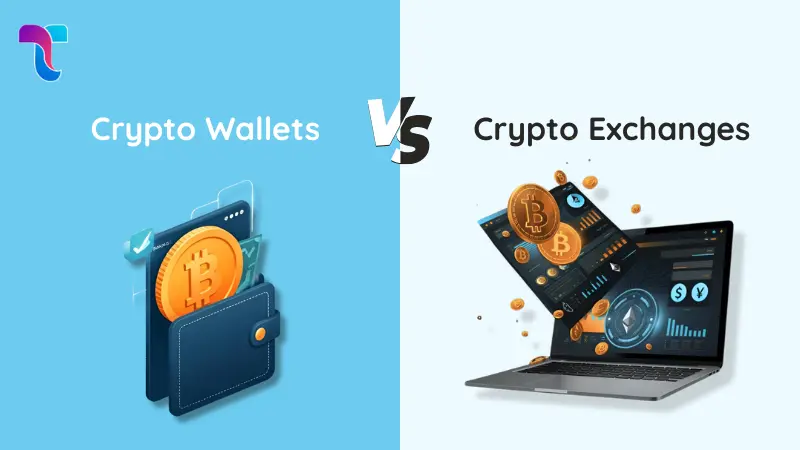
Table of Contents
Crypto wallets are tools used to store, manage, and secure private keys, giving users direct control over their cryptocurrencies. Crypto exchanges are platforms that facilitate buying, selling, and trading digital assets, often holding users’ funds in custodial wallets. The key difference is control and purpose: wallets prioritize ownership and security, while exchanges focus on liquidity and trading convenience.
Are you one of those who think that your exchange account is a wallet? If so, you need to think again!
It’s 2025, and crypto is no longer just for tech geeks or early adopters. With approximately 100 million new users from India jumping into the world of digital assets every month, crypto is going mainstream fast.
But with this rapid growth comes a lot of confusion, especially around one of the most basic pieces of the puzzle: crypto wallets vs. exchanges.
If you are new to crypto or even if you have been around a while, you might assume that the account you created on Binance, Coinbase, or any other exchange is your wallet. After all, it holds your crypto, right?
Well, not quite!
Let’s clear up the confusion once and for all. Here we go!
What is a Crypto Wallet?
A cryptocurrency wallet is basically a digital tool that helps you store your private keys and manage your cryptocurrencies. A wallet doesn’t actually hold your crypto. Your assets live on the blockchain, and the wallet simply gives you access to them. It does this through a secure password that only you should know.
Cryptocurrency wallets come in two main categories:
- Hot Wallets: These are connected to the internet and are perfect for quick and everyday transactions.
- Cold Wallets: These are not connected to the internet and offer stronger protection against hacks.
The main purpose of a crypto wallet is to give you full control and security over your funds. With your own wallet, you control the private keys, which means you control the crypto. This is why many in the crypto space say:
Wallets play a vital role in giving users complete control over their funds. If you’re a business looking to create secure wallet solutions, explore our cryptocurrency wallet development services.
What is a Crypto Exchange?
A crypto exchange is an online platform that allows users to buy, sell, and trade cryptocurrencies. It allows you to trade crypto assets like Bitcoin, Ethereum, and thousands of other tokens.
Be it you are looking to make your first crypto purchase or want to manage a portfolio, crypto exchange platforms provide the tools and access needed to participate in the crypto market.
There are two main types of crypto exchanges, which include:
Centralized Exchanges (CEX): These are run by companies that act as intermediaries to facilitate trading. They are user-friendly and offer high liquidity.
- Examples: Binance, Coinbase, Kraken
Decentralized Exchanges (DEX): These operate without a central authority. Trades happen directly between users using smart contracts.
- Examples: Uniswap, PancakeSwap, dYdX
Crypto exchanges are built for active trading and converting crypto to other assets. If you are a business planning to launch your own exchange platform, check out our cryptocurrency exchange software development solutions.
Key Differences Between Wallets and Exchanges
If you are getting started with cryptocurrency, it is important to understand the difference between a crypto wallet and an exchange. Let’s take a closer look at all the major differences involved:
Ownership of Funds
- Crypto Wallets: When you use a crypto wallet, you hold your own private keys. This means you have full control and ownership of your cryptocurrency. This means only you can access, freeze, or move your funds.
- Crypto Exchanges: Most of the centralized exchange platforms, like Binance or Coinbase, are custodial, which means they hold your private keys for you. While this is more convenient, it also means you don’t truly own your crypto until you transfer it to a personal wallet.
Security Levels
- Crypto Wallets: Wallets can offer high levels of security, especially cold wallets, which are completely offline and nearly impossible to hack. Hot wallets are more vulnerable but still secure when used with the best practices, like strong passwords and two-factor authentication.
- Crypto Exchanges: These store large amounts of funds and are frequent targets for cyberattacks. While the leading platforms invest heavily in security, history shows that no exchange is 100% safe. Additionally, users depend on the exchange’s internal security, which means they can’t control how their private keys are stored or protected.
Primary Use Case
- Crypto Wallets: These are designed primarily for secure storage and personal management of your crypto. They are perfect for long-term crypto storage holders or anyone wanting full control over their assets.
- Crypto Exchanges: These are built for active trading and converting crypto to other assets, which include fiat currencies. Crypto exchanges offer features like spot trading, futures, staking, and instant buy/sell options.
Risk Factors
- Crypto Wallets: The biggest risk is losing access to your private key or recovery phrase. If that happens, no one, not even the wallet provider, can help you recover your funds.
- Crypto Exchanges: Risks include exchange hacks, regulatory shutdowns, technical issues, or even mismanagement by the exchange team. There have been several high-profile cases where users lost funds because an exchange shut down or was compromised.
Ease of Use
- Crypto Wallets: Some crypto wallets require basic technical knowledge, especially during setup (like writing down recovery phrases or connecting to blockchains). While many apps are improving user experience, wallets may still feel complex to beginners.
- Crypto Exchanges: Most centralized exchanges are designed with beginners in mind. They offer simple sign-up processes, intuitive interfaces, and customer support. You can buy crypto with a credit card, track prices, and trade within minutes.
Comparison Table: Wallets vs Exchanges for Crypto
Now, let’s take a quick look at the key differences between crypto wallets and exchanges!
| Feature | Crypto Wallets | Crypto Exchanges |
| Primary Purpose | Store and manage your own crypto | Buy, sell, and trade cryptocurrencies |
| Control of Private Keys | You control the private keys (non-custodial wallets) | The exchange controls the private keys (custodial) |
| Security | Generally more secure (if self-custody is used) | More vulnerable to hacks (if funds stored on an exchange) |
| Accessibility | Requires setup and knowledge of wallet management | Easy access through web/mobile platforms |
| Ease of Use | It can be complex for beginners | User-friendly interfaces for buying/selling |
| Transaction Speed | Slower for trading; manual transactions | Instant trading capabilities |
| Best For | Long-term storage, security | Active trading, quick transactions |
| Fees | Only network fees (varies by blockchain) | Trading fees + withdrawal fees |
| Backup & Recovery | Seed phrase required for recovery | Account recovery through email/ID verification |
| Examples | MetaMask, Ledger, Trezor, Trust Wallet | Binance, Coinbase, Kraken, Gemini |
Risks of Relying Only on Crypto Exchanges
With benefits come risks too. Now, let’s come to the risks involved when dealing with crypto exchange platforms:
You don’t have full ownership of your crypto
When your crypto is stored on an exchange, the exchange controls the private keys and not you. This follows the well-known saying, “Not your keys, not your coins.” If the platform becomes unavailable, your assets may be at risk.
Exchanges can be hacked
History has shown that even major exchanges can fail. Incidents like the Mt. Gox hack and the FTX collapse resulted in billions of dollars in user losses. If an exchange is compromised, you may never recover your funds.
Access to your funds may be restricted
During periods of extreme market activity, exchanges have been known to freeze withdrawals or experience outages. This means you could be locked out of your funds when you need them most.
Risks of Relying Only on Crypto Wallets
Once we are done with the risks involved with depending only on crypto exchanges, let’s come to the risks that come with wallets:
Losing your seed phrase or private key means permanent loss
Wallets don’t have password recovery options. If you lose your seed phrase or private key, there is no way to recover your funds. This means your crypto is lost forever.
Physical wallets can be lost, stolen, or damaged
If you are using a hardware wallet and you haven’t backed up your recovery phrase, losing or damaging the device could result in a complete loss of your crypto assets.
You can’t trade or convert easily from a wallet
Most wallets are designed for storage, not trading. If you want to buy, sell, or exchange your crypto, you will need to transfer your funds to an exchange first, which takes time and may incur fees.
Wrapping Up
That’s a wrap for this blog!
When it comes to managing your crypto, there’s no one-size-fits-all answer.
Wallets give you security and full control, while exchanges offer convenience and fast access to the market. Relying solely on one or the other comes with its own set of risks. But when used together, they can complement each other perfectly.
You can take it like this: keep your long-term investments safe in a wallet, and use an exchange for your day-to-day crypto needs. This way, you can protect your assets.
If you are looking to build a secure and scalable solution or need expert guidance on either wallet or exchange, Technoloader is here to help. With deep industry expertise and a passion for innovation, we can turn your crypto vision into reality.
Get in touch with us today!

Vipin Kumar
Vipin Kumar is the Founder & CEO of Technoloader, a Clutch Top 10 Blockchain Development Company for 2025. A serial technology entrepreneur and blockchain architect with a B.Tech background, Vipin has led the delivery of 450+ projects across DeFi, NFT marketplaces, AI/ML, and custom Web3 platforms for clients in the UAE, India, the US, and beyond. He also founded SALIQ (saliq.ai), an AI-driven conversational marketing platform.
Published in Cryptocurrency Exchange and Cryptocurrency Wallet Development