 +91 7014607737
 info@technoloader.com





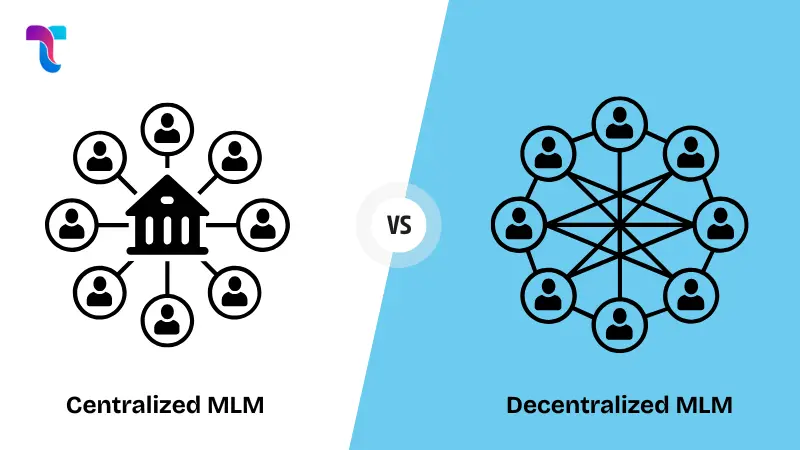
Table of Contents
Key Takeaways:
- Centralized MLM is a perfect option for beginners and traditional markets because they give complete control over management, allows you to make changes in the compensation plan, is budget-friendly, and better at following the rules.
- Decentralized MLM systems integrate smart contracts on the blockchain to ensure that commissions are distributed automatically, are transparent, and require less manual work.
- The big difference between centralized and decentralized systems is that decentralized systems let people check their transactions, while in centralized systems, people have to depend on reports shared by the company.
- Centralized systems are better because they’re easier for business owners and can be changed anytime when required. Whereas, once a decentralized system is set up, it is hard to change.
- Decentralized MLM costs more to develop, and they’re quite harder to understand because of the need for smart contract coding and blockchain deployment.
- There are different security risks for each model. Centralized systems are open to server-based attacks, while decentralized systems are at risk from smart contracts and transaction fees on the blockchain.
Introduction
Multi-Level Marketing has evolved significantly from spreadsheets, manual commission tracking, and traditional back-office systems. Today, technology has become more advanced and is reshaping the way network marketing businesses work.
From admin-controlled software platforms to blockchain-powered smart contract systems, entrepreneurs can now have a wider range of options than ever before. The global MLM market is projected to grow from approximately USD 209.48 billion in 2026 to USD 324.14 billion by 2035, with a compound annual growth rate of 5% between 2026 and 2035.
But here comes the real question: which platform should you choose to launch? Centralized MLM systems are controlled by the company. Decentralized MLM platforms function automatically on blockchain.
Both models have their own uniqueness and also come with their own challenges. The right choice varies depending on your business goals, targeted audience, and long-term growth vision.
So, to help you in figuring out the perfect MLM system, in this blog, we’ll break down the pros and cons of centralized and decentralized MLM systems. With the help of this, you’ll be confidently able to decide which model perfectly fits your concept.
Understanding MLM Systems
Before we compare centralized and decentralized MLM systems, it’s first necessary to understand what an MLM system is and how it works in real life.
What is an MLM System?
MLM stands for Multi-Level Marketing. It is a type of business model where people commonly earn income by selling products or services, or by recruiting other people into the business.
In this system, when someone joins under you, they become part of your team. This team structure continues to grow as more new members are invited. Because of this layered structure, it is called multi-level.
Now the question arises, where does income come from?
- So it generally comes from direct sales commission, where you earn a certain percentage when you sell a product or service.
- Through team commission, which is an additional income source based on your sales or the activity of the people you recruited and the people they recruited.
How MLM Structure Works
If we discuss the MLM working process, then it’s very simple.
- You join an MLM company.
- You invite more people under you.
- Those people invite more people under them
- And this is how networks continue to grow.
During this, the company’s MLM software continues to track who recruited whom. Sales made by each member. Commission percentages. Bonus eligibility. Rank upgrades. In this system, everything is calculated depending on a predefined compensation plan.
Let’s understand the different structures used by MLM companies to calculate earnings.
Binary Plan
In this model, members build only two teams, including one left and one right. Here, your income is calculated depending on the weaker side’s performance. For example, if one side has made more sales compared to the other, then the commission is paid on the lower-performing side.
This system uplifts both team members to grow equally and maintain a proper balance in their network.
Matrix Plan
In a Matrix Plan, a particular limit on how many people can join each level. For instance, in a 3×3 matrix, you can only recruit 3 people, and those 3 can add on 3 people, creating the next level.
Once a level is complete, those extra members are automatically placed into the next available position. This system controls growth and keeps the network properly organized and balanced.
Unilevel Plan
In a Unilevel Plan, there is no set limit on the number of people. In this plan, you can recruit as many members as you want. However, in this plan, the commissions are paid based on the activity of your downline, level by level.
The company usually defines how many levels you earn from. This plan is simple, flexible, and easy to manage as compared to other MLM systems.
Board Plan (Cycler Plan)
In this plan, members are placed into a fixed group or board structure. As more new members join, the board progressively fills up. Once the board is completely filled, an eligible member receives their payout and is moved into a new board to repeat the same process.
Meanwhile, this plan is focused on structured group growth, and payouts vary depending on how quickly the board fills.
These are the different structures that are used by MLM companies, but as technology evolves, the MLM system has changed significantly. Let’s check them out!
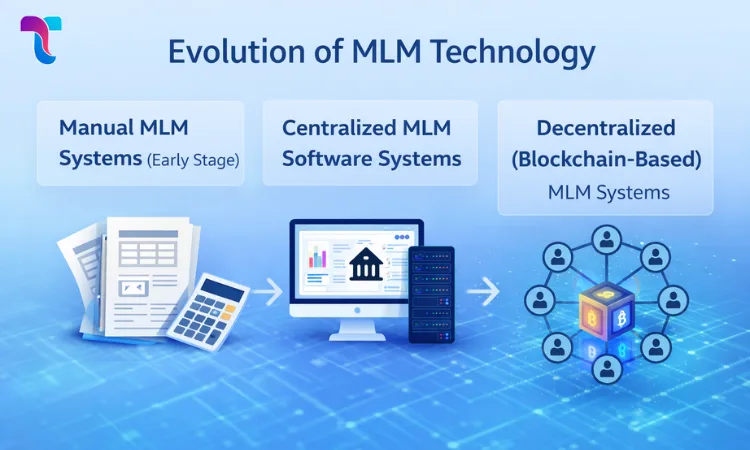
Evolution of MLM Technology
Manual MLM Systems (Early Stage)
In the early days, MLM companies addressed everything on their own. Sales information was noted on paper, commissions were calculated using spreadsheets, and payments were processed by hand.
But this system was also slow and made a lot of mistakes in calculations. There was no way to track things in real time, and members couldn’t see how much they were making. As the network expanded, it became harder to manage data and see what was going on.
Centralized MLM Software Systems
But as technology advanced, MLM companies moved to web-based software systems. In this system, all the user data is stored on the company’s server. The manager controls members’ commission, approves their payouts, and can also change compensation plans whenever needed.
This system makes processes faster, automated, and easier to track. As the company is handling all the data and funds, members have to rely on and trust the organization for fair calculation and timely payments.
Decentralized (Blockchain-Based) MLM Systems
With the rising growth of blockchain technology, decentralized MLM systems were introduced to increase transparency and automation. In this model, smart contracts automatically calculate and distribute members’ commissions based on the member’s performance, and that too without any human involvement.
All the transactions are recorded on a public blockchain. There is no central authority controlling the funds, and the payments are sent directly to users’ crypto wallets. This system decreases dependency on company control, builds trust, and ensures that commission distribution will happen automatically depending on the set rules.
Now that your foundation is clear, it will become easier for you to understand the pros and cons of centralized and decentralized MLM systems.
Pros and Cons of Centralized MLM Systems
As we’ve discussed earlier, what centralized MLM systems are, it’s now time to uncover their pros and cons.
Before that, if you’re still not clear what centralized MLM is, then let’s first understand it with an example:
Amway is one of the most well-known examples of a centralized MLM structure.
In this model, the company handles the whole network using its own platform. Distributors can join the company, sell products, and recruit new members to build their teams.
All the sales data, commissions, bonuses, and rank upgrades are followed and calculated by the company’s internal system. The company also manages payout approvals and sets the compensation rules.
Distributors do not control how commissions are processed, and they totally rely on the company’s software and policies. This clear central authority makes the centralized MLM structure a primary example.
Pros of Centralized MLM Platforms:
Centralized MLM platforms remain popular because of the following reasons:
- Full Administrative Control: In a centralized MLM system, the platform is completely managed by the respective company. Which includes user data, a commission calculator, bonus structures, and payout approvals. This ensures smooth operation, better monitoring, and complete authority over business decisions.
- Easy Plan Modifications: Business owners can easily make changes in the compensation plans, bonus structures, or promotional schemes whenever required. There is no space for any complicated technical redevelopment, and things can be changed quickly.
- Faster Customer Support: As the regulatory company itself is managing the platform, it can instantly solve account problems, commission disputes, or payout delays. This improves user experience and builds trust in the system.
- Lower Initial Development Cost: Centralized MLM platforms cost less than a blockchain-based platform. Because it does not require any smart contract development or audit, it even breaks down the initial technical investment.
- Better Regulatory Compliance: Companies can easily execute KYC verification, tax reporting, and legal compliance measures. Therefore, centralized control allows businesses to follow government regulations more effectively.
- Simpler for Non-Crypto Users: Users don’t need to know anything about crypto wallets or blockchain to get involved. This makes it easier to understand and apply, especially in areas that are more traditional.
Cons of Centralized MLM Platforms:
While centralized MLM platforms offer control and flexibility, they also come with certain limitations, like:
- Lack of Transparency: Members can’t check their own transactions because the corporation is in charge of all the data and commission calculations. This can make people question whether the payouts are fair and correct.
- Single Point of Failure: All the operations depend on a single server. If the system crashes, gets hacked, or faces technical issues, the entire network can be disrupted.
- Risk of Data Manipulation: When a firm administers the database, it is more likely that records, commission rules, or payout structures will be changed without the members’ knowledge.
- Trust Dependency: All the members have to fully trust the company in relation to commission calculation and release payments on time, as they have no direct system control.
- Security Vulnerabilities: Central servers can be hacked by cyberattackers. If it occurs, then a security breach may expose personal user information.
- Manual Payout Delays: Even if commissions are calculated automatically, payouts often require company approval, which can lead to processing delays.
Pros and Cons of Decentralized MLM Systems
Decentralized MLM systems are developed on blockchain technology and operate using smart contracts instead of a central authority. They operate in a very systematic way. Let’s understand it with an example:
A simple example of a decentralized MLM system is Forsage, which was built on the Ethereum blockchain. In this system, there was no central authority controlling commissions or funds.
Instead, smart contracts automatically handled referrals and payouts. When a new member joined, payments were sent directly to the existing participants’ crypto wallets based on predefined rules coded into the blockchain.
All transactions were openly visible and could not be changed once recorded. This structure took away manual control and relied exclusively on automated blockchain logic.
Pros of Decentralized MLM Systems
- High Transparency: All the transactions are recorded on the blockchain, enabling members to verify commissions and payments independently without relying on company reports.
- Automatic Commission Distribution: Smart contracts automatically calculate and release commissions instantly when conditions are met, which removes manual approval or human intervention.
- No Central Authority Control: Funds are transferred from one participant’s wallet to another’s, which means there is no need for a corporation to keep, manage, or release payments.
- Enhanced Security: Blockchain encryption and decentralized storage make altering records extremely difficult, reducing fraud and unauthorized data manipulation risks.
- Global Accessibility: Anyone with an internet connection and a crypto wallet can join, which makes it easy for people from different countries to take part without any banking problems.
- Reduced Operational Manipulation: Commission rules are coded into smart contracts, preventing companies from easily changing payout structures after deployment.
Cons of Decentralized MLM Systems
- Limited Flexibility: After they are deployed, it is hard to change smart contracts or compensation structures. This often means that new contracts need to be deployed.
- Smart Contract Risks: Smart contracts can lose money because of coding mistakes, and once they are live, they are hard to fix.
- Higher Development Cost: The costs of blockchain development, smart contract creation, security audits, and deployment all add up to a lot of money at the start.
- Regulatory Uncertainty: Depending on the country, there may not be clear rules or restrictions for crypto-based MLM platforms.
- User Learning Curve: People who want to take part need to know about wallets, private keys, and how transactions work, which can be hard for people who are new to it.
- Transaction Fees (Gas Fees): Network fees are needed for every blockchain transaction, which can lower the amount of money you make from small commissions.
Which Platform Should You Choose for Your MLM Business?
Choosing the right platform for your MLM business varies depending on how you want to operate and who your target audience is. Every business has different priorities, so there isn’t any one-size-fits-all.
A centralized platform is great for you if you want a structured environment where you can closely oversee operations, quickly handle all the technical changes, and get direct customer assistance. These systems will make it easier to handle your daily tasks and provide you with the liberty to change your plans as your business expands. This method is perfect for newcomers and in markets where people are more used to traditional internet platforms.
On the other hand, if your goal is to build a system that operates automatically and with minimal manual involvement, then a decentralized MLM platform will be excellently aligned with your vision. This platform focuses widely on automation and direct transactions between participants. This type of system can appeal to a global audience, especially those who are already aware of digital assets and blockchain technology.
Lastly, your decision should depend on your long-term goals, technical readiness, budget, and the expectations of your audience. Between the two, choose the model that aligns with your growth strategy and creates the best experience for your members.
Common Mistakes to Avoid
When developing an MLM platform, whether centralized or decentralized, certain mistakes can seriously affect your business’s credibility and long-term sustainability. Here are the most common MLM development mistakes to avoid:
Ignoring Compliance
Many MLM businesses fail because they usually overlook legal requirements. Every country has their own rules and regulations related to network marketing, taxation, and financial reporting. Ignoring compliance can lead to penalties, shutdowns, or legal action. Always make sure to plan your compensation and operations to follow local laws.
Launching Without Smart Contract Audit
You should know that using smart contracts without proper auditing can be challenging. A small error in the code can create a system failure. Before proceeding with your launch, think about getting a professional smart contract audit to find any weaknesses.
Overpromising ROI
Promising unrealistic returns to attract members can only help you generate short-term growth, but can also damage long-term trust. Sustainable MLM businesses focus on product value and realistic earning potential, not exaggerated income claims.
Choosing the Wrong Compensation Structure
Choosing a plan that doesn’t match your product, audience, or growth strategy can form an imbalance and dissatisfaction. So, the compensation model must support sustainable network expansion.
Neglecting Cybersecurity
Weak security measures can disclose user data and financial transactions to cyber threats. To prevent this, strong encryption, secure servers, and regular system monitoring are essential for protecting your platform and members.
Conclusion
When you have to choose between a centralized and decentralized MLM system, it’s not about picking the best one; it’s about selecting what works best for your business. Throughout this guide, we’ve shared everything about the multi-level marketing systems. So, based on this, choose the one that fits your business plan as well as your future goals.
In contrast to this, if you’re ready to launch your own MLM project, then you first need to plan, follow the law, and have strong security. To help you with this, partnering with Technoloader can make the entire process much easier.
With years of experience in MLM software development, we provide secure, scalable, and customized solutions that match your business goals. Our team works hard to provide reliable platforms with advanced features, strong security, and seamless performance. This makes it easier for you to start and run your MLM business.
Frequently Asked Questions
Which MLM system is more transparent?
Comparing both, decentralized MLM systems are more transparent because in this model, all the transactions are recorded on a public blockchain and can easily be proved. Whereas, in centralized systems, members have to depend on the company’s internal reports and calculations.
Is blockchain-based MLM legal?
The legality of blockchain-based MLM varies depending on the country’s rules and regulations. Some places let you pay with a crypto-based model, while others have strong rules against it. So, before launching, being aware of legal compliance and proper structuring is essential.
Which type is more secure: centralized or decentralized MLM?
Decentralized MLM systems offer strong protection against data manipulation due to blockchain encryption. However, they may face smart contract risks. Centralized platforms completely depend on server security, which can be vulnerable to hacking if not properly protected.
Can compensation plans be changed after launching an MLM platform?
In centralized MLM systems, compensation plans can be modified easily by administrators. Therefore, in decentralized systems, changing anything is very difficult, and once smart contracts are deployed, you may even require the redeployment of new contracts.
Which MLM system is best for establishing a new business?
A centralized MLM system is a better option for a new business because they require lower initial investment and no crypto knowledge. Whereas, in decentralized MLM, development costs are higher, technical expertise is a must, and users should understand blockchain.

Kanak Badaya
Kanak Badaya is a Technical Content Writer at Technoloader with over 3 years of experience translating complex technology into content that actually makes sense. He works closely with emerging domains like Blockchain, Web3, AI, and DeFi, turning intricate technical concepts into clear, structured, and engaging narratives that help businesses communicate with confidence. Rather than just writing for search engines, Kanak focuses on writing for people. He combines in-depth research with a practical understanding of the industry to create blogs, website content, and technical guides that inform, educate, and build credibility. His goal is simple - make advanced technology feel approachable while helping Technoloader strengthen its authority in the digital space.
Published in MLM Software Development


