+91 7014607737
 info@technoloader.com
Crypto Token Development Company
As a leading crypto token development company, we at Technoloader can help you create tokens that are secure, reliable, and built for real-world use. Our team handles everything, from strategy to deployment, which makes the process effortless. Want to transform your idea into a successful crypto token? Reach out to us now!
8+ Years
Experience in Blockchain
80%
Blockchain Expert
450+
Project Completed
150+
Client Worldwide
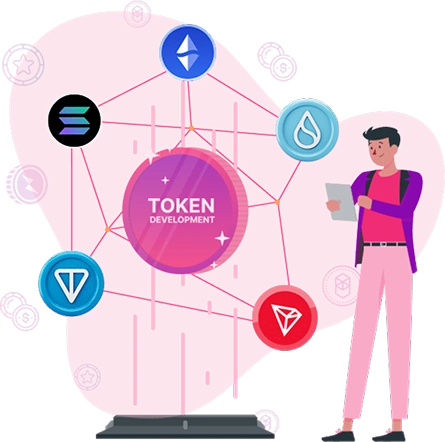
Your Trusted Crypto Token Development Company
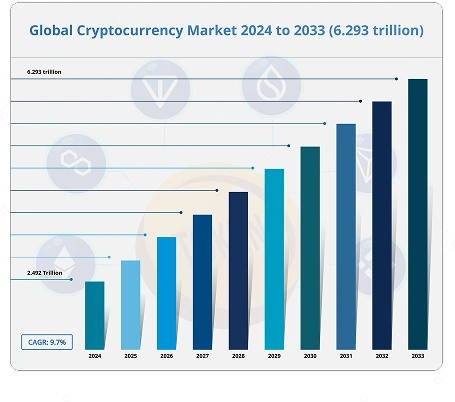
The global crypto market is continuously booming, and the core reason behind this is the rapid adoption of decentralized finance, institutional investments, and the tokenization of real-world assets. Technologies like blockchain are facilitating secure, transparent transactions, further propelling market expansion.
At Technoloader , we specialize in transforming your innovative ideas into fully functional, scalable crypto tokens. Being a leading crypto token development company, our professionals create utility tokens, security tokens, or other unique digital assets.
With a proven track record of successful crypto token launches across various blockchain platforms, we ensure your project is built with precision, security, and scalability.
 Connect
on Whatsapp
Connect
on Whatsapp  Connect on
Telegram
Connect on
Telegram Types of Crypto Tokens We Develop
Our team delivers a wide range of solutions to meet your needs and demands. From creating tailored utility and security tokens to developing complex solutions, we make sure to provide secure, scalable, and innovative crypto token development services according to your business goals.

Utility Tokens
Our team prioritizes developing utility tokens that support access, functionality, and participation within decentralized ecosystems. These crypto tokens define earning, usage, and exchange, while structured supply and distribution ensure predictable behavior across all wallets.

Security Tokens
We create compliant security tokens representing ownership or asset-backed value with verifiable records. Their logic enforces transfer rules and investor rights, ensuring custody compatibility, regulated trading, legal clarity, and predictable on-chain behavior.

Governance Tokens
We design governance tokens that empower decentralized decision-making. It enables users to vote on proposals, protocols, and upgrades while ensuring transparent voting logic, fair participation, and on-chain accountability.

Non-Fungible Token
We develop NFTs that enable unique digital ownership, verifiable authenticity, and provable scarcity. These crypto tokens support collectibles, identity, gaming assets, and asset tokenization while ensuring seamless ecosystem interoperability.

Reward Token
Our reward tokens encourage user engagement and loyalty. They include earning rules, redemption options, and transparent distribution, which makes it easy to support communities, gamified platforms, and incentive-driven ecosystems.

Asset-Backed Token
We build asset-backed tokens that represent verifiable ownership of real-world or digital assets. They provide transparent value, secure ownership records, and reliable transfer rules, which makes asset management and investment accessible and trustworthy.

Stable Token
We build stable tokens that help maintain consistent value. Backed by collateral or reserves, they offer low volatility, secure transactions, and smooth integration for payments, trading, and day-to-day blockchain-related activities.

Meme Token
We create meme tokens focused on community energy, viral growth, and fun digital culture. They feature clear tokenomics, fair distribution, and scalable smart contracts to support creative utility and community-driven development within the ecosystem.
Our Start-to-End Crypto Token Development Services
We, at Technoloader, offer top crypto token development services that are designed to transform your ideas into reality. Our experts specialize in crafting customized crypto token solutions that are secure, scalable, and tailored to your specific needs. Take a look at the exceptional services we offer!

Crypto Token Creation
We develop secure and reliable crypto tokens from scratch, tailored to your project’s goals. Each crypto token is designed for seamless integration, optimized performance, and maximum utility within your ecosystem.

Multi-Chain Token Development
Our team builds crypto tokens compatible with multiple blockchains, which ensures scalability and wider adoption. Your crypto token can function across networks and will reach more users without compromising security or performance.

Crypto Token Wallet Development & Integration
We create and integrate secure and user-friendly wallets that support your crypto tokens. Users can store, send, receive, and interact with crypto tokens seamlessly across multiple platforms and devices.

Cross-Chain Token Bridge Development
Enable secure and smooth cross-chain token transfers with our bridge development services. Your crypto token can interact across blockchains, which boosts liquidity, reach, and interoperability for users and platforms.

Tokenomics Design
We design tokenomics that drive engagement, adoption, and growth. From distribution and rewards to staking and governance, we create sustainable ecosystems that maximize your crypto token’s potential.

Whitepaper Creation
Our team crafts professional and investor-ready whitepapers that clearly explain your project, crypto token model, roadmap, and vision. It helps build credibility, transparency, and trust with stakeholders.

Post-Launch Maintenance & Upgrades
We provide ongoing support, updates, analytics dashboards, and performance optimization, which ensures your crypto token remains secure, efficient, and scalable as your ecosystem grows and evolves.
Crypto Token Development Solutions Across Multiple Blockchains
Our crypto token development services cover some of the widely used blockchains, whether they are fungible or non-fungible. With a proven track record in the field, we can help you develop and launch crypto tokens on the preferred blockchain platform you want.

Token Development on Ethereum
Ethereum tokens are digital assets created on the Ethereum blockchain. There are various Ethereum token standards, including ERC-20, ERC-721, ERC-223, ERC-777, ERC-827, ERC-1155, ERC-1400, ERC-720, and ERC-998.

Token Development on Tron
When TRON was initially launched, it was launched particularly for a decentralized ecosystem. Some most used TRON tokens include TRC-10, TRC-20, and TRC-721. We possess extensive expertise in the development of TRON tokens.

Token Development on Binance
Binance tokens are digital assets specific to the Binance cryptocurrency exchange that is used for trading, fees, and various blockchain services. We are known for developing tokens on various Binance token standards like BEP-20, BEP-721, and BEP-1155.

Token Development on Solana
Solana tokens are digital assets built on the Solana blockchain, used for a variety of purposes, from transactions to decentralized applications. We develop crypto tokens on the Solana blockchain according to specific project’s requirements.

Token Development on Polygon
Polygon tokens are digital assets built on the Polygon (formerly Matic) network, optimized for fast transactions, low fees, and scalable DeFi applications. We help you build Polygon tokens with secure smart contracts and industry-standard protocols.

Token Development on Bitcoin
BRC-20 and SRC-20 tokens are emerging crypto token standards on the Bitcoin blockchain. We specialize in creating customizable and secure Bitcoin-based tokens that leverage Bitcoin’s reliability while enabling advanced utility, trading, and on-chain innovation.

Token Development on TON
With us, you can develop and launch scalable crypto tokens on the Telegram Open Network (TON), which is known for its lightning-fast transactions. We help you build crypto tokens that work smoothly with Telegram and support Web3 projects.

Token Development on SUI
With us, you can easily create fast, secure, and scalable tokens on the SUI blockchain. Our expertise ensures your crypto token is optimized for low-latency, high-throughput transactions, which makes it ideal for dApps and digital asset ecosystems.

Token Development on Avalanche
We provide high-speed, low-cost crypto token creation on the Avalanche network. With Avalanche's consensus protocol, we ensure your crypto tokens are scalable, secure, and ready to perform across DeFi, NFT, and more.
Crypto Token Standards We Specialize In
Our team develops crypto tokens built for real-world use, combining innovation, reliability, and scalability. From launch to long-term performance, we ensure your crypto token thrives in any ecosystem. Want to see what we can create for you? Have a look!
 ERC20
ERC20- ERC721
- ERC223
- ERC777
- ERC827
- ERC884
- ERC1155
- ERC1400
- ERC720
- ERC998
- BEP20
- BEP721
- BEP1155
- TRC10
- TRC20
- TRC721
- BRC20
- SRC20
- ERC4337
- ERC404
Remarkable Features of Tokens We Develop
As a leading crypto token development company, we care about how we create tokens. We ensure that the crypto tokens we develop are enriched with the best-in-class features covering different aspects. We integrate advanced features into our crypto tokens to ensure our partners win the race against the competitors.

Mintable

Burnable

Wallet Compatible

Transferable
Crypto Token Development Process We Follow
We follow a structured, transparent, and secure crypto token development process, from understanding your goals to designing, building, testing, and deploying. Every step ensures quality, scalability, and compliance. Curious about our approach? Take a look below!
Why is Technoloader Your Go-To Crypto Token Development Partner?
Technoloader, a leading crypto token development company, creates secure, scalable, and reliable crypto tokens designed to fit your project’s unique needs. From concept to deployment, we make the process seamless. Curious to learn more? Take a look!
 Talk To Our Experts
 Expertise Across Blockchain Platforms
Our team brings deep blockchain experience and has developed crypto tokens on multiple networks. We ensure your project is secure, scalable, and ready for the future, no matter which network you choose.
Proven Track Record
We have successfully launched crypto tokens across various industries and blockchain platforms. Our portfolio shows consistent results, reliability, and innovation, making us a trusted partner for your crypto journey.
End-to-End Crypto Token Solutions
From initial strategy and design to deployment and exchange listing, we manage every step of your crypto token development. Our approach ensures smooth execution and worry-free crypto token creation.
Security & Compliance Focused
We prioritize security and compliance at every step. Our smart contracts are audit-ready, protecting your crypto token, investors, and reputation while ensuring regulatory standards are met seamlessly.
Scalable Solutions
All our crypto tokens are built to grow with your project. They handle expanding user bases, increased transactions, and ecosystem scaling without compromising performance or reliability.
Post-Launch Support
We continue supporting your crypto token even after launch, providing maintenance, upgrades, analytics, and dashboard solutions to ensure it stays secure, efficient, and adaptable as your ecosystem evolves.
Frequently Asked Questions
Crypto token development is the process of creating digital tokens on a blockchain platform like Ethereum, Binance Smart Chain, or Solana. These represent assets, utility, or ownership rights and are often used in cryptocurrencies, dApps, and smart contracts.
The cost to develop a crypto token depends on the complexity, blockchain platform, and any custom features required. Reach out to us, and we’ll provide you with a quote for your project!
The crypto token development process generally includes:
Choosing a blockchain platform (e.g., Ethereum, BSC) Defining crypto token standards and properties (e.g., ERC-20, BEP-20, ERC-721) Deploying to the blockchain Testing and debugging Verifying and publishing the contract Listing on exchangesBefore launching a crypto token, it is important that you consider:
Securities laws – ensure the token doesn’t qualify as an unregistered security. KYC/AML compliance – especially for tokens involved in fundraising or DeFi. Jurisdictional regulations – laws vary by country and region. Intellectual property rights – especially for branded or NFT-related tokens.Get in touch with us, and we’ll let you understand the specific legal or regulatory factors for your project!
The crypto token development and deployment process typically takes 3 to 5 business days, depending on the complexity and any custom features requested. We are here to guide you regarding the timeline for your project.
To minimize gas fees and network costs:
Choose blockchains with lower fees (e.g., BNB Chain, Polygon). Optimize the smart contract code to reduce computational steps. Deploy during off-peak network hours to avoid congestion. Use layer-2 scaling solutions where applicable.Client Testimonial: Real Clients, Real Results
Client satisfaction is at the core of everything we do. Our testimonials reflect our dedication to quality, innovation, and delivering technology solutions that create measurable impact. See what our clients say about their experience, success, and the value delivered through our technology solutions!
Antonio
Working with Vipin and his team was a smooth experience from start to finish. They handled our project professionally, delivered on time, and provided excellent support throughout the development process.
Reviewed on
Mornage
Our AI product idea was successfully turned into a working solution with the right guidance and fast execution. The team understood our requirements quickly and built a dashboard that improved our real-time decision-making.
Reviewed on
CEO, V Logistics (P) Ltd
The blockchain solution developed by Technoloader helped streamline payments and improve overall user experience. Their responsive approach and strong project management played a major role in the project’s success
Reviewed on
Managing Director, Top Stroke Sports
Technoloader delivered our sports analytics mobile app MVP on schedule with excellent flexibility and dedication. The team responded quickly to feedback and maintained a smooth development workflow throughout the project.
Reviewed on
Umrav Singh, CEO at Ai Tech
We were satisfied with both the quality of work and the overall development cost. Technoloader understood the staking platform requirements clearly and delivered dependable blockchain development support.
Reviewed on
Rakesh Handa, CEO at Miner Edge
Their team paid close attention to every stage of the project and ensured issues were resolved quickly. The overall experience was smooth, professional, and well-managed from beginning to end.
Reviewed on
David Morgan, Marketing Manager
Our cryptocurrency exchange platform was delivered with strong security, scalability, and stable performance. The team handled complex blockchain integrations efficiently while maintaining consistent communication throughout the project.
Reviewed on
Dave Bonez, Founder
Technoloader handled the complete development of our crypto exchange platform, including wallet integration, staking, and admin management features. The process was transparent, technically strong, and delivered good value overall.
Reviewed on


Awards & Recognition