 +91 7014607737
 info@technoloader.com





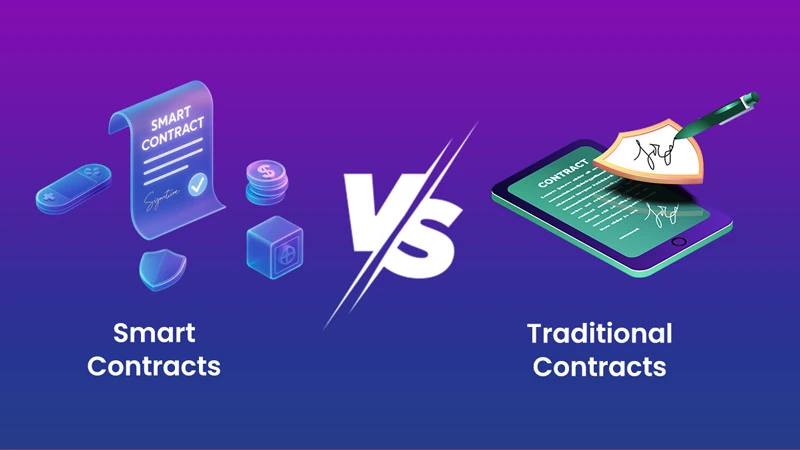
Table of Contents
Key Takeaways:
- The main difference between smart contracts and traditional contracts is how they are executed and enforced. Traditional contracts rely on legal institutions and courts, while smart contracts operate through automated blockchain technology.
- Traditional contracts depend on courts and legal systems for dispute resolution, whereas smart contracts are enforced automatically by blockchain networks.
- Smart contracts execute instantly when predefined conditions are met, reducing delays, paperwork, and the need for intermediaries.
- Traditional contracts offer greater flexibility, allowing amendments, negotiation, and interpretation when situations change.
- Smart contracts are generally immutable after deployment, increasing transparency and security but limiting post-deployment modifications.
- The suitability of each contract type depends on the agreement’s complexity, legal requirements, and need for automation.
- The future of agreements is likely hybrid, combining legal enforceability with blockchain-based automated execution.
Introduction
Every agreement in life is built on trust. Whether you’re signing a job deal, renting an apartment, or making a business deal, contracts are significant for making sure that both sides follow the agreed-upon terms. For years, traditional contracts that are enforced by law have been the basis of these agreements.
But technology is changing how things work in the world.
With the rise of blockchain technology, a new type of agreement has emerged: smart contracts. Unlike traditional contracts that rely on lawyers and courts for enforcement, smart contracts execute automatically when certain conditions are met. No middlemen. No waiting. Just code that runs on a network that isn’t centralized.
Since their introduction, the smart contracts market has grown rapidly and is expected to reach nearly $4 billion by 2026, with an annual growth rate of over 24% through 2030.
So, which one is better? Are smart contracts replacing regular contracts, or do they serve different purposes?
In this guide, we’ll explain the differences in simple terms, compare their pros and cons, and help you figure out which type of contract is perfect for different real-world situations.
Let’s get started.
What Is a Traditional Contract?
A traditional contract is a written agreement between two or more parties. This contract makes it clear what each party agrees to do. You can print these contracts on paper or make them digitally as a PDF. The goal is still the same: to keep everyone safe.
Let’s understand with an example:
When you join a company, you sign an employment contract. When you rent an apartment, you sign a rental agreement. When two companies decide to work together, they sign a business contract. In each case, the document defines responsibilities, payment terms, deadlines, and rules.=
Traditional contracts rely on trust and the legal system. If one party fails to follow the agreement, the other party can take the matter to court. A judge then reviews the contract and decides what should happen next.
In simple terms, these contracts depend on written promises and legal enforcement to ensure agreements are respected.
What Is a Smart Contract?
A smart contract is basically a self-executing digital agreement that is written in code and stored on a blockchain. It automatically executes the agreed-upon terms between the involved parties without the need for middlemen such as lawyers or courts.
These contracts run on blockchain networks like Ethereum. Once they’re uploaded to the blockchain, they cannot be easily changed, and everyone can verify their execution. This makes them transparent and secure.
Here’s the simple idea: If a specific condition happens, the contract will automatically perform the agreed action.
For example:
If payment is received, the product is released automatically. There is no need for a middleman, lawyer, or bank to approve the transaction manually. The code handles everything.
At its core, a smart contract replaces manual enforcement with automatic execution. Instead of trusting people to follow the agreement, you trust the technology to run it precisely as programmed.
The Key Difference Between Traditional Contracts and Smart contracts
Traditional contracts rely on people and legal systems.
Smart contracts rely on code and blockchain technology.
Now that we’ve defined both types, let’s explore how they differ in practice.
When you sign a traditional contract, both parties agree to follow specific terms. If someone breaks the agreement, the other party must take legal action. Lawyers may get involved, and courts may review the contract before deciding the outcome. Courts may review the agreement. And the judge interprets the contract and decides the outcome. So enforcement depends on human judgment and the legal system.
Furthermore, smart contracts work entirely differently.
Instead of waiting for someone to enforce the agreement, the contract executes on its own. Once the required condition is met, the action will happen automatically. No reminders. No legal notices. No delays.
So the core difference is simple:
- Traditional contracts depend on trust in people and institutions.
- Smart contracts depend on trust in technology and programmed rules.
Other than this, if you want to understand both of these contracts more in-depth, below is the step-by-step and straightforward comparison.
Smart Contracts vs Traditional Contracts: Quick Comparison
| Feature | Traditional Contract | Smart Contract |
|---|---|---|
| Format | Written legal document | Computer code on blockchain |
| Execution | Manual | Automatic |
| Enforcement | Courts and the legal system | Blockchain network |
| Speed | Slower process | Fast execution |
| Cost | Legal and administrative fees | Development + gas fees |
| Flexibility | Easy to modify | Hard to change once deployed |
| Trust Model | Trust in institutions | Trust in technology |
For a better understanding, let’s break down these comparisons in a simple way:
- Format: Traditional contracts are written in legal language and signed by the parties involved. Smart contracts are written in code and deployed on blockchain platforms like Ethereum.
- Execution: Traditional agreements require people to take action manually. Smart contracts execute automatically once the programmed conditions are fulfilled.
- Enforcement: If a traditional contract is broken, the issue may go to court. Smart contracts are enforced automatically by the blockchain system itself.
- Speed: Traditional contracts may take days or weeks to process, especially if multiple approvals are required. Smart contracts can execute transactions within minutes or even seconds.
- Cost: Traditional contracts often involve lawyer fees and paperwork costs. Smart contracts may require technical development and blockchain transaction fees, but reduce ongoing administrative expenses.
- Flexibility: Traditional contracts can be edited or renegotiated easily. Smart contracts are usually complicated to modify once deployed.
- Trust Model: Traditional contracts depend on trust in legal institutions. Smart contracts depend on trust in technology and transparent blockchain systems.
How Smart Contracts Actually Work
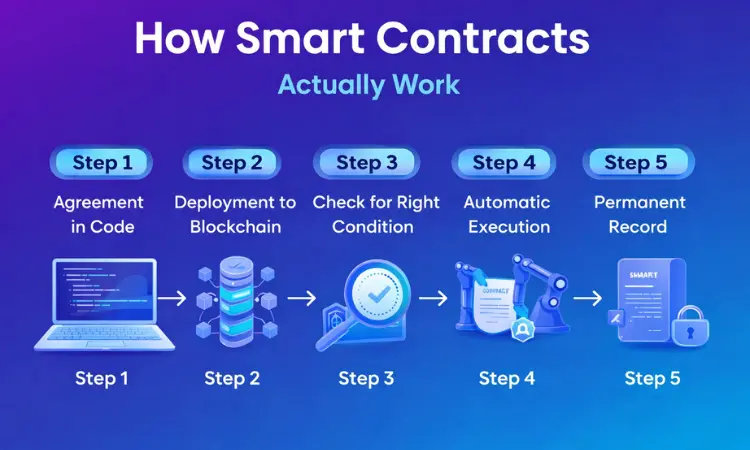
To understand the real power of smart contracts, it’s important to see how they actually work behind the scenes.
Step 1: Writing the Agreement in Code
The first thing you need to do to make a smart contract is turn the agreement into computer code. Instead of long legal documents, developers write clear instructions that follow a simple rule: if something happens, then a specific action will follow. The rules need to be very clear so that computers can understand them.
Step 2: Deploying It on the Blockchain
Once the code is ready and properly tested, it is uploaded to the blockchain network. After it goes live, the smart contract becomes active and available on the network. At this point, it usually can’t be changed, which helps keep it safe. The blockchain ensures the contract is clear and tamper-proof.
Step 3: Waiting for the Right Condition
Once it is deployed, the smart contract just waits for the right condition to be met. This could include receiving a payment, confirming the delivery of goods, or obtaining data from a trusted source. Then, without anyone having to watch it, the system will automatically look for these conditions.
Step 4: Automatic Execution
As soon as the condition is fulfilled, the smart contract will do what it was programmed to perform. It might release funds, transfer ownership, or send a confirmation. Everything happens instantly and automatically, without the need for banks, lawyers, or middlemen. This speeds up and makes the process more efficient.
Step 5: Recording Everything Permanently
Once the transaction is completed, those details are stored permanently on the blockchain. This record can’t be changed or deleted, which ensures that it is open. It also reduces the risk of fraud and disputes between parties because the information is stored in a decentralized system.
Where Traditional Contracts Are Still Better
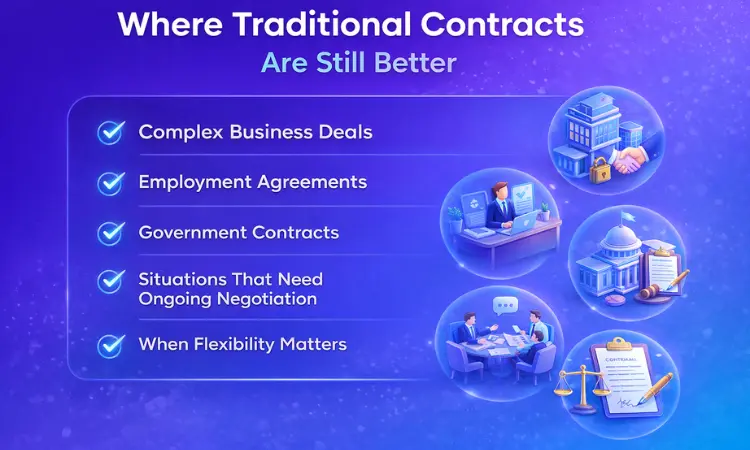
Even though smart contracts are fast and automated, that doesn’t mean they’re preferred for every situation. In many real-world cases, traditional contracts still work better.
1. Complex Business Deals
Big business agreements like mergers, acquisitions, joint ventures, or partnerships are usually detailed and complicated. They include risk-sharing terms, confidentiality clauses, and conditions that may change in the future. These kinds of agreements often need interpretation based on new developments. Since smart contracts strictly follow pre-written code, they may not handle changing or flexible situations very well.
2. Employment Agreements
Employment contracts often include terms about performance, behavior, benefits, and dispute handling. These areas involve human judgment and interpretation. For example, measuring performance or resolving workplace conflicts cannot always be reduced to code.
Because smart contracts can’t understand intent or behavior, traditional contracts are more practical in employer-employee relationships.
3. Government Contracts
Government agreements must follow laws, regulations, and public policies. They require legal oversight and strict compliance procedures.
Since public-sector contracts involve regulatory interpretation and accountability, traditional legal contracts are still the safer and more reliable option in most cases.
4. Situations That Need Ongoing Negotiation
Many agreements change over time. Parties may renegotiate terms, extend deadlines, or update conditions, and traditional contracts allow this flexibility.
Once deployed on the blockchain, smart contracts are usually difficult to change. That makes them less suitable for agreements that may require frequent updates.
5. When Flexibility Matters
Business environments are constantly changing. Market conditions shift, unexpected events happen, and relationships evolve. Traditional contracts allow room for adjustment and interpretation.
A smart contract, however, executes exactly as written, even if the situation changes. This strict structure can sometimes become a limitation.
In short, smart contracts are great for clear, rule-based transactions that need automation. But when an agreement requires flexibility, negotiation, or human judgment, then traditional contracts are often the better choice.
Where Smart Contracts Are More Useful
Traditional contracts are great when flexibility and human judgment are needed. But smart contracts really stand out in situations where speed, automation, and transparency matter the most. They work best when the rules are clear, and the process can run on its own without any manual approval.
1. Crypto Trading
In cryptocurrency trading, transactions usually happen quickly and often between people in different countries. Smart contracts automatically transfer digital assets once payment is received. There’s no need for intermediaries to approve the transaction. This helps make crypto trading faster, secure, and available at any time of the day.
2. DeFi Platforms
Decentralized finance platforms depend heavily on smart contracts. Users can lend, borrow, or earn interest on digital assets without using traditional banks. From calculating interest to managing collateral and processing repayments, the smart contract handles everything automatically.
3. NFT Marketplaces
NFT marketplaces rely on smart contracts to automate the buying and selling of digital assets. When someone purchases an NFT, the contract automatically transfers ownership to the buyer and sends the payment to the seller. This reduces manual work and lowers the risk of fraud.
4. Supply Chain Tracking
In supply chains, smart contracts can automate payments once goods are delivered. For example, when a shipment reaches its destination and is verified, the contract can instantly release payment to the supplier. This improves transparency and reduces delays between businesses.
5. Automated Payments
Smart contracts are especially useful for recurring or condition-based payments. For example, a freelancer could receive payment automatically once a milestone is completed and confirmed. Insurance claims can also be processed automatically if certain conditions are met. This cuts down paperwork and speeds up the entire process.
Simply put, smart contracts perform best in digital, rule-based environments where transactions happen regularly. They reduce human involvement, improve efficiency, and ensure agreements are carried out exactly as programmed.
Advantages & Disadvantages of Smart Contracts and Traditional Contracts
Both traditional and smart contracts have their own advantages and limitations. Neither one is perfect; understanding where each one works best helps you make smarter decisions instead of assuming one is always superior.
Advantages of Traditional Contracts
- One of the biggest strengths of traditional contracts is flexibility. The terms can be negotiated, interpreted, and updated if situations change. If both parties agree, modifications can be made without starting from scratch.
- They’re also legally recognized almost everywhere in the world. Courts and legal systems clearly understand them, and there are established processes to resolve disputes. This makes them especially reliable for complex or high-value agreements.
- Another important benefit is that they can deal with subjective matters. Issues involving intent, fairness, or behavior can be reviewed and interpreted by judges or arbitrators.
Disadvantages of Traditional Contracts
- Traditional contracts can be time-consuming and costly. Drafting and reviewing often require lawyers, paperwork, and multiple approvals.
- If a dispute arises, resolving it in court can take months or even years.
- They also depend heavily on trust. If one party fails to follow the agreement, legal action is usually required to enforce it.
Advantages of Smart Contracts
- Smart contracts are known for speed and automation. Once the required condition is met, they execute instantly without waiting for human approval.
- They reduce the need for intermediaries, thereby lowering costs and improving efficiency.
- They’re also transparent and tamper-resistant because they run on blockchain networks like Ethereum. After deployment, the contract cannot be easily changed.
- Another key advantage is accuracy. Smart contracts execute exactly as coded, which reduces the chances of human error.
Disadvantages of Smart Contracts
- Smart contracts are not very flexible. Once they are deployed, changing them can be difficult if there is a coding mistake. Fixing it may require creating a completely new contract.
- They also rely entirely on correct programming. Even a small error in the code can create serious security risks, as seen in early projects like the DAO.
- In many countries, legal recognition of smart contracts is still developing. While adoption is growing, they may not yet have the same legal clarity everywhere.
- Lastly, they’re not ideal for complex human situations that require judgment, negotiations, or interpretation.
When to Use Smart Contracts vs Traditional Contracts
The use cases of smart contracts and traditional contracts depend on the type of agreement, the level of trust, and the enforcement mechanism you need.
Here’s how to decide which one fits your purpose best:
| Situation | Best Choice | Reason |
|---|---|---|
| You need fast, automatic execution without human involvement | Smart Contract | Executes instantly when predefined conditions are met |
| The agreement is fully digital or blockchain-based (e.g., crypto payments, NFTs, DeFi). | Smart Contract | Works seamlessly in decentralized systems. |
| The deal involves multiple jurisdictions and parties that don’t fully trust each other. | Smart Contract | Blockchain ensures transparency and tamper-proof execution. |
| The contract involves complex legal terms or requires court-enforceability. | Traditional Contract | Offers flexibility and recognition under existing legal systems. |
| You may need to amend or terminate the agreement later. | Traditional Contract | Easier to modify or cancel through mutual consent. |
| The transaction involves physical assets or services (like real estate, employment, etc.) | Traditional Contract | Allows detailed clauses, dispute resolution, and human judgment. |
The Future of Contracts: Hybrid Approach
The future may not be about choosing one over the other but blending both worlds. Many industries are exploring hybrid contracts. This means legally binding agreements that use smart contracts for execution.
For example:
A lease agreement backed by a traditional legal contract, but with a smart contract that automatically releases rent payments each month.
Trade finance deals where smart contracts handle payments, while traditional contracts cover regulatory compliance and dispute resolution.
This hybrid model is becoming increasingly common in smart contracts in enterprise use cases where both compliance and automation matter.
Wrapping Up
That’s a wrap for this blog!
Indeed, smart contracts represent a transformative approach to how agreements are made, executed, and governed.
Unlike traditional contracts that rely entirely on human interpretation and legal systems, smart contracts utilize the power of blockchain technology for transparency, automation, and trustless environments.
Businesses looking for efficiency, security, and automation are now turning to smart contract solutions to stay ahead of the competition. And the experts at Technoloader can help you with that.
Go, get in touch with us, and lead the future with confidence!
Frequently Asked Questions
Can smart contracts be enforced by law?
Smart contracts can be legally enforceable if they meet the basic requirements of a valid contract, such as mutual agreement and lawful purpose. However, laws differ from country to country. Some regions recognize them clearly, while others are still developing regulations around blockchain-based contracts.
Are smart contracts able to take the place of regular contracts?
Smart contracts cannot completely replace traditional contracts. They work best for simple, rule-based digital transactions that require automatic execution. However, agreements involving negotiation, legal interpretation, or complex terms still need traditional contracts and human judgment to handle disputes or changes.
What happens if there is a bug in a smart contract?
If a smart contract has a coding error, it will still execute exactly as written, even if the outcome is wrong. Fixing the issue usually requires deploying a new contract. That’s why testing and auditing smart contracts are essential before launching.
Are smart contracts safer than traditional contracts?
Smart contracts are safer because they run on blockchain networks and cannot be easily altered. However, their safety depends on how well the code is written. Traditional contracts rely on legal enforcement, while smart contracts rely on technical accuracy and cybersecurity measures.
Is it possible to change smart contracts after they have been deployed?
Once smart contracts are on a blockchain, they can’t be changed easily in most cases. This unchangeability makes sure that things are clear and trustworthy. Some advanced systems let you make changes through special mechanisms, but most of the time, you have to make a whole new contract and deploy it.
What is a hybrid contract?
A hybrid contract is known for combining the automation of smart contracts with the legal clarity of traditional contracts. This model is gaining traction among enterprises that want efficiency without losing legal protection.

Kanak Badaya
Kanak Badaya is a Technical Content Writer at Technoloader with over 3 years of experience translating complex technology into content that actually makes sense. He works closely with emerging domains like Blockchain, Web3, AI, and DeFi, turning intricate technical concepts into clear, structured, and engaging narratives that help businesses communicate with confidence. Rather than just writing for search engines, Kanak focuses on writing for people. He combines in-depth research with a practical understanding of the industry to create blogs, website content, and technical guides that inform, educate, and build credibility. His goal is simple - make advanced technology feel approachable while helping Technoloader strengthen its authority in the digital space.
Published in Smart Contract Development


