 +91 7014607737
 info@technoloader.com





Table of Contents
Key Takeaways:
- Gold tokenization transforms physical gold into digital tokens that are backed by real gold stored in safe and certified vaults.
- Projects like Paxos Gold (PAXG) and Tether Gold (XAUT) have significantly proven real-world adoption of blockchain-based gold assets.
- A specialized platform needs to have solid compliance, KYC/AML processes, trusted custodians, and frequent audits of its reserves by third parties.
- Smart contracts automate token minting and burning to maintain transparent and accurate gold-to-token backing.
- Tokenized gold provides fractional ownership, global access, quicker settlements, and 24/7 trading compared to traditional gold markets.
- Building a gold tokenization platform offers long-term business potential as real-world asset tokenization continues expanding beyond 2026.
Introduction
When it comes to investing, gold has always been the safest bet. Today, it’s no longer limited to physical bars, coins, or vault storage. With blockchain technology, gold has now turned into digital tokens, which you can buy, sell, or trade from anywhere in the world.
According to the report, in February 2026, the tokenized gold market surpassed $6 billion in total market capitalization, highlighting the growing demand for blockchain-based commodity investments.
However, at this moment, if you want to start your own gold tokenization platform, this is the right time. By combining the stability of gold with the speed of blockchain, you may make a safe, clear, and internationally accessible investment solution. In this blog, we will understand everything about the gold tokenization platform, how to start with it and develop a successful platform.
What is Gold Tokenization?
Using blockchain technology, gold tokenization is the process of turning physical gold into digital tokens.
So, instead of spending money on a physical gold bar or coin, you buy a digital token that represents a certain amount of real gold stored safely in a vault. Each of the tokens is backed by real gold, usually in a set amount like 1 token = 1 gram or 1 ounce of gold.
Think of it this way:
Imagine it in a way, a business purchases 1 kilogram of gold and keeps it in a secure vault. Instead of selling the gold as a whole piece, they break it up into 1,000 digital tokens, each of which stands for 1 gram of gold. When you buy a token, you own 1 gram of gold that is kept digitally.
You don’t need to worry about holding or protecting the gold yourself. The gold stays safe with a certified custodian, and your ownership is noted securely on the blockchain. Depending on the restrictions of the site, you can trade, send, or cash in your tokens as per your needs.
So, gold tokenization simply makes gold easier to buy, sell, and manage by turning it into a digital asset while still being backed by real physical gold.
Why Build a Gold Tokenization Platform?
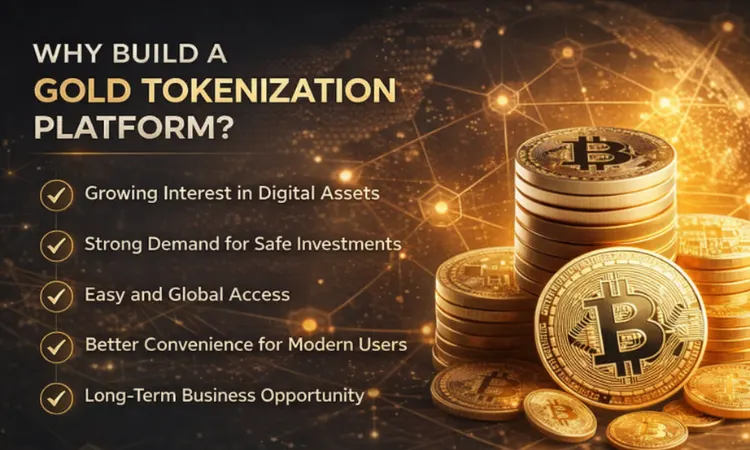
Almost every investor prioritizes a secure, easy-to-access, and digital platform. At the same time, if we look at the investment options, then gold remains one of the most trusted and powerful investment options.
So, by fusing gold with blockchain technology, you can give investors a better and modern way that fits today’s digital world. Here are some key reasons why you can build a gold tokenization platform:
Growing Interest in Digital Assets
Investors are becoming more comfortable with blockchain-based investments. Real-world assets like gold are now being tokenized to make them easy to trade and manage. Building a gold tokenization platform enables businesses to enter the fast-growing market for digital assets early.
Strong Demand for Safe Investments
When the economy is unstable, people choose stable assets over anything. Over the years, gold has always been a safe option for investment. Building a tokenized gold platform will provide the same security as physical gold, and it’s also easier and more flexible.
Easy and Global Access
Using this platform, people can make an investment in gold from anywhere in the world. The best thing is, you don’t need to deliver anything to people or have access to a local market. This makes gold investment easier and available anytime.
Better Convenience for Modern Users
Most of the investors prefer managing their assets digitally, and a tokenized gold platform supports this. Using this platform, people can instantly transfer, track, and make transactions compared to traditional gold buying methods.
Long-Term Business Opportunity
As digital finance will continue to evolve beyond 2026, platforms that offer real-world asset tokenization will become more important. Launching a gold tokenization platform now helps businesses stay ahead and build a strong position in the future financial ecosystem.
Real-Life Examples of Gold Tokenization
As you’re somewhat clear about the gold tokenization platform, it’s time to explore its real-life examples.
In 2026, gold tokenization is no longer an experimental concept; instead, it is a growing sector within real-world asset markets. In the market, there are several platforms that offer gold-backed tokens while combining physical gold security with blockchain convenience. This includes:
1. Tether Gold (XAUT)

In 2026, Tether Gold was one of the most popular tokens backed by gold. Each XAUT value is one troy ounce of real gold and is kept safe in Swiss vaults. Many crypto traders use it to get exposure to gold without really owning any gold.
Pros
- High liquidity and strong market presence
- Supported by real gold reserves
- Simple to trade on crypto exchanges
Cons
- Primarily popular within crypto markets
- Less regulatory clarity compared to some competitors
Ideal Option For
Active traders and crypto investors looking for liquid, blockchain-based gold exposure.
2. Paxos Gold (PAXG)

Paxos Trust Company issues PAXG, a regulated token backed by gold. Each token stands for one fine Troy ounce of gold that is stored in LBMA-approved vaults. It is known for compliance, transparency, and regular audits.
Pros
- Regulated and audited structure
- Strong institutional credibility
- Transparent gold backing
Cons
- Requires stricter KYC verification
- Users have to follow the rules a little more.
Ideal Option For
Long-term investors and institutions who want safe and regulated access to gold.
3. Kinesis Gold (KAU)

Kinesis Gold is part of the Kinesis monetary ecosystem. Each KAU token equals one gram of physical gold. It also includes a yield-sharing model where users may earn rewards from ecosystem transactions.
Pros
- Gold-backed and redeemable
- Payment and reward ecosystem
- Designed for both saving and spending
Cons
- Less market share than the top tokens
- Adoption that depends on the ecosystem
Ideal Option For
For users who want gold exposure combined with a payment utility and earning potential.
4. Matrixdock Gold (XAUM)

Matrixdock Gold is an emerging gold-backed token that is gaining significant attention from users. It keeps focus on institutional-grade backing and aims to extend liquidity within the tokenized commodities.
Pros
- Growing market adoption
- Institutional-focused approach
- Real gold reserve backing
Cons
- Newer and less established
- Less liquid than the leaders
Ideal Option For
Investors are looking for newer gold token projects with future growth potential.
5. Comtech Gold (CGO)

Comtech Gold is a UAE-based gold-backed token that is subject to regional compliance norms. Each CGO token stands for physical gold stored in secure and audited vaults.
Pros
- Strong regional regulatory alignment
- Transparent reserve audits
- Focused on compliance
Cons
- Limited global recognition
- Smaller ecosystem compared to top leaders
Ideal Option For
Investors are prioritizing regulatory compliance within Middle Eastern markets.
Core Features of a Gold Tokenization Platform
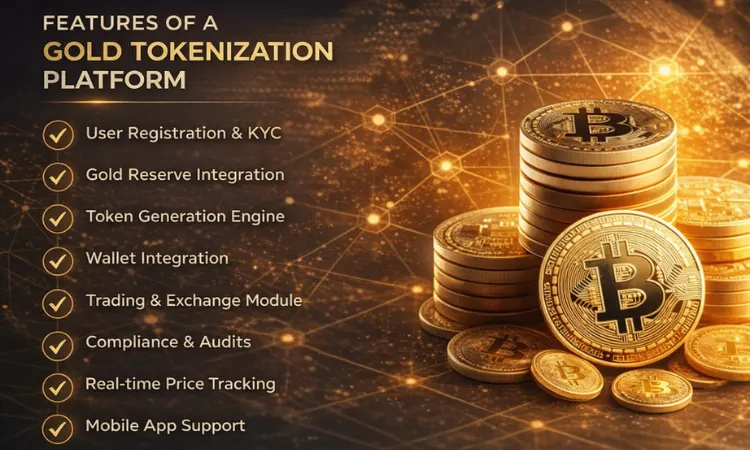
Since there are too many tokenization platforms available, how could you make yourself stand out in a crowded market? So, it’s all with the help of the features you’ll be sharing. With features like asset backing, smart contracts, real-time audits, secure wallets, and KYC/AML compliance, you’ll be able to stay ahead and gain user trust.
User Registration & KYC
Use government-issued ID verification and automated KYC processes to make sure that new users are verified. Integrate AML checks to prevent fraud and money laundering. This makes a compliant, trustworthy platform while ensuring only legitimate users participate in gold token transactions.
Gold Reserve Integration
Connect the platform to gold reserves in the real world that are kept safe by trusted third-party custodians. This ensures that each token is backed by real gold, allowing users to verify their holdings in real time. This kind of integration is important for transparency and maintaining token value parity.
Token Generation Engine
When you deposit or withdraw the gold, utilize smart contracts to automatically create gold-backed tokens. This ensures the platform’s credibility and ensures that digital assets are always backed by real reserves.
Wallet Integration
Put a custodial or non-custodial crypto wallet to safely store, send, and receive gold tokens. This offers users full control over their digital assets and allows for faster and low-cost transfers while keeping strong encryption and multi-layer authentication for the highest level of security.
Trading & Exchange Module
Allow users to trade tokens within the platform or connect with external crypto exchanges for broader liquidity. This feature helps users to make investments in gold tokens seamlessly, enhancing the platform’s user-friendliness and positioning it as a valuable trading ecosystem.
Compliance & Audits
Conduct third-party audits of gold reserves and publish results. Use compliance regulations such as FATF guidelines to develop investor confidence, lower regulatory risks, and ensure long-term sustainability of the tokenized gold ecosystem.
Real-time Price Tracking
Integrate live gold price data, historical charts, and conversion tools directly into the platform. This helps users monitor market trends, make informed investment decisions, and easily track the real-time value of their tokenized gold assets.
Mobile App Support
Create mobile apps that work on both Android and iOS to let users see their token balances, trades, and price alerts. A mobile-first approach makes things easier, gets people more involved and supports the growing trend of managing investments online.
Steps to Create a Gold Tokenization Platform
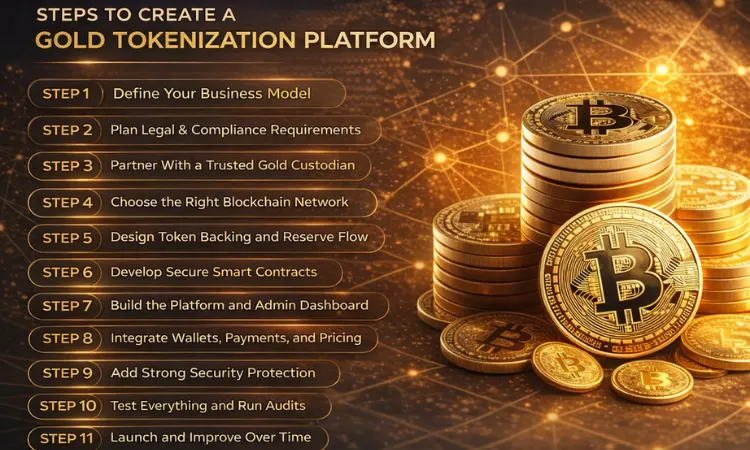
To make sure that every digital token is backed by physical gold and trusted by investors, always choose to build a gold tokenization platform with careful planning, solid security, and the right compliance. Here is a step-by-step guide on how you can easily create your own platform.
Step 1: Define Your Business Model
Start by deciding what your platform will offer. Will users only buy and hold tokenized gold, or will they also be able to trade, redeem physical gold, and use it in DeFi? Having clear goals helps you find out the right features, prices, and user experience.
Step 2: Plan Legal & Compliance Requirements
Before you start, know the rules in your target country. Choose how you’ll do KYC and AML checks. This step makes your platform legally safer and builds trust with users and partners.
Step 3: Partner With a Trusted Gold Custodian
Pick the right custodian who can keep physical gold in safe vaults. They should offer insurance and regular reports on audits. This makes sure that every token is truly backed by real gold, and users feel confident that reserves are safe.
Step 4: Choose the Right Blockchain Network
Choose a blockchain for tokenizing assets based on transaction fees, speed, security, and ecosystem support. Ethereum is trendy, but it may be expensive. Polygon and BSC are faster and less expensive. Your blockchain choice directly affects platform performance, user costs, and scalability.
Step 5: Design Token Backing and Reserve Flow
Create a clear system that links gold deposits to token minting. When gold is deposited and confirmed by the custodian, tokens are minted. When users redeem gold, tokens are burned. This flow makes sure that there is always a 1:1 gold-to-token backing.
Step 6: Develop Secure Smart Contracts
Smart contracts manage the main actions like minting, burning, transferring, and tracking ownership. They reduce manual work and improve transparency. Add safety controls like pausing the contract in emergencies. Always build contracts carefully to avoid costly errors.
Step 7: Build the Platform and Admin Dashboard
Make the user side where people can sign up, do KYC, buy/sell tokens, and keep track of their balances. Also, make an admin dashboard for managing users, reserve updates, audits, and compliance checks. A simple design makes the platform easy for beginners.
Step 8: Integrate Wallets, Payments, and Pricing
Add wallet support so users can store and transfer tokens safely. You can offer custodial wallets or non-custodial wallets. Add payment options like crypto and fiat, and let people track the price of gold in real time to get the most up-to-date value.
Step 9: Add Strong Security Protection
Protect the platform with 2FA, encryption, secure login, and fraud monitoring. Add DDoS protection to prevent attacks and secure key storage if you manage wallets. Security is essential because your platform deals with high-value assets and sensitive user information.
Step 10: Test Everything and Run Audits
Check your entire platform to ensure smooth signups, token transfers, trading, and redemption. Get smart contracts audited by experts to detect vulnerabilities. Fix all problems before launch. A strong testing phase helps find bugs and increases user trust from day one.
Step 11: Launch and Improve Over Time
Start with a small launch or beta version to gather feedback. After stable performance, scale to more users and markets. Keep updating security, adding features, publishing reserve audits, and staying up to date on regulatory changes. Continuous improvement helps your platform grow in the long term.
Benefits of a Gold Tokenization Platform
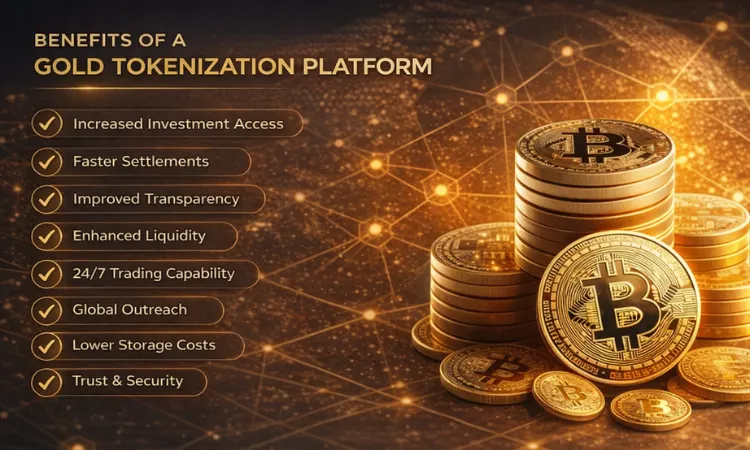
Gold tokenization makes trading easier, allows for fractional ownership, allows for trading around the clock, and makes gold more secure. It eliminates traditional barriers to gold investment, making it easier for both retail and institutional investors to participate in the digital gold economy.
Increased Investment Access
Tokenization lets people own a small part of something, so investors can buy small amounts of gold. This democratizes gold investment, welcoming retail investors who were previously excluded due to high capital requirements in traditional bullion markets.
Faster Settlements
Digital gold transactions settle almost instantly on blockchain networks. This cuts down on the long processing times and red tape that come with trading physical gold, making things run more smoothly and improving the experience for both buyers and sellers.
Improved Transparency
The blockchain keeps a permanent record of all token activities, including minting, burning, and transfers. This auditability reduces fraud risks, increases accountability, and builds investor trust through real-time traceability and publicly verifiable data trails.
Enhanced Liquidity
Gold tokens can be traded right away on both centralized and decentralized exchanges. Unlike physical gold, they’re not constrained by storage or delivery logistics, providing users with faster access to buy or liquidate their holdings.
24/7 Trading Capability
Unlike conventional gold exchanges with fixed hours, tokenized gold can be traded around the clock. This flexibility is great for global users and ensures round-the-clock accessibility to investments, irrespective of time zones or regional holidays.
Global Outreach
Tokenized gold platforms can serve users worldwide without requiring physical shipping. This removes geographical limitations and offers a borderless investment option, opening gold markets to users across emerging and developed economies alike.
Lower Storage Costs
Gold tokens break down storage complexity by consolidating large gold reserves with certified custodians. Shared custodial arrangements lower per-unit storage fees, making gold investment more efficient and cost-effective for platform operators and users.
Trust & Security
Blockchain technology ensures immutable records, while trusted custodians guarantee physical gold backing. They work together to create a safe space where users can easily trade and be sure that their digital tokens are linked to real, verifiable gold assets.
Use Cases of Tokenized Gold
Tokenized gold can be used for many things, including digital savings, DeFi collateral, cross-border payments, institutional trading, and protecting against inflation. It connects the value of traditional assets with modern financial systems, making gold investment more flexible, accessible, and high-tech.
Digital Gold Investment Platforms
Allow users to invest in gold through web or mobile apps with real-time tracking and easy token management. These platforms combine traditional assets with blockchain benefits, making a secure and affordable investment option.
DeFi Collateralization
Allow gold tokens to serve as security in decentralized finance protocols. Using this, investors can borrow crypto or earn profit without selling their holdings, combining stability with the liquidity and innovation of decentralized markets.
Cross-border Payments
Use gold tokens for fast, low-fee international transfers. Their value stability makes them a good option for payments and B2B transactions, reducing currency risk and avoiding traditional banking systems and their high transaction fees.
Savings & Pension Funds
Gold-backed tokens are a good way to save for the long term or for retirement. They keep inflation from happening and protect assets, especially when the economy is unstable or when new financial systems are being built.
Micro-investment Apps
Incorporate gold tokens into micro-investing apps, allowing users to invest spare change into gold. This promotes saving habits and makes digital gold ownership accessible even with smaller daily investments.
How Much Does It Cost to Build a Gold Tokenization Platform?
Here is a table that shows how much it might cost to develop a Gold Tokenization Platform for different sizes of projects.
| Platform Type | Description | Estimated Cost |
| MVP (Basic Platform) | Basic features include gold token minting, KYC, wallet, and minimal UI. | $35,000 – $60,000 |
| Mid-Scale Platform | This type of platform includes smart contracts, an exchange module, a mobile app, and enhanced security. | $70,000 – $120,000 |
| Enterprise-Grade Platform | Advanced features like multi-custodian support, DeFi integration, and a compliance suite. | $150,000+ |
Conclusion
Gold tokenization is changing the way people invest by combining the reliability of gold with blockchain’s innovation. By building a gold tokenization platform, you can give people a secure, scalable, and modern way to invest in precious metals.
With the correct strategy, technology, tokenization platform development company, and compliance, your platform can attract a global investor base and revolutionize digital asset ownership.
Technoloader can be your ideal partner in building this next-gen financial ecosystem with custom development, smart contract expertise, and blockchain strategy.
Frequently Asked Questions
Are gold tokens legally compliant?
Gold tokens can be legal if the platform follows the right financial rules in the country where it is based. This includes KYC verification, AML checks, licensing, and clear legal structuring. Compliance depends on jurisdiction, so businesses must follow local rules before they can start.
How is gold stored in such platforms?
The physical gold is stored in secure vaults that are managed by certified custodians. These custodians provide regular third-party audit reports to make sure that the gold reserves match the issued tokens. This ensures transparency and maintains trust in the 1:1 gold backing.
Which blockchain is best for tokenized gold?
Ethereum, Polygon, BNB Chain, and Avalanche are commonly used blockchains for tokenized gold. The right choice depends on transaction speed, fees, scalability, and ecosystem support. Businesses select a blockchain that offers security, cost-efficiency, and smooth performance for long-term growth.
How long does it take to develop a gold tokenization platform?
Building a gold tokenization platform takes 3 to 6 months. The timeline completely depends on the platform features, compliance requirements, smart contract development, testing, and security audits. Advanced platforms with mobile apps, exchange integration, and multi-custodian support may take longer to complete.
Can users convert gold tokens into physical gold?
Some platforms let users redeem tokens in exchange for physical gold. However, this usually requires completing verification steps and meeting minimum redemption limits. The specifics of this process vary, dictated by the platform’s individual policies and the agreements in place with custodians.

Kanak Badaya
Kanak Badaya is a Technical Content Writer at Technoloader with over 3 years of experience translating complex technology into content that actually makes sense. He works closely with emerging domains like Blockchain, Web3, AI, and DeFi, turning intricate technical concepts into clear, structured, and engaging narratives that help businesses communicate with confidence. Rather than just writing for search engines, Kanak focuses on writing for people. He combines in-depth research with a practical understanding of the industry to create blogs, website content, and technical guides that inform, educate, and build credibility. His goal is simple - make advanced technology feel approachable while helping Technoloader strengthen its authority in the digital space.
Published in Asset Tokenization Development


