 +91 7014607737
 info@technoloader.com





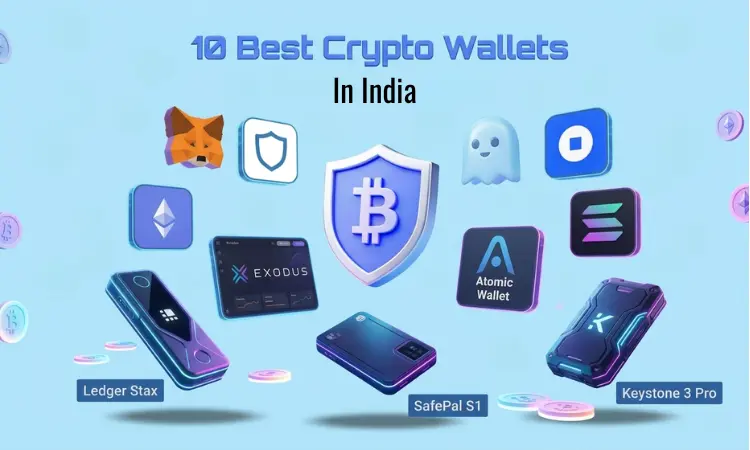
Table of Contents
Key Takeaways:
- India is currently leading global crypto adoption, but secure storage of assets is now becoming more important than ever.
- Keeping your cryptocurrencies on an exchange is a risky task. And, “not your keys, not your coins” is a reality, not just a phrase.
- A crypto wallet does not store assets. It safely keeps private keys that control your funds on the blockchain.
- Software (hot) wallets like MetaMask, Trust Wallet, Exodus, Phantom, Coinbase Wallet, Atomic Wallet, and Solflare are best for daily use, trading, and DeFi access.
- Hardware (cold) wallets like Ledger Stax, Keystone 3 Pro, and SafePal S1 are perfect for long-term holding and maximum security.
- Hot crypto wallets provide speed and flexibility, whereas cold crypto wallets prioritize offline security of crypto assets.
- The right choice of crypto wallets in 2026 ultimately relies on your overall usage, risk-bearing ability, and investment size.
- Beginners should focus on ease of use and multi-chain support, whereas advanced users should prioritize security layers and ecosystem compatibility.
Introduction
India doesn’t just participate in crypto. It leads the world at it.
According to the 2025 Chainalysis Global Crypto Adoption Index, India holds the #1 spot for the third consecutive year, among 151 countries.
With over 119 million active users, India has the world’s largest crypto user base and processed $2.36 trillion in cryptocurrency transactions between July 2024 and June 2025. It shows a remarkable 69% year-over-year increase.
But here’s the part most people overlook: owning crypto and safely storing crypto are two completely different things. And in 2026, that matters even more.
On July 18, 2024, WazirX, which was then India’s largest crypto exchange, suffered a cyberattack in which approximately $230 million in digital assets were stolen from a multisignature wallet. Then, just one year later, CoinDCX lost another $44 million in a server breach.
These were two of India’s biggest exchanges, and these hacks destroyed their reputation. One lesson we learned is that if your crypto is on an exchange, it isn’t really yours.
This is exactly why choosing the right crypto wallet in India is important. That’s because your wallet choice directly impacts the safety of every dollar you have invested in crypto.
In this guide, we have done the hard research for you. We have covered the 10 best crypto wallets available in India in 2026, across different wallet types such as hot, cold, and Web3 wallets.
Without further delay, let’s begin the blog!
What is a Crypto Wallet?
Most people assume a crypto wallet works like a regular wallet: a place where your coins sit, waiting to be spent. That assumption is also completely wrong. And it is an important factor to get right before you choose one.
Well, here is the truth: your crypto never actually lives inside your wallet.
Bitcoin, Ethereum, USDT, and more all live on the blockchain, a public ledger distributed across thousands of computers around the world. Your crypto wallet stores your private keys.
For example, your crypto wallet address is like a bank account number. Anyone can see it and send funds to it. And your private key is like the PIN, signature, and the vault combination all into one. Whoever controls the private key controls the crypto.
A crypto wallet is a specialized tool that generates your private keys, stores them securely, and uses them to sign off on transactions when you want to send or receive funds. This is also why the phrase “not your keys, not your coins” has become a known saying in the crypto world.
Custodial vs Non-Custodial Wallets
This is most important to understand, especially after the WazirX and CoinDCX incidents.
- Custodial Wallet: It is managed by a third party, typically an exchange like Binance, ZebPay, or CoinDCX. They hold your private keys on your behalf.
- Non-Custodial Wallet: It gives you complete control of your crypto assets. You hold the private keys, and there is no central authority to freeze or seize your funds.
Read our article on custodial vs non-custodial wallets to understand the key differences between them.
Hot Wallet vs Cold Wallet
Once you have decided to take self-custody seriously, the next question is simple: do you need a hot wallet, a cold wallet, or both?
The answer depends entirely on how you use crypto. Let’s understand them below!
- Hot Wallets: A hot wallet, also called a software wallet, is any wallet that stays connected to the internet. You can send, receive, swap, and interact with dApps in seconds, without any extra hardware or setup steps.
- Cold Wallet: A cold wallet, also referred to as a hardware wallet, stores your private keys that are never connected to the internet. When you want to make a transaction, you connect the device, approve it physically on the device itself, and then disconnect. The keys never leave the hardware.
Quick Comparison: 10 Best Crypto Wallets in India 2026
Before getting into depth into each crypto wallet, here is an at-a-glance look at all ten wallets side by side. If you are short on time, this table alone will point you in the right direction.
| Wallet | Type | Best For | Chains Supported | INR / UPI Support | KYC Required | Price |
| MetaMask | Hot (browser + mobile) | EVM / DeFi power users | 30+ EVM natively, unlimited custom | Limited | No | Free |
| Exodus
|
Hot (mobile + desktop) | Beginners, portfolio management | 50+ blockchains including BTC, ETH, SOL | Limited | No | Free |
| Trust Wallet | Hot (mobile) | Everyday multi-chain users | 100+ blockchains | Via P2P | No | Free |
| Phantom | Hot (mobile + browser) | Solana + ETH/BTC users | SOL, ETH, Polygon | Limited | No | Free |
| Coinbase Wallet | Hot (mobile + browser) | Beginners, compliance-focused | 10,000+ tokens across 50+ chains | Via Coinbase | Optional | Free |
| Atomic Wallet | Hot (mobile + desktop) | Multi-chain holders, built-in exchange users | 60+ blockchains, 1,000+ coins & tokens | Via Simplex / Guardarian | No | Free |
| Solflare | Hot (mobile + browser) | Solana power users, SOL stakers | Solana native + ETH | Limited | No | Free |
| Keystone 3 Pro | Cold (air-gapped hardware) | Advanced security, serious HODLers | 5,000+ coins, 200+ blockchains | Via third-party | No | ~₹20,000 ($240) |
| Ledger Stax | Cold (hardware) | <span style=”font-weight: 400;”>Premium cold storage, large portfolios</span> | 15,000+ coins & tokens natively | =”font-weight: 400;”>Via Ledger Live | No | ~₹33,000 ($399) |
| SafePal S1 | Cold (air-gapped hardware) | Budget hardware, max offline security | 200+ blockchains, 10,000+ tokens | Via SafePal App (60+ countries) | No | ~₹4,100 ($49.99) |
MetaMask

MetaMask is a popular crypto wallet and browser extension that has been into existence since 2016. Consensys founders Dan Finlay and Aaron Davis launched it with the motive to manage digital assets and interact with dApps on blockchain networks, mainly Ethereum. It now supports nearly 100 million users worldwide. And that’s because it connects seamlessly to virtually every EVM dApp and even supports 30+ blockchains.
It basically acts as a wallet and gateway to the world of DeFi, NFTs, and other blockchain-based services. Thus, it has become an important tool for crypto enthusiasts. It enables users to store, send, and receive cryptocurrency, connect to dApps, and manage a wide range of blockchain networks – all from a single browser extension or mobile app.
Pros:
- Users can buy crypto directly within the app by using UPI or IMPS.
- Being fully non-custodial, it enables storing private keys with users.
- Allows swapping tokens across chains without leaving the app.
- Clean design makes it easy to manage tokens, NFTs, and multiple wallets.
- Wide dApp and chain support across Ethereum, Polygon, Arbitrum, and more.
- Its MetaMask Card lets you spend your crypto at real-world merchants.
Cons:
- Being non-custodial, if you lose your seed/mnemonic phrase, your assets are gone permanently.
- It doesn’t provide native Bitcoin support, which increases complexity.
- Ethereum network congestion can even result in high gas fees.
- Its support is limited to documentation and community forums.
Exodus

Launched in 2015 by JP Richardson and Daniel Castagnoli, Exodus was built to remove the “geek requirement” from crypto by combining high-end design with robust engineering. And, they delivered. It combines a polished interface with broad multi-chain support, built-in swaps, and staking – all without requiring accounts or handing over private keys.
Exodus wallet supports over 50 different blockchain networks for managing, sending, and receiving cryptocurrencies and even emerging Layer-2s such as Arbitrum, Optimism, Polygon, Base, and more. It basically covers everything an Indian retail investor would hold. It works across desktop, mobile, and browser extensions, and syncing between devices is handled via QR code. After its collaboration with Ledger in 2024, Exodus is also compatible with Ledger hardware wallets.
Pros:
- Highly intuitive and easy-to-use, which is perfect for newbies.
- Being a non-custodial wallet, you hold full control of your private keys.
- Supports a wide range of cryptocurrencies and even blockchains.
- Enables swapping tokens within the app without creating a separate account.
- Features easy integration with Trezor devices.
Cons:
- In-app exchange fees depend on third-party APIs and are higher.
- Doesn’t support 2FA, which can lead to unauthorized access.
- As a software wallet, it is less secure for large or long-term crypto holdings.
- Losing a 12-word recovery phrase can result in losing funds permanently.
Trust Wallet
Trust Wallet is a popular mobile crypto wallet in India. It allows users to safely store, send, and receive many kinds of crypto assets. It is a non-custodial wallet, which gives full control over your private keys. This means you are the only one who can access your funds. Furthermore, this helps boost security and reduces the risks of hacks linked with custodial wallets.
It supports thousands of cryptocurrencies, which include some of the most popular ones like Bitcoin and Ethereum, as well as other types of tokens from different blockchain networks. This versatility is what makes this crypto wallet an excellent choice for anyone looking to manage a wide range of digital assets from one place.
Pros:
- Enables users to manage a wide range of cryptocurrencies from a single interface.
- Supports an integrated DEX that facilitates swapping tokens from wallet.
- Enables staking cryptocurrencies to earn extra rewards.
- Employs advanced security protocols like private key encryption.
- Its interface is designed to be intuitive, especially for beginners.
Cons:
- Users have often reported slow or unresponsive support.
- Depends on third-party apps for swapping, which can lead to privacy risks.
- Users may face delayed transactions or even high fees for swaps during peak times.
- Being non-custodial, if you lose your seed phrase, your assets may be lost permanently.
Phantom

Phantom wallet is basically a non-custodial crypto wallet that has now become a core of the Solana ecosystem. It provides users a safe platform to handle their digital assets. Apart from the basic features, Phantom allows users to stake SOL tokens, interact with dApps, and seamlessly manage NFTs.
Founded in January 2021 by Brandon Millman, Francesco Agosti, and Chris Kalani, Phantom wallet is easily accessible across multiple devices, including desktop (browser extensions) and mobile (iOS and Android apps). This ensures users can access their assets and interact with dApps easily, no matter the device they are using.
Pros:
- Easy to use for both newbies and pro crypto users.
- Apart from Solana, it now supports Ethereum and Polygon networks.
- Users gain full control of their private keys.
- Allows for quick swaps of tokens and direct purchases of crypto.
- Enables users to seamless view and manage NFTs.
Cons:
- Being connected to the internet makes it prone to hacks & phishing attacks.
- Doesn’t support all existing blockchain networks or tokens.
- Lacks advanced technical tools for power users.
- Its performance is closely tied to the stability of the Solana network.
Coinbase Wallet

Coinbase Wallet, that is recently rebranded as Base App, is a free and self-custodial hot wallet developed by Coinbase, which is one of the world’s largest and most regulated crypto exchanges. It supports over 10,000 cryptocurrencies across all EVM-compatible networks, including Ethereum, Solana, Arbitrum, Base, Polygon, and BNB Chain, along with Bitcoin, Dogecoin, and Litecoin on mobile.
It can easily connect to the Coinbase exchange. Also, you can create up to 15 sub-wallets, stake ETH, manage NFTs, and access DeFi protocols, all within one clean interface that works on both mobile and browser extension. The built-in swap feature compares rates across 21 different liquidity sources to get you the best possible price, and a gasless swap option lets you pay network fees in USDC rather than holding native tokens.
Pros:
- Can smoothly connect to the Coinbase exchange.
- Supports thousands of tokens across multiple networks.
- Its user-friendly interface makes it easy to use for beginners.
- Offers biometric authentication and cloud backups.
- Supports INR within the Coinbase wallet.
Cons:
- Support is mostly documentation and community forums.
- As a non-custodial wallet, losing private keys means permanent loss of funds.
- Users report high fees for transactions.
- Some pro features of Coinbase wallet are limited for India.
Atomic Wallet

Atomic Wallet is basically a non-custodial and multi-asset crypto wallet. It allows users to store, swap, and stake cryptocurrencies while gaining complete control of their private keys. Atomic supports more than 1,000 coins and tokens and is trusted by 15 million users. It is accessible on both desktop and mobile, which makes it an easy multi-chain solution for managing a wide range of crypto portfolios.
This Indian crypto wallet comes with features such as built-in crypto swaps, atomic swaps (peer-to-peer exchanges), staking for passive income, and portfolio tracking, all within a single interface. It uses end-to-end encryption, which ensures private keys never leave the user’s device.
Pros:
- Private keys are stored locally on the user’s device, not on central servers.
- Supports more than over 1000 coins and tokens.
- Doesn’t need registration or KYC for basic wallet features.
- Perfect for both beginners and experienced users.
- Since it is decentralized, no one can block your crypto.
Cons:
- Doesn’t support hardware wallets like Ledger or Trezor.
- Users have even reported slow customer support response times in the past.
- In 2023, the wallet faced a security incident, which resulted in user losses.
Solflare

Solflare is the most powerful wallet on Solana, that is trusted by over 3 million active users and managing $15 billion in crypto assets. Developed under Solrise Group, Solflare launched in July 2020 as one of the first wallets built specifically for Solana, and has since grown into an all-in-one platform for staking, swapping, NFT management, and dApp access
Compared to Phantom, Solflare offers a more detailed staking validator selection interface, richer on-chain data visualisation, and more robust DeFi support. This makes it the stronger choice for Indian users who want deeper control over their Solana positions. It supports the Solflare Shield, a Solana-native NFC hardware wallet card that lets users sign mobile transactions with a physical tap.
Pros:
- Full non-custodial control, private keys stay with the user
- Optimized specifically for Solana, giving faster and low-cost transactions
- Smooth integration with Solana dApps, DeFi platforms, and NFT marketplaces
- Supports hardware wallets like Ledger for added security
- Available on web, browser extension, and mobile with seamless access
Cons:
- Limited primarily to the Solana ecosystem, not ideal for multi-chain users
- Smaller ecosystem compared to Ethereum-based wallets
- Hardware wallet setup can be complex for non-technical users
Keystone 3 Pro

The Keystone 3 Pro is a hardware wallet that comes with sleek design, a large 4-inch touchscreen, and top-notch security features. It is one of the only cold crypto wallets that is equipped with 3 secure element chips, with two protecting the private keys and one dedicated to fingerprint biometric data. This creates a layered security architecture that no other wallet on this list can match.
It supports 5,000+ coins and tokens. One outstanding feature of this wallet is that it pairs natively with MetaMask, which allows you to manage it from one single device. The Keystone 3 Pro is fully air-gapped, which means it operates completely offline and never has any direct connection to the internet. It communicates only through QR code scanning for transaction signing, which means no USB data transfer, no Bluetooth, and Wi-Fi attack.
Pros:
- Features a PCI security-grade function, which erases data if the device is broken.
- Enables managing up to 3 separate seed phrases on one device.
- Has a built-in fingerprint sensor for quick transaction authorization.
- Compatible with MetaMask and other Web3/DeFi applications.
- Offers a Bitcoin-only firmware option to reduce the attack surface.
Cons:
- Doesn’t have its own computer or mobile application.
- The initial setup is long and complex.
- More expensive and might not be suitable for beginners.
Ledger Stax
Ledger Stax is another hardware wallet that features a curved E Ink touchscreen, wireless Qi charging, and Bluetooth connectivity, which gives a smartphone-like experience while keeping your private keys fully offline. It supports 15,000+ coins and tokens and can easily connect to third-party wallets like MetaMask for even broader asset management.
For Indian users managing crypto portfolios, the Clear Signing feature is helpful as it shows the full details of every transaction, including recipient address, asset amount, and approval type, on the device screen before you sign anything. This eliminates the blind signing risk that catches so many Indian users off guard on hot wallets. Also, this wallet is secured by a CC EAL6+ certified Secure element chip, which is the highest security certification available on any consumer hardware wallet.
Pros:
- Provides a user-friendly interface that allows for easy on-device management.
- Equipped with Bluetooth for mobile (iOS/Android) and USB-C for desktop.
- Supports Qi wireless charging, reducing dependence on cables.
- Provides institutional-grade protection for private keys.
- Features a spacious touchscreen that makes reviewing details easier.
Cons:
- More expensive than the Ledger Nano X.
- The E-ink display is hard to read in low-light environments.
- Has limited memory for holding multiple apps.
SafePal S1
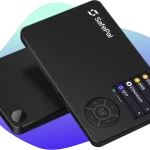
Launched in 2018, SafePal S1 was the first hardware wallet to receive investment from Binance Labs, which says a lot about the credibility behind this compact little device. The SafePal S1 is roughly the size of a credit card and operates 100% offline with no wireless or USB data connection. It supports over 10,000 cryptocurrencies across 200+ blockchains, including Bitcoin, Ethereum, BNB Chain, Solana, TRON, and all major ERC-20 and BEP-20 tokens.
The SafePal app pairs easily with the device for portfolio management, token swaps, DeFi access, staking, and NFT management, and is available in over 15 languages. It’s security is a CC EAL6+ certified Secure Element chip that stores private keys in a tamper-proof environment, alongside a self-destruct mechanism that automatically wipes all sensitive data the moment any physical tampering is detected.
Pros:
- One of the most affordable hardware wallets on the market.
- Uses a dual-chip architecture with an EAL 6+ certified secure element.
- Has a compact design with a 1.3-inch screen and D-pad navigation.
- No personal information or KYC data is required.
- Perfect for both beginners and experienced users.
Cons:
- Updating the device requires a manual and long process.
- Less durable or premium compared to metal alternatives.
- Requires scanning numerous QR codes, which may be inconvenient.
Wrapping Up
That’s a wrap for this blog!
In a country where crypto adoption is growing faster than ever, the real question is how safely you can store your assets. As we’ve observed from recent exchange hacks and security breaches, relying solely on centralized platforms can be risky. The control must shift back to you.
That’s where picking the right crypto wallet makes all the difference. Be it you are choosing to go for a hot wallet for convenience or a cold wallet for maximum security, the key is to align your choice with how you actually use crypto.
At the end of the day, crypto is about owning things and being decentralized. Your wallet gives you control. So, take your time, know what you need, and choose carefully. A small choice now can keep your whole portfolio safe.
And if you are looking to build a crypto wallet solution, Technoloader can help you turn that vision into reality with our expertise. Reach out to us now!
Frequently Asked Questions
Which is the safest crypto wallet in India in 2026?
If safety is your only priority, you must go ahead with a hardware wallet. The Ledger Stax and Keystone 3 Pro are the strongest options right now, with air-gapped security and certified secure element chips that make remote hacking virtually impossible. Or, if you are looking for a cost-effective option, the SafePal S1 offers genuine air-gapped cold storage.
Is it legal to use a crypto wallet in India?
Yes, completely. Owning and using a personal crypto wallet is legal in India. Well, wallets themselves are not regulated. The crypto exchanges in India that convert your INR to crypto must be registered with India’s Financial Intelligence Unit (FIU).
What happens if I lose my seed phrase?
If you lose your seed phrase, your funds are gone permanently. There is no way to recover access without the seed phrase.
Can I use MetaMask in India?
Yes, of course! MetaMask is one of the most widely used crypto wallets in India. There are no geographic restrictions on using this wallet.
Hot wallet or cold wallet: which one should I start with?
If you are new to crypto and holding smaller amounts, start with a hot wallet like Trust Wallet or Exodus. They are free, beginner-friendly, and more than adequate for getting started. Once your portfolio grows to a point where a hack or loss would hurt, you can move the bulk of your holdings into a hardware wallet. You do not have to choose one or the other permanently. Most experienced Indian crypto users run both simultaneously.
Do crypto wallets in India require KYC?
No! Every non-custodial wallet on this list requires zero KYC to download, set up, and use. You do not even need an email address.
Which is the cheapest hardware wallet in India?
The SafePal S1 is the most affordable hardware wallet on this list at approximately ₹4,000–₹5,500. It is fully air-gapped, supports 200+ blockchains and 10,000+ tokens, and includes a certified secure element chip, which makes it a perfect cold storage device at a budget price.

Vipin Kumar
Vipin Kumar is the CEO of Technoloader, a leading blockchain development company. With deep expertise in emerging technologies, he drives innovation in Web3, gaming, and crypto solutions. He is passionate about delivering robust and scalable tech that transforms businesses in the digital age.
Published in Cryptocurrency Wallet Development


