 +91 7014607737
 info@technoloader.com





Table of Contents
Quick Summary
Crypto exchange security is essential for protecting user funds, preventing cyberattacks, and building long-term trust. In 2026 and beyond, exchanges must adhere to strict compliance standards while implementing advanced security measures such as cold storage, fraud monitoring, and secure withdrawal controls.
Key Points:
- Crypto exchange security focuses on safeguarding user accounts, private data, and digital assets from hackers and scams.
- Exchanges are frequent targets because they hold large amounts of funds, and crypto transactions are fast and irreversible.
- Compliance frameworks such as KYC, AML, the FATF Travel Rule, and MiCA are critical for secure and legal operations.
- Best practices include cold wallet storage, multi-signature approvals, and strong private key management.
- Additional protection comes from encryption, API security, DDoS defense, and withdrawal whitelisting.
- Continuous monitoring with AI-powered fraud detection helps prevent suspicious activity in real time.
- Regular audits, penetration testing, and transparency tools like proof of reserves strengthen trust and credibility.
In the crypto market, security is not just a necessity; it’s a foundational component for trust and success!
With billions of dollars in digital assets being traded daily, crypto exchanges have become one of the most valuable targets for hackers, scammers, and cybercriminals. Whether you’re launching a new exchange platform or improving an existing one, one truth remains the same:
Users will only trust your exchange if they feel their funds and data are completely secure.
In 2026 and beyond, having a modern trading interface, low transaction fees, or aggressive marketing campaigns is not enough. Crypto users demand strong protection of assets, compliance with global regulations, transparent operations, and much more.
And history has already proven that even the biggest exchanges are not immune to breaches. When an exchange fails, the losses are not only about financial matters; further, they are also about destroying user trust permanently.
So, in this extensive guide, we’ll discuss the best security practices for crypto exchange compliance and asset protection. Let’s start.
What Is Crypto Exchange Security?
Crypto exchange security refers to keeping an exchange platform safe from hackers, scams, and unauthorized access.
It is a place where people can buy, sell, and store cryptocurrency, and because this platform handles real money, keeping it secure is crucial.
Imagine a crypto exchange like an online bank, where security is the full protection system guarding that bank.
However, the primary responsibilities of a cryptocurrency exchange are
- Protecting User Accounts: This means keeping the user’s login and personal information safe. Every exchange must prevent password hacks, fake login attempts, phishing scams, and unauthorized account access. To achieve this, digital currency exchanges must prioritize two-factor authentication, login alerts, anti-phishing protections, and strong password rules.
- Protecting User Funds: This second and most critical responsibility is safeguarding crypto holdings. Exchanges generally store large amounts of digital assets like Bitcoin, Ethereum, and stablecoins. So, it is crucial to defend them against threats like wallet breaches, withdrawal manipulation, insider fraud, and large-scale cyberattacks. That’s why secure exchanges must consider setting up cold wallet storage, multi-signature wallets, withdrawal limits, and real-time monitoring systems.
Why Crypto Exchanges Are Frequent Targets
In the digital world, cryptocurrency exchanges are the most attacked platforms because they handle valuable assets, and cybercriminals often target exchanges where they can steal money quickly.
Let’s understand this in a simple way.
Exchanges Store Large Amounts of Digital Assets
A cryptocurrency exchange is not just a trading platform; it is also a platform where thousands of users keep their crypto funds. Which makes escrow security mechanisms essential for preventing fraud and unauthorized fund movement. As so much money is kept in one place, exchanges become a very attractive target.
Crypto Transactions Are Fast and Cannot Be Reversed
In traditional banking, if money is stolen, banks can sometimes block the transfer or help recover it. But crypto works differently. Once crypto is sent, it happens instantly, and it cannot be undone or reversed. If a hacker attempts to steal assets from an exchange wallet, the funds typically disappear permanently. That’s why exchanges must be extra careful, because there is no “undo button” in crypto transfers.
Crypto Exchanges Are Open to Users Worldwide
Most crypto exchanges operate globally, which means people from many countries can use them. Trading happens 24/7; anyone with internet access can try to log in, and this global exposure increases risks like phishing scams, fake accounts, bot attacks, and cross-border cybercrime.
Major Hacks Have Happened Even to Big Exchanges
Over the years, many well-known exchanges have suffered security breaches, including:
- Mt. Gox (2011-2014) was one of the earliest major exchange failures.
- The FTX-related incidents in 2022 demonstrated the importance of strong internal security.
- The DeFi and bridge hacks occurred as a result of vulnerabilities in smart contracts.
These incidents clearly show why modern platforms must proactively protect crypto exchanges from hacking by strengthening internal controls, smart contract security, and real-time threat monitoring.
Common Security Risks in Crypto Exchanges
Crypto exchanges are among the most valuable platforms in the digital finance world. They enable users to trade, store, and transfer cryptocurrencies, which makes them an essential part of the crypto ecosystem. However, because exchanges manage large volumes of assets and sensitive user details, they’re also prime targets for cybercriminals.
Crypto exchanges face various security risks, including hacking, fraud, wallet vulnerabilities, insider threats, and regulatory challenges. Building a safer and more compliant exchange platform begins with understanding these risks.
Let’s explore the most common security threats in detail.
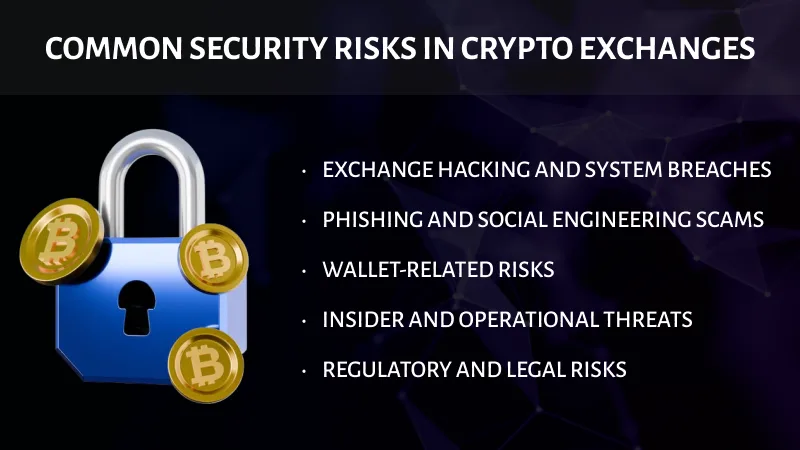
Exchange Hacking and System Breaches
Crypto exchanges are significant targets for hackers because they store large amounts of user funds. Attackers try to break into exchange servers, wallet systems, or databases by exploiting security weaknesses. If the platform is not well protected, hackers can steal assets quickly and can cause huge financial losses.
Phishing and Social Engineering Scams
Phishing attacks generally happen when scammers create fake emails, websites, or messages that look like real exchanges. They trick users into sharing passwords, OTPs, or private information. Social engineering scams also involve attackers pretending to be support staff. These threats mainly succeed because of user mistakes.
Wallet-Related Risks
Crypto exchanges use wallets to store user funds. Hot wallets are connected to the internet and are used for daily withdrawals, but they’re more vulnerable to hacking. Cold wallets store assets offline and are safer. Poor private key management can lead to stolen funds instantly.
Insider and Operational Threats
Sometimes security risks come from inside the exchange. Employees or administrators with high access may misuse their permissions intentionally or by mistake. Weak internal controls, poor access management, or a lack of monitoring can cause serious damage. Exchanges must limit access and track activities carefully.
Regulatory and Legal Risks
Crypto exchanges must follow rules like KYC, AML, and licensing laws. If they fail to comply, they may face penalties, shutdowns, or loss of user trust. Regulations help stop illegal activities, improve transparency, and make exchanges safer for users in the long term.
Role of Compliance in Crypto Exchange Security
Compliance plays a crucial role in crypto exchange security because it ensures that an exchange operates legally, safely, and transparently. In simple words, compliance means following the rules and regulations that are especially set by governments and financial authorities to prevent fraud, hacking, and illegal activities.
Since crypto exchanges handle large amounts of user data as well as funds, they must implement strong security practices like identity verification, transaction monitoring, and proper data protection.
Regulatory requirements like KYC help exchanges confirm user identities and reduce fake accounts. In contrast, AML measures detect suspicious transactions and stop criminal fund movements. Overall, crypto exchange compliance is not just about avoiding legal penalties; it’s often about strengthening the exchange security network, protecting user assets, and building long-term trust among investors and customers worldwide.
📞 Speak With Experts
Key Regulatory Standards Exchange Must Follow
To operate safely and legally, crypto exchanges must follow important regulatory rules. These standards help prevent fraud, stop illegal activities, and ensure user protection. Let’s understand the three main compliance areas in a simple way.
KYC (Know Your Customer) Requirements
KYC is a process where crypto exchanges verify the identity of their users before allowing trading. It helps prevent fake accounts, scams, and fraud. Users may need to submit documents like an ID card or a passport. A smooth KYC system also improves onboarding by keeping the exchange secure while maintaining trust and transparency.
AML (Anti-Money Laundering) Policies
AML policies help exchanges stop criminals from using crypto for illegal money transfers. Exchanges use transaction monitoring tools to track suspicious activities, such as unusually large transfers or high-risk wallet addresses. Early detection of such transactions helps prevent money laundering, fraud, and financial crimes, making the platform safer for everyone.
Major Global Frameworks
Crypto exchanges must also follow global regulations depending on the region in which they operate. Rules like the FATF Travel Rule require exchanges to share sender and receiver details. EU MiCA introduces licensing standards, while US agencies like the SEC and FinCEN enforce investor protection and AML laws. Countries like India, the UAE, and Singapore are also strengthening their frameworks.
Best Practices to Secure User Accounts
Securing user accounts is one of the most important responsibilities of a crypto exchange, as most attacks begin with unauthorized logins. To keep users safe, every exchange must implement strong protection systems like authentication, anti-phishing measures, and continuous monitoring.
Strong Authentication Systems
Strong authentication helps protect user accounts from unauthorized access. Exchanges should use multi-factor authentication (MFA), where users confirm their login with an extra code or an app. Biometric options like fingerprint or face ID also add stronger protection.
Anti-Phishing Protection
Anti-phishing measures prevent users from falling for scam emails or fake websites. Exchanges can use email security codes, so users can confirm official messages. Verified communication channels also ensure users interact only with real exchange support and platforms.
Login and Session Monitoring
Login monitoring helps detect suspicious activity early. Exchanges track devices and IP addresses to identify unusual logins. Alerts warn users about unknown access attempts, and automatic session timeouts log users out safely when inactive.
Best Practices to Secure User Funds
Protecting users’ funds is the most critical aspect of security for an exchange. Since exchanges store large amounts of digital assets, they must use strong wallet strategies, secure withdrawal systems, and safe key management to prevent hacks and fund theft.
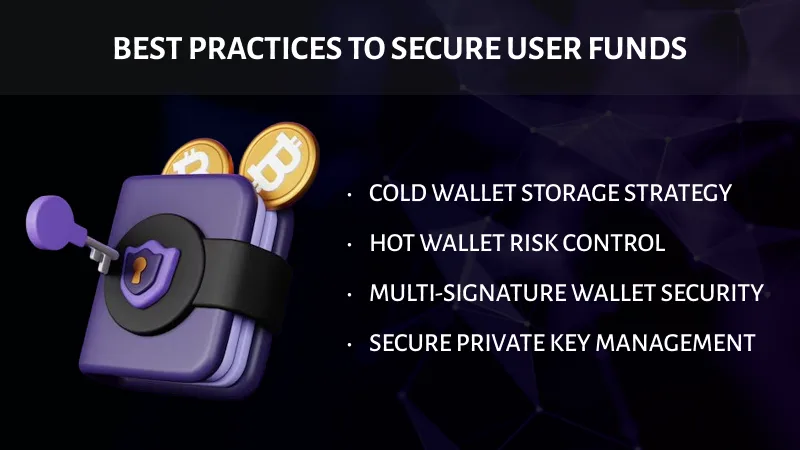
1. Cold Wallet Storage Strategy
Cold wallet storage means keeping most user funds offline, away from the internet. This reduces the chances of hacking because attackers cannot easily access offline wallets. Exchanges should store the majority of assets in cold storage with strict access controls.
2. Hot Wallet Risk Control
Hot wallets are connected to the internet and used for daily withdrawals. Because they’re more exposed to online threats, exchanges should keep only small amounts in hot wallets. Continuous monitoring helps detect suspicious activity and prevent losses early.
3. Multi-Signature Wallet Security
Multi-signature wallets require more than one approval or private key to complete a transaction. This stops a single point of failure, where one stolen key could drain funds. It also reduces the risk of insider theft by ensuring no single person controls withdrawals.
4. Secure Private Key Management
Private keys must be protected carefully because they control access to crypto funds. Exchanges use hardware security modules (HSMs) and encrypted key storage to protect keys. Strong key management prevents hackers from stealing assets through key exposure.
Platform-Level Infrastructure Security Measures
Along with wallets and compliance, crypto exchanges must also secure their technical infrastructure. Platform-level security protects the exchange’s servers, user data, and trading systems from cyberattacks. Strong encryption, API security, and network defense ensure the platform stays safe and stable.
1. End-to-End Data Encryption
End-to-end encryption safeguards user information and transaction data from hackers. SSL/TLS encryption secures data exchanged between users and the exchange, while database encryption keeps customer data safe even if attackers access internal systems.
2. API Security for Trading Systems
APIs allow users and third-party apps to access exchange services like trading and withdrawals. Secure API keys help prevent unauthorized access, while rate limiting and access control stop attackers from abusing the system through repeated requests or automated hacks.
3. DDoS Protection and Network Defense
DDoS attacks overload exchange servers with huge traffic, causing downtime and disruptions. Anti-DDoS tools block harmful traffic, firewalls detect suspicious activity, and intrusion detection systems prevent breaches. Load balancing ensures stable performance even during high demand.
consult technical experts on WhatsApp
Withdrawal Security Controls
Withdrawal security is another of the most important parts of crypto exchange protection because most hacks usually happen when attackers try to move stolen funds out quickly. Strong withdrawal controls help exchanges stop fraud, detect suspicious activity, and protect user assets.
1. Address Whitelisting
Address whitelisting enables withdrawals only to approved wallet addresses. Even if hackers access an account, they cannot send funds elsewhere, improving security and preventing theft.
2. Withdrawal Limits
Withdrawal limits restrict the amount users can withdraw daily or per transaction. This reduces losses during hacks and gives exchanges time to detect suspicious activity.
3. Time-Locks for Large Withdrawals
Time locks delay large withdrawals for a set time. This prevents instant fund draining and allows users or exchanges to stop suspicious transfers before completion.
Continuous Security Monitoring and Fraud Detection
Continuous security monitoring helps crypto exchanges detect threats early and prevent fraud. By tracking user behavior and transactions in real time, exchanges can stop suspicious activity before assets are stolen.
Real-Time Anomaly Detection
Real-time anomaly detection identifies unusual actions instantly, such as sudden large withdrawals or strange login attempts. It helps exchanges respond quickly before hackers can cause major damage.
AI-Powered Fraud Prevention
AI-powered fraud prevention uses machine learning to detect scams, bots, and other suspicious patterns automatically. It improves security by catching threats faster than manual monitoring and reducing financial losses.
Monitoring Unusual Trading Activity
Monitoring unusual trading activity helps exchanges spot abnormal trades, price manipulation, or wash trading. Detecting these actions early protects users, maintains fair markets, and prevents fraudulent exchange behavior.
Automated Risk Scoring Systems
Automated risk scoring systems use behavioral data to assign risk levels to users and transactions. High-risk activities trigger alerts or restrictions that help exchanges prevent fraud and strengthen overall security.
Regular Auditing and Security Testing
Regular auditing and security testing help crypto exchanges stay protected over time. By checking systems frequently, exchanges can find weaknesses early, fix vulnerabilities, and stop hackers from exploiting security gaps.
Penetration Testing
Penetration testing is an ethical hacking simulation where security experts attack the exchange system legally. It helps identify vulnerabilities in servers, APIs, and wallets before real hackers can capitalize on them.
External Security Audits
External security audits are mainly performed by third-party experts who typically review an exchange’s security framework. These audits improve credibility, ensure compliance, and confirm that strong protection measures are in place.
Smart Contract Audits (For DEX or DeFi Integrations)
Smart contract audits examine blockchain-based contracts for errors or vulnerabilities. They help prevent exploits that could drain liquidity pools or allow hackers to manipulate DeFi exchange operations.
Bug Bounty Programs
Bug bounty programs reward ethical hackers for finding and reporting security issues. This community-driven approach helps exchanges continuously improve security and fix weaknesses before attackers misuse them.
Transparency and Trust-Building Practices
Transparency is essential for building user trust in crypto exchanges. When platforms openly show how they protect funds and communicate during problems, users feel more confident.
- Proof of Reserves: Proof of reserves is a method where exchanges publicly verify that they actually hold enough crypto assets to cover user deposits. It reassures customers that their funds are safe and prevents situations like the FTX collapse, where hidden financial issues caused major losses.
- Security Reports and Public Communication: Security reports and open communication help exchanges maintain user trust. By sharing clear security policies, audit results, and timely updates during incidents, exchanges show accountability. Transparency during breaches reduces panic and proves the platform is responsibly managed.
Conclusion
Here comes the end of this comprehensive guide; through this blog post, we have discussed all the important information related to cryptocurrency exchange security. From understanding the basics to regulatory compliance and core security practices, we’ve discussed everything efficiently and comprehensively.
In addition to this, developing a crypto exchange platform isn’t that simple; you are typically required to work on various strategies and tech stacks. So, to simplify your development process and ensure you have a great and future-ready crypto exchange, all you’re required to do is partner with Technoloader.
With a team of experts, customizable trading options, and cost-effective, flexible revenue stream options, we will ensure you’ve the right foundation to build, scale, and manage your exchange with confidence.
FAQs
Why are cryptocurrency exchanges targeted by hackers?
Crypto exchanges are frequently targets of hackers because they store large amounts of user funds in a single location. Additionally, crypto transactions happen instantly and cannot be reversed, making exchanges a highly profitable target for cybercriminals worldwide.
What are the biggest security risks for crypto exchanges?
The most common risks include exchange hacking, phishing scams, wallet vulnerabilities, insider threats, withdrawal fraud, and regulatory non-compliance. Understanding these risks is the first step in building a safer exchange platform.
How does cold storage improve exchange security?
Cold storage keeps most crypto assets offline, away from internet exposure. Since hackers cannot directly access offline wallets, cold storage greatly reduces the risk of large-scale fund theft and is considered a core security practice.
What is the role of multi-signature wallets in exchange protection?
Multi-signature wallets require multiple approvals before a transaction is executed. This reduces single-point failures, prevents insider abuse, and ensures that stolen private keys alone cannot drain user funds.
Why is private key management critical for exchanges?
Private keys control access to crypto wallets. Attackers can instantly transfer funds if they expose or steal keys. Secure exchanges use encryption, HSMs, strict access controls, and key rotation to prevent unauthorized key usage.
How do AML policies strengthen crypto exchange security?
AML (Anti-Money Laundering) policies detect suspicious transactions and stop criminals from using exchanges for illegal fund transfers. AML tools monitor wallets, transaction patterns, and high-risk activities in real time.
How does AI help in fraud detection for crypto exchanges?
AI-powered fraud detection systems help identify unusual behaviors, such as abnormal trades, bot attacks, large withdrawals, or login anomalies. Machine learning finds threats faster than manual monitoring and cuts down on financial losses.
What is Proof of Reserves, and why does it matter?
Proof of Reserves is a transparency mechanism in which exchanges verify that they hold sufficient assets to cover customer deposits. It fosters trust, shields users from hidden insolvency risks, and ensures the safety of their funds.

Kanak Badaya
Kanak Badaya is a Technical Content Writer at Technoloader with over 3 years of experience translating complex technology into content that actually makes sense. He works closely with emerging domains like Blockchain, Web3, AI, and DeFi, turning intricate technical concepts into clear, structured, and engaging narratives that help businesses communicate with confidence. Rather than just writing for search engines, Kanak focuses on writing for people. He combines in-depth research with a practical understanding of the industry to create blogs, website content, and technical guides that inform, educate, and build credibility. His goal is simple - make advanced technology feel approachable while helping Technoloader strengthen its authority in the digital space.
Published in Cryptocurrency Exchange


