 +91 7014607737
 info@technoloader.com





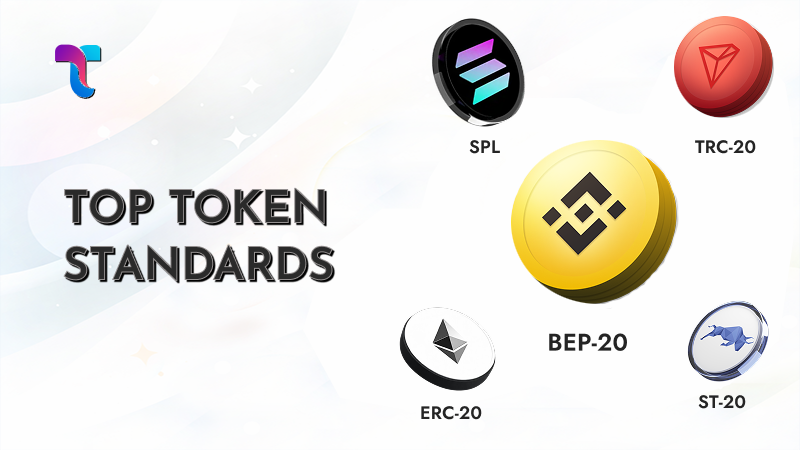
Table of Contents
Crypto tokens may look different on the surface, but they all rely on one thing: token standards.
Token standards are like common rules that enable tokens to move between wallets, connect with apps, and work across blockchains without any issues.
By 2026, crypto isn’t just about trading anymore; now it’s powering DeFi, NFTs, games, and even real-world assets. With so many new projects and blockchains, understanding token standards helps you know what’s being built, how it works, and why it matters.
Keep scrolling through this comprehensive guide and understand the most important token standards shaping the crypto ecosystem in 2026.
What Are Token Standards?
Before discussing 2026’s top token standards, it is important to understand what token standards actually are.
Token standards are the rules that make it easier to create a crypto token and control how it works on a blockchain. These rules make sure that tokens can be easily moved, stored in wallets, and used in apps without any problems.
Instead of every developer building tokens in a different way, token standards help them by creating a common framework. This enables wallets, exchanges, and decentralized applications to recognize and support tokens automatically.
For example:
When a token follows a known standard, it can be sent between wallets, traded on exchanges, or used in DeFi platforms without extra customization. Here in, some standards are designed for fungible tokens (like stablecoins), while others support non-fungible tokens (NFTs) or even both.
In short, token standards make blockchain ecosystems interoperable, reliable, and easy to build on, which is why they’re a foundation of modern crypto systems.
Top Token Standards You Should Know in 2026
With so many blockchains and use cases in 2026, knowing the right token standards can easily make all the difference. Here is the list of top token standards you should know in 2026:
Core Ethereum Standards
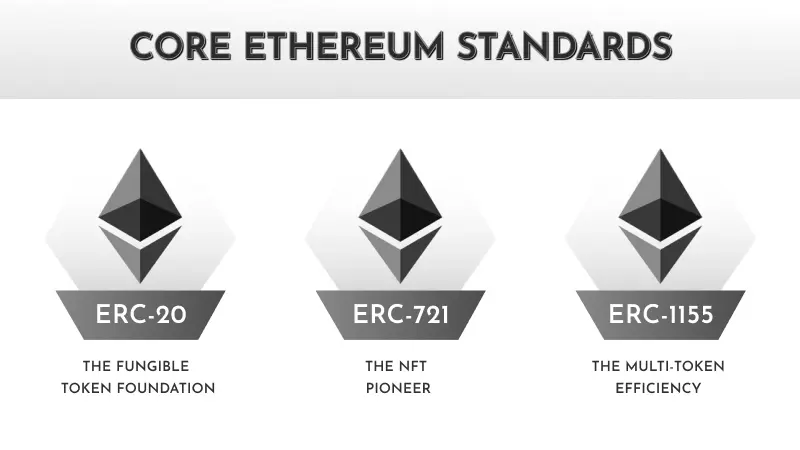
Even in 2026, Ethereum continues to dominate and remains the core foundation of the crypto world.
ERC-20: The Fungible Token Foundation
ERC-20 is one of Ethereum’s most well-known token standards and the backbone for fungible tokens that are identical and interchangeable. It sets basic rules for creating, transferring, and tracking tokens on the blockchain, making them compatible with wallets, exchanges, and decentralized apps.
The most common use cases for ERC-20 include utility tokens for apps, stablecoins like USDC and DAI, and power tokens that allow holders to vote on protocol decisions.
The major reason behind ERC-20 remaining dominant is due to its widespread adoption, liquidity, and compatibility with DeFi platforms and Layer 2 solutions. Its proven reliability and strong ERC-20 ecosystem continue to power many projects and innovations, from traditional DeFi to cross-chain applications.
ERC-721: The NFT Pioneer
ERC-721 is Ethereum’s non-fungible token standard, especially designed for assets that are unique and cannot be exchanged one-to-one like fungible tokens. Each token has its distinct identity, making it ideal for representing digital art, collectibles, and in-game items.
Unlike ERC-20, which concentrates on identical tokens, ERC-721 allows developers and creators to assign metadata and ownership to each unique asset, enabling verifiable scarcity and provenance.
By 2026, ERC-721 had evolved to support dynamic NFTs and tokenization of real-world assets, such as property or limited-edition goods. Its flexibility and uniqueness hold it at the forefront of the NFT ecosystem, powering art, gaming, and emerging applications across multiple industries.
ERC-1155: The Multi-Token Efficiency
It is a versatile Ethereum token standard that supports both fungible and non-fungible tokens within a single contract. This token is perfect for projects that require multiple types of assets without deploying separate contracts for each token.
The common use cases for ERC-1155 include gaming assets, where players may hold both currency and unique items, as well as bundled assets and collections that can be transferred together efficiently.
By 2026, this token will have grown in popularity due to gas savings on Layer-2 solutions and its adoption in metaverse projects, where large numbers of items and assets need to be managed efficiently. Furthermore, its flexibility and cost-effectiveness make it a favorite for developers building complex, multi-asset ecosystems.
Compliance-Focused Standards for RWAs and Security Tokens
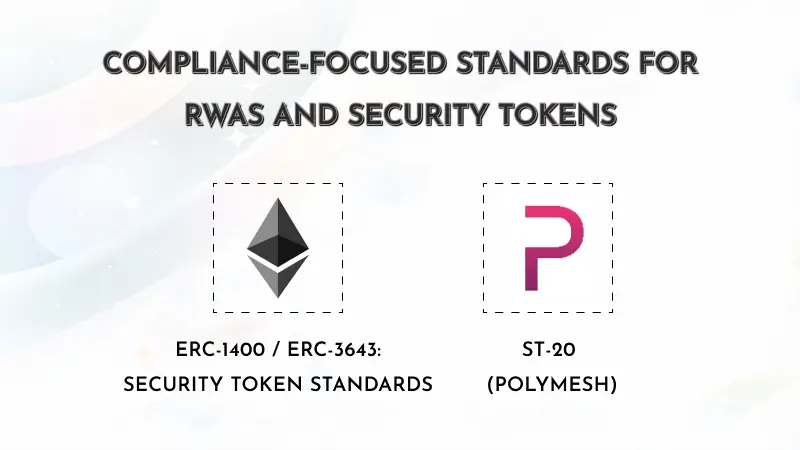
As blockchain expands into real-world assets, compliance-focused token standards are becoming essential for regulated projects.
ERC-1400 / ERC-3643: Security Token Standards
ERC-1400 and ERC-3643 are Ethereum token standards designed specifically for security tokens with built-in compliance features. They include rules for KYC/AML verification, transfer restrictions, and other regulatory requirements, ensuring tokens follow legal standards while remaining tradeable on blockchain platforms.
These standards are ideal for tokenized real-world assets such as real estate, investment funds, and equities, where compliance and investor protection are critical.
By 2026, these standards are gaining momentum due to clearer regulations like MiCA and increasing institutional participation, which are driving a boom in tokenized RWAs. ERC-1400 and ERC-3643 make it easier for projects to safely bridge traditional finance with blockchain while maintaining legal compliance.
ST-20 (Polymesh) and Similar Regulated Standards
ST-20 is a token standard on Polymesh, a blockchain built specifically for compliant security tokens. Unlike general-purpose chains, Polymesh focuses on regulatory requirements like KYC/AML, transfer restrictions, and investor accreditation, making it easier for projects to issue legally compliant tokens.
These specialized standards are ideal for tokenized real-world assets, including equities, funds, and real estate, where meeting legal requirements is crucial.
By 2026, ST-20 and similar standards will be increasingly relevant as they bridge traditional finance and blockchain, enabling institutions to safely enter the crypto ecosystem while maintaining compliance and trust.
Standards from Other Major Ecosystems
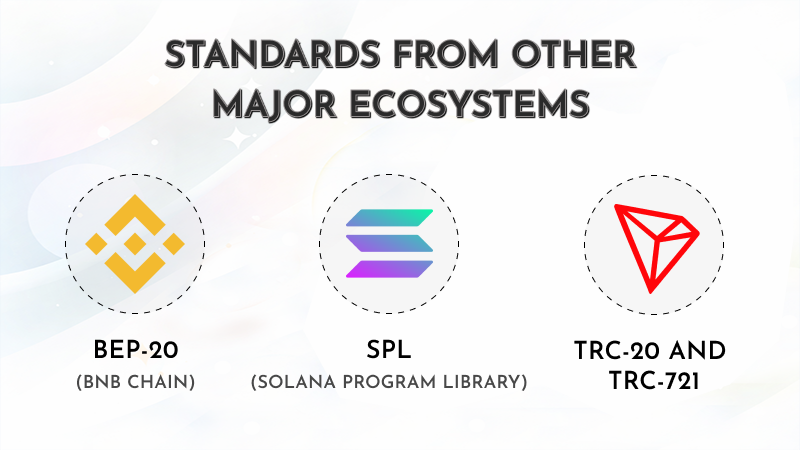
Beyond Ethereum, major blockchains like BNB, Solana, and Tron offer token standards that power fast, low-cost, and high-throughput applications.
BEP-20 (BNB Chain)
BEP-20 is the token standard for BNB Chain, designed to be Ethereum-compatible while offering lower fees and faster transactions. It follows a structure similar to ERC-20, making it easy for developers to port projects from Ethereum while benefiting from BNB Chain’s efficiency.
Common use cases include memecoins, GameFi tokens, and DeFi projects, where speed and cost-effectiveness are crucial.
BEP-20 token remains popular for retail applications and high-volume projects through 2026, thanks to its low transaction costs, quick confirmation times, and strong support from the BNB ecosystem. Its compatibility and efficiency make it a favoured choice for developers looking to scale projects quickly without sacrificing usability.
SPL (Solana Program Library)
SPL is Solana’s native token standard, used to create fungible tokens, NFTs, and compressed tokens on the Solana blockchain. It is designed for high performance, allowing tokens to be made and transferred with extremely low fees and fast confirmation times.
SPL tokens are widely used in high-throughput DeFi applications, NFT marketplaces, and memecoin ecosystems, where speed and scalability are essential.
The core behind SPL 2026’s key standard is its focus on innovation, including features like token extension for advanced functionality and state compression. Which significantly reduces the cost of minting and managing large numbers of tokens. These simplify the SPL idea for mass-scale consumer applications and on-chain activity.
TRC-20 and TRC-721: Token Standards
These token standards are designed to support low-cost and accessible token transactions. TRC-20 is used for fungible tokens, while TRC-721 supports non-fungible tokens. These standards are popular for applications that require fast transfers and minimal fees.
Common use cases include stablecoins, payments, simple DeFi applications, and NFTs, especially in regions where low transaction costs are critical.
By 2026, TRC standards are evolving alongside cross-chain technologies and interoperability protocols, enabling TRON tokens to move more easily between different blockchains. This growing connectivity helps TRC-20 and TRC-721 remain relevant in an increasingly multi-chain crypto ecosystem.
Emerging Trends and Future Outlook for 2026
As blockchain technology is rapidly growing, interoperability and multi-chain tokens are becoming a major focus. Projects are being made as token tokens that can move easily between different blockchains, making it easier for users to access them and improve liquidity.
Another key trend is AI-integrated and programmable tokens, which can adapt based on data, usage, or automated decision-making. These tokens make DeFi smarter, dynamic NFTs, and more.
At the same time, compliance-focused and yield-bearing token standards are continuously gaining importance as regulations become clearer and institutions enter the space. These standards help projects meet legal requirements while offering returns to token holders.
However, choosing the right token standard comes with risks and trade-offs, including scalability, security, regulatory compliance, and ecosystem support. Selecting the right standard varies depending on your project’s goals, audience, and vision.
Conclusion
As the crypto ecosystem matures in 2026, token standards are no longer just technical specifications. They form the backbone of innovation across DeFi, NFTs, gaming, and real-world asset tokenization. From Ethereum’s foundational ERC standards to emerging multi-chain and programmable models, each token standard plays a vital role in shaping how blockchain products are developed and expanded.
Understanding all these standards helps founders, investors, and enterprises to make informed decisions about interoperability, compliance, scalability, and long-term sustainability. Choosing the right token standard is not just about popularity; it’s also about aligning technology with your project’s vision, regulatory requirements, and user experience.
If you’re planning to launch a token, develop a DeFi protocol, tokenize real-world assets, or explore next-generation blockchain solutions, then partnering with the right development team is vital. Technoloader specialises in blockchain, token creation, Web3 solutions, and compliant crypto infrastructures, which enable businesses to select and implement the most appropriate token standards for future-ready projects.

Kanak Badaya
Kanak Badaya is a Technical Content Writer at Technoloader with over 3 years of experience translating complex technology into content that actually makes sense. He works closely with emerging domains like Blockchain, Web3, AI, and DeFi, turning intricate technical concepts into clear, structured, and engaging narratives that help businesses communicate with confidence. Rather than just writing for search engines, Kanak focuses on writing for people. He combines in-depth research with a practical understanding of the industry to create blogs, website content, and technical guides that inform, educate, and build credibility. His goal is simple - make advanced technology feel approachable while helping Technoloader strengthen its authority in the digital space.
Published in News and Updates


