+91 7014607737
 info@technoloader.com
Custom Game Development
Blockchain game development experts build customized games from scratch, giving players true ownership of in-game assets.
Great blockchain games need more than NFTs and tokens. Technoloader helps you design the gameplay, player experience, and blockchain features to create a complete product.
Bring us your idea, and we’ll help you turn it into a practical blockchain game development plan.
Blockchain game development means building a video game that records selected items, trades, or rewards on a blockchain. The game itself still runs on regular servers and a game engine. The right blockchain features depend on your game, so development can include NFTs, tokens, wallets, smart contracts, and on-chain assets.
Some don't. We design games where the blockchain stays in the background
Many have. We design rewards to be balanced, and never promise earnings to players.
Some can’t. We build the game in Unity first and treat the chain as just one feature.
Some may. We check each app store's current rules before we launch a blockchain game.
It happens. That’s why we use small contracts and always test them before launch.
They don’t have to be. We ensure that crypto calls run in the background and don’t affect speed.
Add something on-chain only if players need to own it, trade it, or verify it. That usually means items like skins, characters, and land, plus trades and reward payouts. Everything else stays on game servers, including physics, soft currency, quests, and progression.
Put everything on-chain, and every action can become slower and more expensive. Put too little there, and players get little real ownership.
Technoloader finds the balance before development starts. We keep fast gameplay off-chain and put valuable ownership and trading features on-chain.
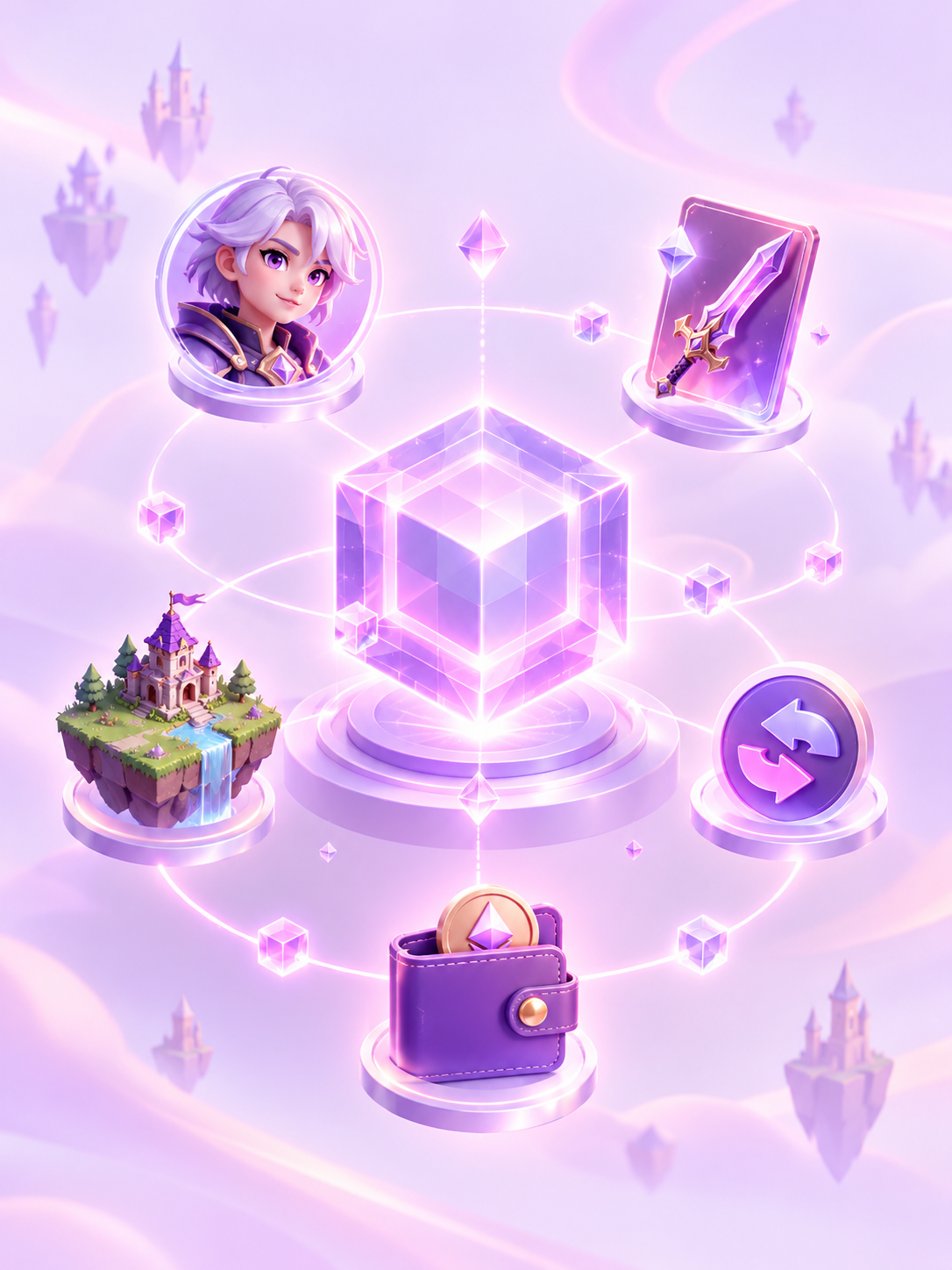
Players hold various assets in their wallets, such as skins, characters, and land.
Marketplace contracts handle trades between players and record each transaction.
Blockchain records make reward payouts transparent and independently verifiable.
Game servers handle gameplay, physics, matchmaking, and other real-time actions.
Soft currencies remain off-chain to avoid unnecessary blockchain transactions.
Quests, progression, health, and ammo update directly within the game.
You don’t need blockchain for every part of a game. Putting only ownership and key transactions on-chain keeps gameplay smooth and costs manageable.
Technoloader’s blockchain game development service covers several game types, each with its own on-chain mix.
Our NFT game development work turns in-game items into NFTs that players can trade or sell. We use ERC-721 for unique items and ERC-1155 for others.
Players may earn tokens or items through regular gameplay, but rewards can vary and aren’t guaranteed. We design the reward economy first and keep it fair.
Our Web3 game development adds wallets, tokens, and marketplaces without making crypto mandatory for players. People who don’t want it can simply choose to ignore it.
We use metaverse game development to create shared 3D worlds with avatars, land, and live events. Player assets can stay on-chain while gameplay runs on servers.
Telegram Mini App games are web apps that open inside Telegram. Telegram's rules require any tokens and on-chain assets to use TON, with wallets connected through TON Connect.
Tap-to-earn games reward players for taps or small tasks. They’re often built as Telegram Mini Apps, and rewards aren't guaranteed. We place daily reward caps and conduct bot checks.
These games reward real-world activity, such as phone-tracked steps, though rewards aren't guaranteed. We plan checks for faked steps and spoofed GPS before rewarding.
These games can record rare characters, gear, or achievements on-chain, which gives collectors something lasting to trade. The quests, combat, and puzzles stay off-chain for speed.
Our six-stage blockchain game development process helps you validate the game before investing heavily in blockchain. We build a playable prototype first, then move into smart contracts and the rest of the blockchain layer.
Every stage gives you something concrete to review. That means you can spot problems early, make changes faster, and move forward with more confidence.
We start with in-depth market research and a review of current trends. Then we brainstorm unique ideas and turn them into a clear roadmap for your blockchain game development project.
A roadmap of your project goals and strategies.
We define the core gameplay mechanics and plan an enjoyable player experience. We create aesthetic game assets and choose the framework and programming languages, using engines like Unity.
Core mechanics, assets, and a framework.
Our team selects a blockchain platform and designs the game's architecture. We plan for transparency and security, and integrate NFTs that give players ownership of in-game assets.
A platform, game architecture, and NFTs.
We develop and test smart contracts using secure coding practices, then audit them and fix security issues before deployment. Next, we design your game's token, its economy, and player rewards.
Tested contracts, a token, and rewards.
We build a playable MVP and put the core game through its paces to find any issues. After alpha and beta testing, we run full QA on testnets before launch and make any needed improvements.
A prototype refined from user feedback.
Our blockchain game development support continues after launch, with bug fixes, upgrades, and server maintenance. We release features and events, and communicate regularly to build a strong community.
Continuous support and upgrades.
End-to-end blockchain game development means one team handles design, engines, contracts, tokens, and launch. Our services combine the latest tools, including Unity and Unreal, to turn your game idea into a working blockchain game.
Blockchain game development experts build customized games from scratch, giving players true ownership of in-game assets.
Our blockchain game developers write and test smart contracts that automate in-game rewards and asset creation, and can enable player voting.
We build wallets around your game's needs. These let players manage in-game assets, view transaction history, and make seamless transfers.
Players can build unique digital identities through the customizable 2D and 3D avatars our team creates for your blockchain game world.
Our blockchain game developers build NFT marketplaces with intuitive designs and frictionless transactions to let players easily trade assets.
In-game tokens built by our expert team power a dynamic player-driven economy. They give players a tangible stake in your game.
Using advanced 3D engines, we create immersive worlds with dynamic environments. We also add NFTs or PFPs for digital ownership.
Unity and Unreal power the games we build. A scalable backend with robust APIs and databases ensures a smooth gameplay experience.
After thorough QA testing on testnets, our blockchain game development team deploys. We also offer regular bug fixes and upgrades.
There are six common ways to approach blockchain game development. The right build option depends on your team, budget, and the blockchain functionality your game needs.
A specialist partner like Technoloader can handle blockchain development alongside game development. An SDK, in-house team, or off-chain approach may suit other projects better.
The table below compares all six options across the factors that matter most when choosing your approach.
| Compare By |
Specialist Partner
(Us)
|
In-House Team
|
General Game Studio
|
White-Label or
Clone Script
|
Web3 SDK
Platform Alone
|
Keep the Game
Off-Chain
|
|---|---|---|---|---|---|---|
| Game Design & Art | Unity team, art scoped | Yours to hire | Strongest here | Copied and generic | You supply it | Same as today |
| Contract Security | Reviews plus independent audit | Needs rare hires | Usually outside core | Shared, unknown code | Pre-built contracts | Nothing on-chain |
| Wallet & Gas Plumbing | Integrates proven SDKs | Must build or buy | Usually outside core | Bundled, basic | Strongest here | Not needed |
| Economy Design | Planned before contracts | Needs specialist hire | Game side only | Inherits the original | Tools only | Standard game economy |
| App-Store Readiness | Planned at scoping | Your team researches | Knows store basics | Varies by script | Your responsibility | Simplest here |
| Speed to First Playable | Prototype first, moderate | Slow to staff | Fast for games | Fastest | Fast plumbing, no game | No chain work |
| Support After Launch | Live-ops support available | Fully yours | Game side only | Depends on vendor | Platform support only | Standard updates |
If you already have a strong game team, an SDK platform may provide enough blockchain infrastructure. You can also combine approaches, such as using an SDK with a specialist partner.
When blockchain adds little value to the player experience, keeping the game off-chain may be the simpler option.
Technoloader has built Unity mobile games for Android and iOS, including a play-to-earn runner with crypto rewards.
An endless runner where players collect meme rewards, earn tokens, and compete on global leaderboards.
A crowd-battle runner where players guide their squad through fast-paced levels and optional in-game purchases.
A mobile archery game where players aim, shoot, and compete through responsive Unity-based gameplay and physics.
A restaurant simulation where players prepare meals, manage daily tasks, and build their virtual food business.
We can walk you through the technology, development process, and blockchain features behind each build.
Blockchain game development usually takes a few months for a simple game and a year or longer for complex projects. The exact timeline depends on your game's complexity, features, and team size. Our process runs from concept and design through smart contracts, tokenomics, and MVP testing, and we tailor each project to your goals.
The cost of blockchain game development at Technoloader depends on what you want to build. Game complexity, blockchain integration, NFTs, smart contracts, wallets, tokenomics, and other features all affect the final price. We review your requirements before providing an estimate, so you pay for the features your game actually needs.
At Technoloader, blockchain game development is priced according to the project rather than a fixed package. Your game type, complexity, blockchain platform, NFTs, smart contracts, wallets, tokenomics, and testing needs all affect the cost. Once we understand your requirements, we can provide a clear, project-specific development estimate.
Many NFT games had the technology in place but missed what actually keeps players playing. Weak gameplay, poor reward economies, and unnecessary crypto features eventually became difficult to sustain.
Our blockchain game development approach starts with player experience. We add blockchain features only when they give players something genuinely useful.
With blockchain gaming, the things players earn can become assets they actually own. They can potentially trade items, collect rewards, and take part in player-driven economies. Studios can also build new ways to reward players and make money. None of this needs to come at the cost of good gameplay.
Web3 games aren’t completely different from regular games. The main difference is what happens to the things players own. Blockchain can let players hold certain assets in their own wallets and trade them. The game can still handle gameplay, matchmaking, and other fast actions on traditional servers.
The best blockchain is simply the one that fits your game. Our team has expertise in Ethereum, Binance Smart Chain, and other platforms, and we pick the technology stack based on your game's requirements. In blockchain game development, that choice is made alongside the game's architecture, NFTs, and transparency and security planning.
It depends on your game's design, engine, and goals. Our blockchain game development services include NFTs for in-game assets, wallet integration, in-game tokens, and an NFT marketplace. Each is planned around your game's architecture.
Share your game with our team, and we'll tell you which blockchain features fit and where they add value for players.
There are a few ways to make money from a blockchain game. You can sell NFTs, charge for in-game items, use tokens, or offer play-to-earn rewards. Players can also trade NFT items through marketplaces.
The tricky part is the economy. If you keep giving out more than players spend, it eventually stops working.
You can, though where you publish changes what your game is allowed to do with tokens. Google Play and the App Store both accept them, with extra conditions on tokens, NFTs, and earnings claims. Steam doesn't, at least not for games that issue or allow exchange of cryptocurrencies or NFTs.
In a traditional game, items usually belong to the publisher, and players just get to use them. Blockchain games change that by putting items in the player's wallet, where they can be traded. The catch is that the studio's code still ultimately controls what each item does in the game.
Our blockchain game development team writes smart contracts with secure coding practices and tests them throughout the build. Before deployment, we run thorough audits on the contracts and fix any security issues they uncover. Then we do complete QA testing on testnets, so mainnet launch isn't the first real test.
That’s why Technoloader’s blockchain game development services are very secure.
We integrate top game engines like Unity and Unreal into the blockchain games we build. That gives our blockchain game development work cross-platform support for mobile, web, and PC, with a scalable backend. Our portfolio titles, like Squad Run Shooter and Archer Arena, are Unity builds for Android and iOS.
Yes. Post-launch support is part of our blockchain game development services. We help with bug fixes, upgrades, server maintenance, and token listing support after deployment. Whether you need to fix an issue or add improvements later, our team can continue supporting the game as your requirements change.
Tell us about your game idea, target users, and budget, and we'll map a build that fits all three.
You'll get straight answers before you commit to anything. We endeavor to answer all inquiries within 24 hours on business days.
Send us your game brief to get started.
Client satisfaction is at the core of everything we do. Our testimonials reflect our dedication to quality, innovation, and delivering technology solutions that create measurable impact. See what our clients say about their experience, success, and the value delivered through our technology solutions!
Working with Vipin and his team was a smooth experience from start to finish. They handled our project professionally, delivered on time, and provided excellent support throughout the development process.
Reviewed on
Our AI product idea was successfully turned into a working solution with the right guidance and fast execution. The team understood our requirements quickly and built a dashboard that improved our real-time decision-making.
Reviewed on
The blockchain solution developed by Technoloader helped streamline payments and improve overall user experience. Their responsive approach and strong project management played a major role in the project’s success
Reviewed on
Technoloader delivered our sports analytics mobile app MVP on schedule with excellent flexibility and dedication. The team responded quickly to feedback and maintained a smooth development workflow throughout the project.
Reviewed on
We were satisfied with both the quality of work and the overall development cost. Technoloader understood the staking platform requirements clearly and delivered dependable blockchain development support.
Reviewed on
Their team paid close attention to every stage of the project and ensured issues were resolved quickly. The overall experience was smooth, professional, and well-managed from beginning to end.
Reviewed on
Our cryptocurrency exchange platform was delivered with strong security, scalability, and stable performance. The team handled complex blockchain integrations efficiently while maintaining consistent communication throughout the project.
Reviewed on
Technoloader handled the complete development of our crypto exchange platform, including wallet integration, staking, and admin management features. The process was transparent, technically strong, and delivered good value overall.
Reviewed on