 +91 7014607737
 info@technoloader.com





Table of Contents
Key Takeaways:
- Cryptocurrency wallets are no longer just for storing coins; they are now essential for handling business payments, treasury, and digital assets.
- Businesses use crypto wallets to make transactions across borders faster and to make their finances more efficient overall than traditional systems.
- Different types of wallets, including hot, cold, custodial, and multi-signature, serve specific business needs based on security and usage.
- Crypto wallets give you full control over your money, but they also require good internal security and responsible key management.
- Despite their advantages, crypto wallets do not fully replace traditional banking systems and are often used alongside existing financial systems.
- Challenges like regulatory uncertainty, technical integration, and asset volatility must be carefully managed for successful adoption.
- The future of crypto wallets in business is to become all-in-one financial management platforms that work better together and are more automated.
Crypto wallets have come a long way from simply storing digital coins. Businesses are using them to send cross-border payments in minutes, manage company treasury, pay international contractors, and accept customers from the market that traditional banking cannot easily reach.
According to the report, the global crypto wallet market, which was valued at $18.96 billion in 2025, has grown to $25 billion in 2026 and is expected to reach $69.02 billion in 2030, with a compound annual growth rate (CAGR) of 28.9%. This rapid growth not just reflects the rising individual interest, but also serious business adoption.
However, what’s driving this growth is not speculation; it is the practical reality that crypto wallets offer. Because of this, businesses speed up their settlements, lower transaction costs, gain full ownership of funds, and have the ability to operate financially across borders without any involvement of traditional banking systems.
Industries from fintech and e-commerce to gaming, healthcare, and enterprise finance are already integrating crypto wallets into their core operations, not just as an experiment, but as infrastructure. In this blog, we will understand what cryptocurrency wallets mean in a business context, the different types of wallet companies used, how they’re changing key business functions, and more.
What Is a Cryptocurrency Wallet in a Business Context?
A cryptocurrency wallet is a digital tool that allows a business to store, send, and receive cryptocurrencies in a safe way. It does not hold coins like a real wallet holds cash; instead, it stores the private keys that prove you own digital assets recorded on a blockchain. Whoever controls the keys controls the funds.
For businesses, a wallet is more than a strong tool. It is the interface through which a company interacts with the entire blockchain ecosystem, such as executing payments, managing digital assets, connecting to financial services, and maintaining a complete, tamper-proof record of every transaction.
Personal Wallets Vs. Business Wallets
A personal wallet is built for individual use, that is simple, straightforward, and created for one person managing their own funds. Whereas a business wallet is built around how businesses actually operate. It helps multiple users with different permission levels, requires approval workflows before funds can be moved, integrates with accounting software, and maintains audit trails that make compliance reporting manageable.
Both wallets’ underlying technology is the same, but the governance layer is entirely different.
Types of Crypto Wallets for Business
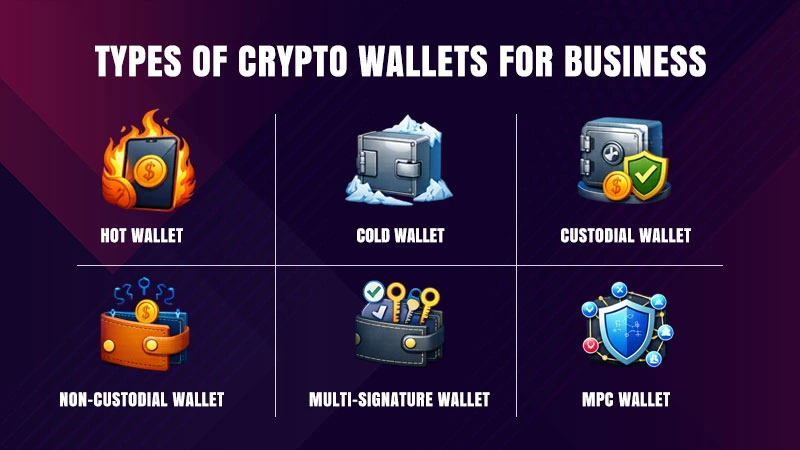
Businesses typically use a mix of hot and cold wallets to manage security and operational efficiency. The right choice depends completely on how a business intends to use it. Here is the clear breakdown of the main types and where each one fits in a business context.
Hot Wallet: Ideal for everyday business transactions, offering quick access and prompt processing, but needs strong security practices since it remains linked to the internet all the time.
Cold Wallet: Ideal for long-term storage of large digital asset reserves, as it operates completely offline, it provides maximum protection against hacks and unauthorized access attempts.
Custodial Wallet: Simple to set up and manage, as a third-party provider manages private keys, but businesses must trust the provider with full control over their money.
Non-Custodial Wallet: Gives businesses complete ownership and control over their private keys and funds, but also requires strong internal security processes and responsible key management practices.
Multi-Signature Wallet: Needs approvals from multiple authorized individuals before executing any transaction. This adds an extra layer of security and prevents unauthorized fund transfers within organizations.
MPC Wallet: Uses advanced cryptographic techniques to divide private keys into multiple parts across different parties, reducing single-point-of-failure risks while maintaining strong enterprise-grade security standards.
Why Businesses Are Adopting Crypto Wallets
Businesses are not adopting crypto wallets just out of interest in new technology. They’re widely using them because traditional banking still has real limitations, and crypto wallets offer direct, practical solutions to those problems.
Faster and Borderless Payment
A standard international bank transfer can take between three to five business days, pass through multiple intermediaries, and still arrive with deductions the sender did not anticipate. Whereas, crypto wallets settle transactions within minutes, at any hour, to any country, and that’s with no correspondent bank involved.
Lower Transaction Costs
In a traditional payment system, every middleman takes a cut, due to which cross-border transactions through conventional banking can carry fees ranging from 1% to 7%. Therefore, crypto transactions, particularly those using stablecoins, significantly reduce the cost, which is just a fraction of a per cent.
Full Ownership and Control of Funds
With a bank account, a business accesses its money on the bank’s terms, which are subject to operating hours, freeze policies, withdrawal limits, and several other restrictions. But by using an enterprise crypto wallet, they get direct ownership of its funds with no third party involved. Money moves when the business decides.
Improved Cash Flow and Liquidity
Faster settlements mean money doesn’t sit in processing queues for days. Businesses can see their real cash position and have more freedom in how they spend their working capital every day because they can access funds from crypto wallets almost instantly.
Key Ways Crypto Wallets Are Transforming Modern Business

This is where the real shift becomes visible. Crypto wallets are not just changing how businesses make payments; instead, they’re changing the complete financial functions. Here’s how that transformation is playing a big role:
Revolutionizing Payments and Settlements
Cross-border payments that used to take days are now settled in minutes, without worrying about any banking hours, cut-off times, or intermediaries. Businesses can make transactions from anywhere in the world at any time, making it a fundamental upgrade for companies with international suppliers, remote teams, or global customers.
Redefining Treasury Management
Finance teams are using crypto wallets to manage reserves more actively. They are doing things like moving money between markets in real time and using multi-signature wallets to enforce internal approval controls before any significant transfer goes through.
Enabling New Revenue Streams
Through decentralized financial integrations, businesses can earn yield on idle treasury funds via staking or lending protocols. Companies building wallet-native products can also make money by charging transaction fees, creating token economies, and offering financial services within their products.
Powering Web3 Business Models
NFT-based loyalty programs, token economies, and in-game asset ownership are all wallet-native models already operating at scale. For businesses in gaming, e-commerce, and creator platforms, crypto wallets are not a feature; they’re the foundation on which the entire commercial model is built.
Enhancing Transparency and Auditability
Every transaction is permanently stored on the blockchain, with a timestamp, and can be tracked but not changed. This gives businesses a clear, automatic audit trail that reduces compliance reporting and offers partners and investors a level of financial transparency that traditional records cannot match.
Industry Use Cases – Where Wallets Are Making the Biggest Impact
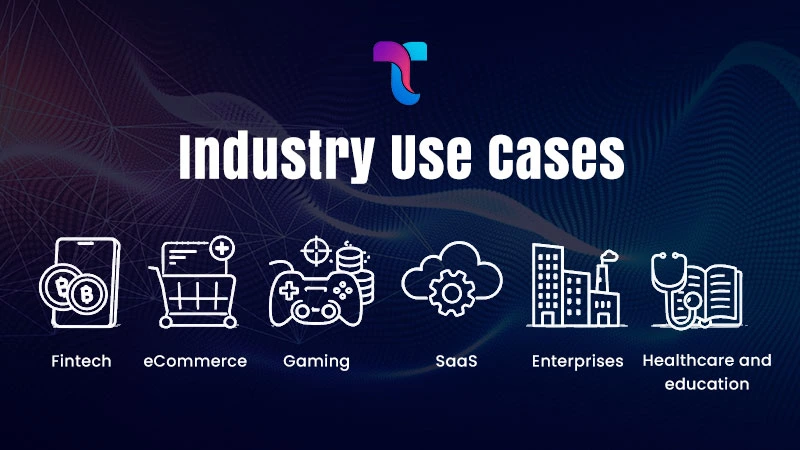
Crypto wallets for businesses are not being adopted uniformly across all industries; some sectors have identified a particularly strong product-market fit, and here is where the impact is most apparent.
-
Fintech
Fintech companies are adding crypto wallets directly into their apps, so users can send, receive, and manage digital assets without ever leaving the platform. Instead of sending users to an outside exchange or wallet provider, the wallet operations happen right inside the product, making for a smoother experience and keeping all of the financial activity in one place.
-
eCommerce
Online stores that accept crypto payments through wallets don’t have to deal with chargebacks, instant settlement, and access to a global customer base that traditional payment processors often cannot serve. Some e-commerce brands are also using wallets to boost their loyalty token programs, replacing conventional point systems with digital tokens customers can actually own, trade, or redeem across platforms.
-
Gaming
The gaming industry has arguably seen the most natural fit with enterprise crypto wallets. Players use wallets to own in-game assets as NFTs, meaning items they’ve earned or purchased in a game are genuinely theirs, not just licensed by the developer. This shifts the complete economic relationship between game developers and players, making real markets around virtual goods.
-
SaaS
Software businesses are using crypto wallets to receive subscription payments in digital currencies, removing dependence on payment processors that charge high fees or restrict access in certain regions. It opens up markets that were previously difficult to monetize due to banking infrastructure limitations.
-
Enterprises
Big businesses are merging crypto wallets into treasury operations, using them to settle supplier payments across borders, tokenize real-world assets, and manage multi-currency holdings from a single interface, cutting down the operational complexity of managing finances across multiple countries and banking relationships.
-
Healthcare and education
Both of these sectors deal heavily in cross-border payments, including tuition fees, insurance claims, research funding, and medical service payments. Crypto wallets remove the currency conversion delays and banking intermediary conflict that make these transactions slow and costly, allowing businesses to act more efficiently across geographies.
Features That Make Wallets Business-Ready
Both consumer crypto wallets and business crypto wallets are built on the same technology, but what makes them different is the layer of controls, security, and integrations that affect the wallet’s functionality at an organizational level. Here are the features that matter most for businesses.
-
Multi-Signature Authorization
No single person can approve and execute a transaction alone. Any outgoing transfer requires a sign-off from multiple designated team members, which keeps protecting the business against both internal fraud and external attacks that compromise one person’s credentials.
-
Role-Based Access Control
Different team members get different levels of access. Which means, a finance manager might initiate a payment, a CFO approves it, and an auditor can view transaction history, but no one of them can act outside their defined role. This shows how financial controls work in traditional organizations, applied to a crypto role.
-
KYC and AML Compliance Modules
Built-in identity verification and anti-money laundering screening make sure that the business stays compliant with financial regulations without having to build a separate system. As regulatory frameworks around crypto lighten globally, this feature is moving from optional to essential.
-
MPC Security
MPC divides private key control across multiple parties, which means that there isn’t a single credential that, if stolen, gives an attacker complete access. For businesses holding significant digital assets, this is the security standard that institutional-grade operations require.
-
Multi-Chain Support
Most businesses today don’t use just one blockchain. With a wallet that supports multiple chains, a business can manage Bitcoin, Ethereum, stablecoins, and other assets across different networks from a single dashboard, without having to have separate wallets for each one.
-
Real-Time Monitoring and Reporting
Automated transaction logs, balance tracking, and reporting tools that feed directly into accounting software remove the need for manual reconciliation. With the help of this, finance teams get a live view of the company’s digital asset position, making month-end processes significantly less painful.
Challenges Businesses Face with Crypto Wallet Adoption
Crypto wallets offer several real advantages, but adopting them also comes with challenges that businesses need to understand before diving in. This includes:
-
Security and Key Management
The biggest risk leaves no room for errors. If a business loses access to its private keys, the funds associated with those keys are gone permanently, after which there is no bank to call, no account recovery process.
-
Regulatory Uncertainty
Crypto regulation varies from country to country, and it is still in this evolving phase. Businesses operating across multiple jurisdictions have to navigate different rules around taxation, reporting, and asset classification simultaneously.
-
Integration with Existing Systems
Connecting a business crypto wallet to existing ERP platforms, accounting software, and payment infrastructure is rarely plug-and-play. It requires technical work, and for businesses without in-house development capability, that means relying on third-party providers to bridge the gap, adding cost and dependency.
-
Staff Learning Curve
Teams that are unfamiliar with how crypto wallets work can make errors that are irreversible. Sending funds to the wrong address, mishandling private keys, or falling for phishing attempts targeting wallet credentials are all real operational risks. Without proper training and clear internal policies, the human element remains the weakest point in any wallet setup.
-
Volatility of Non-Stable Assets
Holding cryptocurrency like Bitcoin or Ethereum in a business wallet means the value of those holdings can shift dramatically within a single day. For businesses that need predictable cash positions, this is a genuine concern, and one of the most addressed by conducting day-to-day operations primarily in stablecoins rather than volatile cryptocurrencies.
How Businesses Are Overcoming These Challenges
In the previous section, every single challenge outlined has a specific solution that businesses are already using. The barriers to adoption are real, but they’re not impossible.
-
White-label Wallet Solutions
Rather than building wallet infrastructure from scratch, businesses are adopting white-label solutions that come pre-built with enterprise security, compliance modules, and integration capabilities. This extremely reduces both the time and technical expertise that are needed to get operational, converting what could be a year-long development project into a matter of weeks.
-
Custodial and Non-Custodial Hybrid Approach
Instead of choosing a single model and accepting its limitations, many businesses break down their approach into multiple parts. Custodial wallets handle day-to-day operational payments where convenience and recoverability matter the most. Therefore, non-custodial wallets hold larger reserves where full ownership and control are the priority. Each model covers the weakness of the other.
-
Third-Party Infrastructure Providers
Platforms that specialize in enterprise crypto infrastructure handle the complexity of security, key management, and compliance on the business’s behalf. This lets companies adopt crypto wallet functionality without needing to become experts in blockchain security themselves, all while lowering the barrier to entry.
-
Stablecoins for Daily Operations
Stablecoins exclude the volatility problem in digital transactions by anchoring their value to stable assets, such as the US dollar, offering a reliable medium for commerce. Businesses get all the speed and cost advantages of crypto transactions while maintaining the predictable cash positions they need for financial planning.
-
Compliance-first Wallet Design
From the beginning, modern enterprise wallets are built with regulation in mind, such as incorporating KYC verification, AML screening, and audit-ready transactions records as standard features rather than afterthoughts. Businesses using these solutions start with a compliant foundation instead of treating compliance as a late-stage fix.
Future Trends – Where Crypto Wallets Are Heading
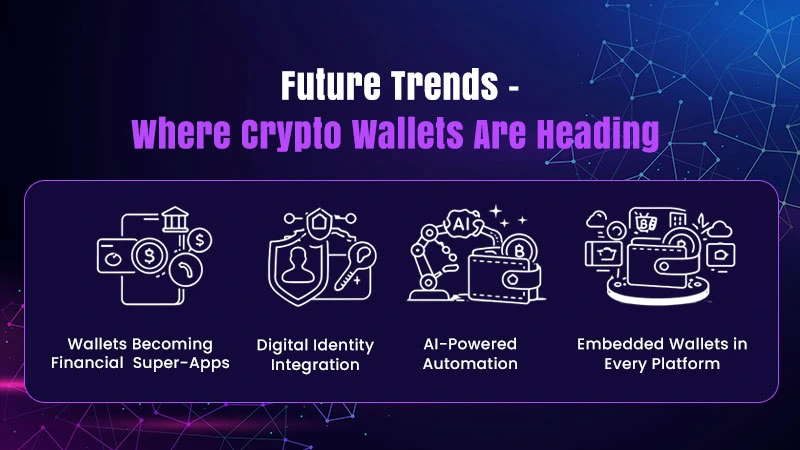
The evolution of crypto wallets is not yet complete. There are several ongoing things which are clearly pointing out where the business wallet is heading next.
-
Wallets Becoming Financial Super-Apps
In the future, the wallet will not just move money; therefore, it will manage payments, savings, lending, insurance, and investments from a single interface. Instead of businesses using multiple financial tools and platforms, the wallets will simplify all the financial activities and become the central hub.
-
Digital Identity Integration
Wallets have started to store more than money. Today, they’re handling verified business credentials, KYC documents, and decentralized identity records that are increasingly being held within wallet infrastructure. Wallets are also allowing businesses to onboard new partners, pass compliance checks, and verify identities instantly without repetitive paperwork.
-
AI-Powered Automation
Artificial intelligence is being built directly into wallet functionality. AI-integrated smart wallets will detect unusual transaction patterns, optimize fee timing, automate treasury rebalancing, and flag compliance issues before they become problems, breaking down the manual oversight finance teams currently have to apply.
-
Embedded Wallets in Every Platform
Wallet functionality is moving from standalone applications into the fabric of existing business tools. E-commerce platforms, payroll systems, ERP software, and marketplace apps will have wallet capabilities built in by default, making crypto transactions as routine as a card payment is today.
Conclusion
Cryptocurrency wallets have moved well beyond their origins as simple storage tools for digital coins. In this blog, we have covered the reasons behind the rapid adoption of crypto wallets, how crypto wallets are transforming modern business, industry use cases, and more.
Looking at the currency market size, the transformation is already underway. Businesses across fintech, e-commerce, gaming, enterprise finance, and beyond are not experimenting with crypto wallets; they’re building core operations around them.
Meanwhile, the businesses that benefit most will not be the ones that wait for crypto wallets to become mainstream; they’ll be the ones that understand the advantages now. Those businesses that are ready to take that step and work with an experienced crypto wallet development company can make the difference.
We at Technoloader provide end-to-end wallet development solutions, from initial architecture and security design to deployment and ongoing support. We help businesses build wallet infrastructure that is tailored to how they actually operate.
Whether you’re starting from scratch or want to improve an existing system, our team has the technical knowledge and industry experience to do it right!
Frequently Asked Questions
What is a cryptocurrency wallet in a business context?
A cryptocurrency wallet in a business context is a digital solution that lets companies securely store, send, and receive digital assets. It operates as an interface to blockchain networks, enabling businesses to manage transactions, control private keys, and maintain transparent financial records efficiently across various operations and teams.
How do crypto wallets help businesses with cross-border payments?
Crypto wallets make cross-border payments easy by reducing dependency on multiple intermediaries and traditional banking delays. Businesses are able to send and receive funds globally with faster processing times, often within minutes. This improves operational efficiency, improves cash flow, and helps companies to work effectively with international clients, vendors, and remote teams.
Are crypto wallets safe for business use?
Crypto wallets can be highly secure when businesses implement proper security measures such as multi-signature approvals, secure private key storage, and access controls. However, security also depends on internal practices. Poor key management or human errors can lead to losses, making it essential to follow strict security protocols and staff training.
Can businesses fully rely on crypto wallets instead of banks?
Since crypto wallets cannot take the role of traditional banks, businesses cannot fully rely on them. Banks are still needed to manage fiat money, regulatory compliance, and financial services, even though wallets provide speed and control over digital transactions.
What are the main challenges businesses face when using crypto wallets?
While using the crypto wallets, businesses usually face challenges like managing private keys securely, dealing with the regulatory uncertainty across regions, and consolidating wallets with the existing financial systems. Furthermore, if not well addressed, the price volatility of some cryptocurrencies and a lack of technical understanding within teams might result in operational concerns.

Kanak Badaya
Kanak Badaya is a Technical Content Writer at Technoloader with over 3 years of experience translating complex technology into content that actually makes sense. He works closely with emerging domains like Blockchain, Web3, AI, and DeFi, turning intricate technical concepts into clear, structured, and engaging narratives that help businesses communicate with confidence. Rather than just writing for search engines, Kanak focuses on writing for people. He combines in-depth research with a practical understanding of the industry to create blogs, website content, and technical guides that inform, educate, and build credibility. His goal is simple - make advanced technology feel approachable while helping Technoloader strengthen its authority in the digital space.
Published in Cryptocurrency Wallet Development


